Vevang AISites/ Solar installers · Google Business Profile

Google Business Profile management · Solar installers

Google Business Profile for Solar Installers

Homeowners research solar for weeks before they contact anyone. Your map listing is often the first place they check to see whether you are real, local and still installing.

Pick a 15-minute time. Your demo is built before the call.

  • Your demo, built before the call
  • Improved every week
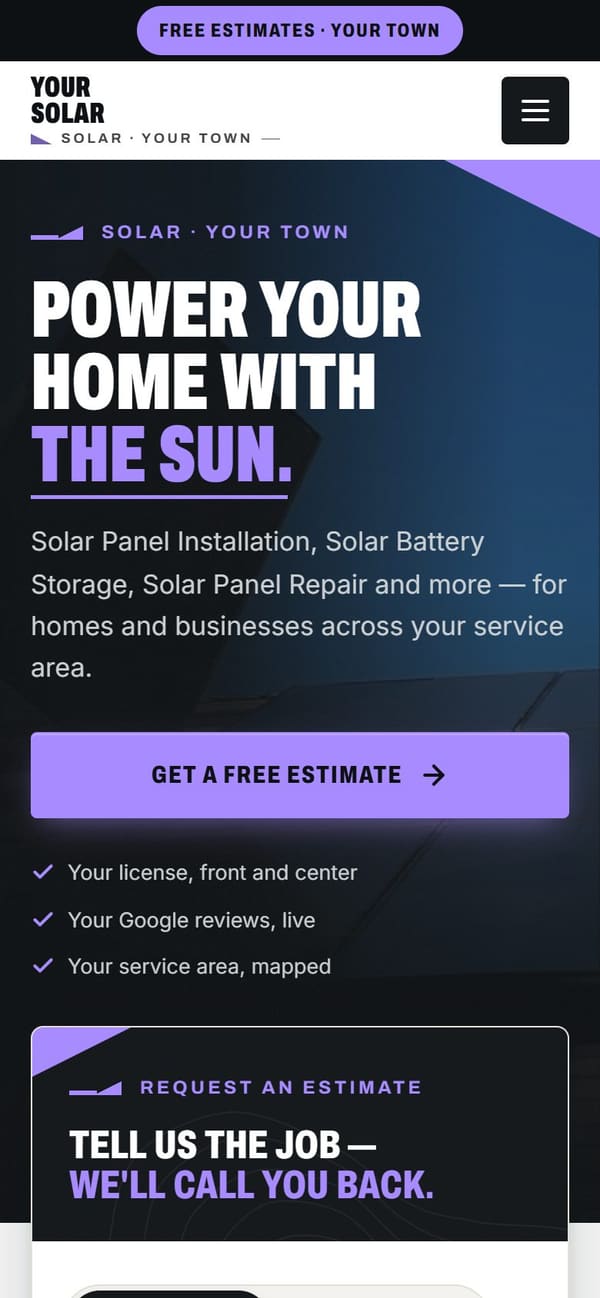
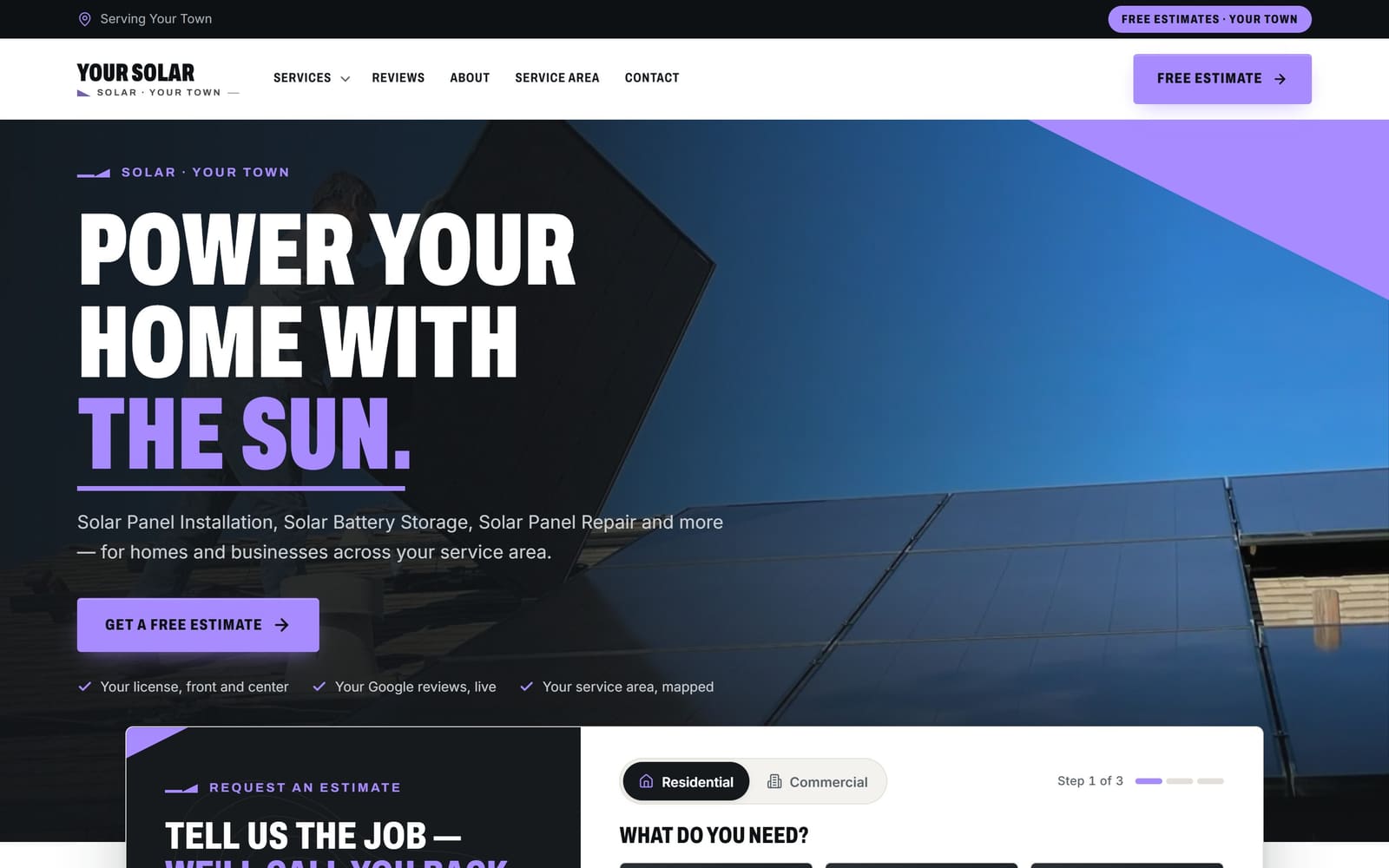
A sample solar installers website, the kind Vevang builds and keeps improving.
The same sample site on a phone.
Sample demo · the kind of site we build for solar installers

What does this include?

Your Google Business Profile is the map listing homeowners open while they compare solar quotes. Vevang Sites sets the categories, service area, services and hours, adds real install photos, posts and Q&A, and connects it to a website that says the same thing. SEO Ranker keeps it active every week.

Why it matters

Why it’s different for your trade.

01

Solar buyers verify before they call

By the time a homeowner contacts you, they have read for weeks and hold a quote or two. They check your profile to confirm you install locally, still operate, and handle permits. A thin listing makes a serious installer look like a door knocker.

02

Service searches happen on the map

Panels stopped producing. The original installer is gone. That homeowner searches for solar panel repair near me and calls someone from the map, not from page two. If your profile never mentions service, those steady jobs go elsewhere.

03

The listing and the site must agree

If your profile says battery storage and your website never mentions backup power, both look unreliable. Matching categories, services, cities and hours across the map listing and your pages gives Google and readers one consistent story about what you install.

What we do

The work, step by step.

01

Claim and verify the listing

We claim or recover the profile, finish verification, and remove duplicates left behind by old office addresses or a previous marketing vendor. One verified listing beats three half-built ones competing with each other for the same solar searches.

02

Set categories and services

Primary category matches your main work. Secondary categories cover what you actually perform: maintenance, electrical, battery installation, reroofing if you do it. Then we write service entries for residential, commercial, storage, repair, and panel removal and reinstall.

03

Define the real service area

Most solar companies work from a warehouse or a home office. We hide the address where that applies and list the cities and counties where you genuinely pull permits and handle interconnection, instead of a radius covering half the state.

04

Load photos that prove local work

Arrays on roof types common to your area, inverters and combiners, a battery on a garage wall, crews on site, the truck. We date and refresh them so the listing shows recent installs, not a folder from your first year.

05

Post and answer questions

Short posts after outages, finished installs, program changes and seasonal bill spikes. We add the questions homeowners already ask by phone, permits, timelines, whether you service other companies' systems, and answer them publicly on the profile.

06

Connect, track and maintain

The profile links to your consultation page, not the homepage. We add call and form tracking so you see which leads came from the map, and SEO Ranker reviews the listing and your pages every week.

Common mistakes

What usually goes wrong.

One category, installs only

Listing solar panel installation and nothing else hides the service side of your business. Homeowners with a dead inverter or a defunct original installer search different words. Add maintenance and repair categories, and give them a page to land on.

Posting incentive amounts

Dollar figures and program details change, and a stale post about an expired credit costs you trust at the exact moment a homeowner is deciding. Post that you walk owners through current programs and keep the specifics on a page you maintain.

Going quiet in slow season

Installs slow in hard weather, so many installers stop posting. Reading does not slow down. Keep publishing battery, backup and roof readiness answers through the quiet months so you are already present when bills jump in summer.

Leaving reviews unanswered

Solar reviews often run long and mention permits, delays or production. Ask every customer once the system is running, and reply to all of them, including the critical ones. A calm, factual reply is read by the next homeowner comparing installers.

Checklist

What you can check today.

  • Claim the profile and delete duplicate listings
  • Add maintenance and repair as secondary categories
  • Hide the address if you work from a warehouse
  • List only cities where you actually permit
  • Upload ten recent local install and battery photos
  • Answer permit and timeline questions in the Q&A
  • Link the profile to your consultation page
  • Reply to every review, good or bad

How it works

You see it first. Then you decide.

You don’t sign anything to see it. Book a time, and your demo is ready before we talk.

  1. 01

    Book 15 minutes

    Pick a time — often the same day. Tell us your website, or just your business name and city.

  2. 02

    We build your demo

    Before the call, we build a demo of your new website from your real business: your services, your area, your reviews.

  3. 03

    See it, then decide

    We walk you through the demo on the call. You see exactly what you’d get before you spend anything.

  4. 04

    Launch, then improve weekly

    We build it for real and put it live. After launch, the SEO Ranker agent keeps improving it every week.

15 minutes on Google Meet. No obligation.

Questions

Straight answers.

Which categories should a solar company choose?

Pick a primary category that matches your main work, usually solar energy contractor or solar panel installation. Then add secondary categories for work you genuinely perform in house: solar panel maintenance, electrician, battery or generator work, roofing if you reroof before installs. Skip categories for work you fully subcontract, because the calls will come to you anyway.

Should I show my shop address?

Only if customers can visit and be helped there. Most solar companies operate from a warehouse or a home office, so the address should be hidden and the listing set as a service area business. Then define the area by the cities and counties where you actually pull permits and complete interconnection paperwork.

How often should the profile be posted to?

Weekly is a reasonable rhythm, and timing matters more than volume. Post after a widespread outage, when utility bills jump, when a program deadline is being discussed locally, and when you finish an install worth showing. SEO Ranker handles this schedule so the listing never sits untouched for a season.

Do photos really change anything for solar?

They change what a homeowner believes. Generic panel images look like a sales page. Photos of arrays on the roof styles common in your area, a battery mounted in a real garage, your crew and your trucks show that you install nearby. Keep adding new ones as jobs finish.

Can you guarantee we rank in the map pack?

No, and nobody honestly can. Rankings depend on proximity to the searcher, competition and factors Google does not publish. What we control is a complete, accurate, active profile connected to a site that matches it, plus tracking so you can see which calls came from the map rather than guessing.

What should go in the Q&A section?

The questions you already answer on the phone. Who handles permits and inspection. How long from signing to the system running. Whether you service systems installed by other companies. Whether you work with battery backup. Post them and answer them plainly, so a homeowner reading at night gets the answer without calling.

How do you handle reviews for a long sales cycle?

Solar jobs run months from proposal to production, so we ask at the point the system is running and the experience is fresh. Every customer gets the request, no incentives, no filtering. We help you reply to all of them, including the ones about delays, because the next reader is watching how you respond.

What happens before the first call?

We build a demo of your new website before we speak, using your service area, install types and the pages solar buyers look for. On the call we walk through it, review your current Google Business Profile with you, and show what we would fix first. Fifteen minutes.

More for solar installers

One team for the whole job.

Reviewed 2026-09-24

Your demo is free

See your new website on the call.

Tell us your website — or your business name and city — and pick a time. We’ll have your demo ready before we talk.

Pick a 15-minute time. Your demo is built before the call.