Vevang AISites/ Solar installers · Local ads

Local ads management · Solar installers

Local Ads for Solar Installers That Book Consultations

Most solar ad budgets get spent on people who are still reading. We aim yours at the homeowners who are ready to talk, and send them to a page that answers the question they actually typed.

Pick a 15-minute time. Your demo is built before the call.

  • Your demo, built before the call
  • Improved every week
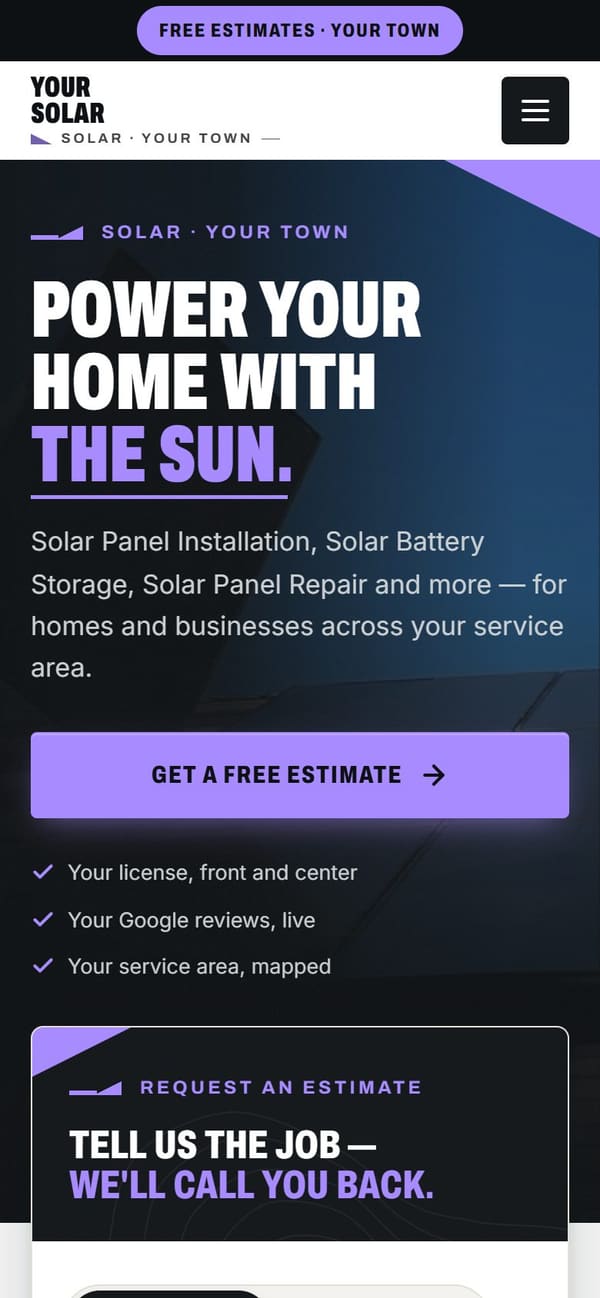
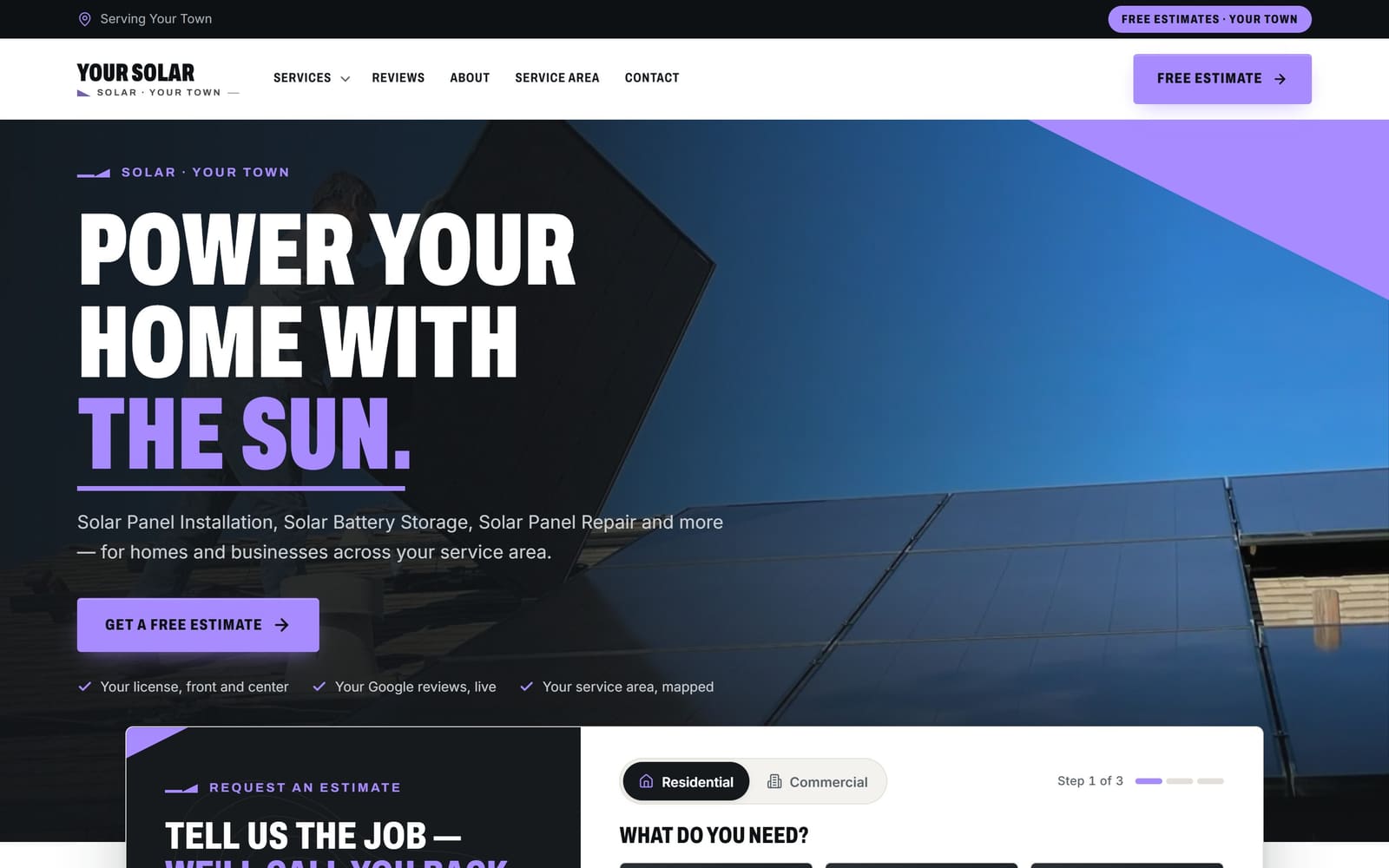
A sample solar installers website, the kind Vevang builds and keeps improving.
The same sample site on a phone.
Sample demo · the kind of site we build for solar installers

What does this include?

Vevang Sites builds your solar website first, then runs local Google and Meta ads on top of it. Ad spend stays on your own card. Campaigns point at battery, repair and reroof pages instead of your homepage, and every call and form is tracked through to booked consultations.

Why it matters

Why it’s different for your trade.

01

The ready buyers aren't the shoppers

A homeowner searching "is solar worth it" may read for weeks. Someone searching for a dead inverter, panel removal before a roof replacement, or battery backup after an outage wants a call today. Paid budget goes further on those searches.

02

Head terms are crowded with lead resellers

Bid on broad solar phrases and you are bidding against brokers who sell the same homeowner to several installers. Narrow, specific phrases cost less attention and reach people who want your company rather than a form on a comparison site.

03

Clicks die on a homepage

Solar buyers arrive with one question: payback, warranty, who pulls the permit, will my roof hold it. An ad aimed at a page that answers that question turns into a consultation. An ad aimed at a slider does not.

What we do

The work, step by step.

01

Site and education pages first

We build or rebuild your site with plain-language pages on how solar works, incentives, financing, roof readiness and service for existing systems. Ads are an add-on. Sending paid traffic to a thin site wastes your card.

02

Pick campaigns by intent, not by volume

We start with repair and maintenance, inverter and monitoring problems, panel removal and reinstall, battery and backup power, and your own company name. Those searches come from people with a reason to call this week.

03

Draw the map you actually serve

Targeting follows your crews and the permitting jurisdictions you already know. We cut the towns where interconnection or inspection turns into a headache, so you stop paying for consultations you would rather not drive to.

04

A landing page per campaign

Battery ads land on battery and backup. Reroof ads land on panel removal and reinstall. Each page carries local install photos, your license and warranty details, and a consultation request that asks roof age and utility company.

05

Track to consultations, not clicks

Call tracking and form tracking tell us which campaign produced the appointment, and you tell us which appointments turned into signed systems. Solar has a long lag, so we judge campaigns on booked work over months.

06

Weekly adjustments beside the organic work

SEO Ranker keeps improving your pages every week while we prune search terms, rotate install photos in Meta and lift budget when outages or program deadlines push interest up. Ads and organic feed each other.

Common mistakes

What usually goes wrong.

Buying broad "solar companies near me" clicks

It is the most expensive way to meet a homeowner who is three weeks from deciding. Keep a small, tight set of phrases with clear intent and let your education pages earn the early readers over time.

Ignoring the existing-system market

Owners with dead panels, a failed inverter or a lost original installer are searching right now, and almost nobody advertises to them. That work funds crews in slow install months and often turns into a battery add-on later.

Promising savings in the ad copy

Hard savings claims and "free solar" language attract people who feel misled at the kitchen table. Write ads about the consultation, the equipment and who handles permits. The proposal can do the math honestly.

Letting warm leads sit

A solar form fill often follows weeks of reading. If nobody calls back the same day, that homeowner books with the next installer they read about. Set a phone rule before you spend a dollar on ads.

Checklist

What you can check today.

  • Pause broad solar keywords, keep specific intent phrases
  • Bid on your own company name in search
  • Add a paid campaign for repair and inverter problems
  • Build a battery and backup page for ads to land on
  • Ask roof age and utility company on the ad form
  • Trim targeting to towns your crews permit in
  • Note which calls came from ads for one week
  • Shoot photos of a finished local install for creative

How it works

You see it first. Then you decide.

You don’t sign anything to see it. Book a time, and your demo is ready before we talk.

  1. 01

    Book 15 minutes

    Pick a time — often the same day. Tell us your website, or just your business name and city.

  2. 02

    We build your demo

    Before the call, we build a demo of your new website from your real business: your services, your area, your reviews.

  3. 03

    See it, then decide

    We walk you through the demo on the call. You see exactly what you’d get before you spend anything.

  4. 04

    Launch, then improve weekly

    We build it for real and put it live. After launch, the SEO Ranker agent keeps improving it every week.

15 minutes on Google Meet. No obligation.

Questions

Straight answers.

Should I run ads before my website is finished?

No. Solar buyers compare equipment, warranties, financing and process before they call, and a paid click cannot survive a site that skips all of that. We build the site and the education pages first, then add ads once there are real pages to send traffic to.

Do solar installers qualify for Google Local Services Ads?

Local Services Ads cover a specific list of home trades and solar is not offered in every market. We check your market and license type instead of assuming. If you qualify, we handle the screening and profile. If not, the budget goes into search and Meta campaigns.

Who pays for the ad spend?

You do, on your own card, straight to the platform. You see exactly what was spent and you can raise, lower or stop it. We manage the campaigns, the keywords and the landing pages. Local ads are an optional add-on, not a required part of the work.

How fast will I know if the ads are working?

Clicks and calls show up quickly. Signed systems do not, because solar shopping runs long. We watch call and form volume in the first weeks, then look at booked consultations and contracts over a longer window before deciding what to keep running.

Can you guarantee a number of solar leads?

No, and nobody honestly can. Ad results move with utility rates, program changes, outages and how many installers are bidding in your area. Rankings cannot be guaranteed either. What we control is targeting, ad copy, landing pages and tracking, and we adjust them every week.

Are Meta ads worth it for solar?

They work best for two jobs: showing finished installs in specific neighborhoods, and reaching people who already read your how-solar-works or incentives pages. That second group is warm. For someone with a dead inverter today, search ads are the better place for the money.

Should I buy shared leads instead?

Shared leads arrive already sold to other installers, so you are racing to the phone on a homeowner who never chose you. Ads pointed at your own pages bring people who read your warranty terms and your project photos first. Those consultations are easier conversations.

What happens on the 15-minute call?

We build a demo of your new solar site before we talk, using your service area, your install photos if we can find them and the pages your buyers need. On the call we walk through it, then talk about whether local ads make sense for your market.

More for solar installers

One team for the whole job.

Reviewed 2026-09-24

Your demo is free

See your new website on the call.

Tell us your website — or your business name and city — and pick a time. We’ll have your demo ready before we talk.

Pick a 15-minute time. Your demo is built before the call.