Vevang AISites/ Solar installers · AI search

AI search visibility · Solar installers

AI Search for Solar Installers

Homeowners now ask AI assistants whether solar is worth it, how net metering works locally, and who installs near them. Your site should answer those questions in plain language.

Pick a 15-minute time. Your demo is built before the call.

  • Your demo, built before the call
  • Improved every week
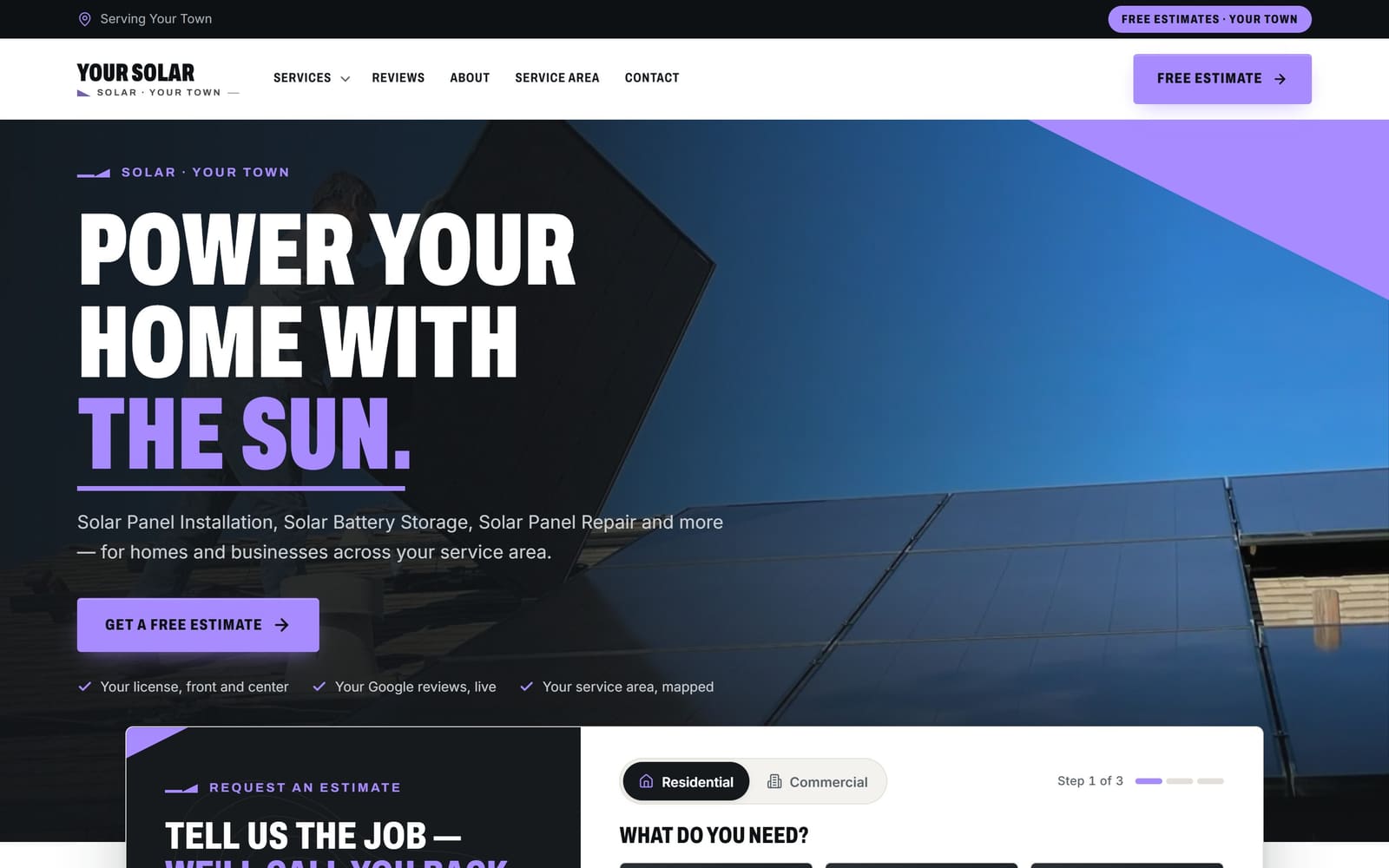
A sample solar installers website, the kind Vevang builds and keeps improving.
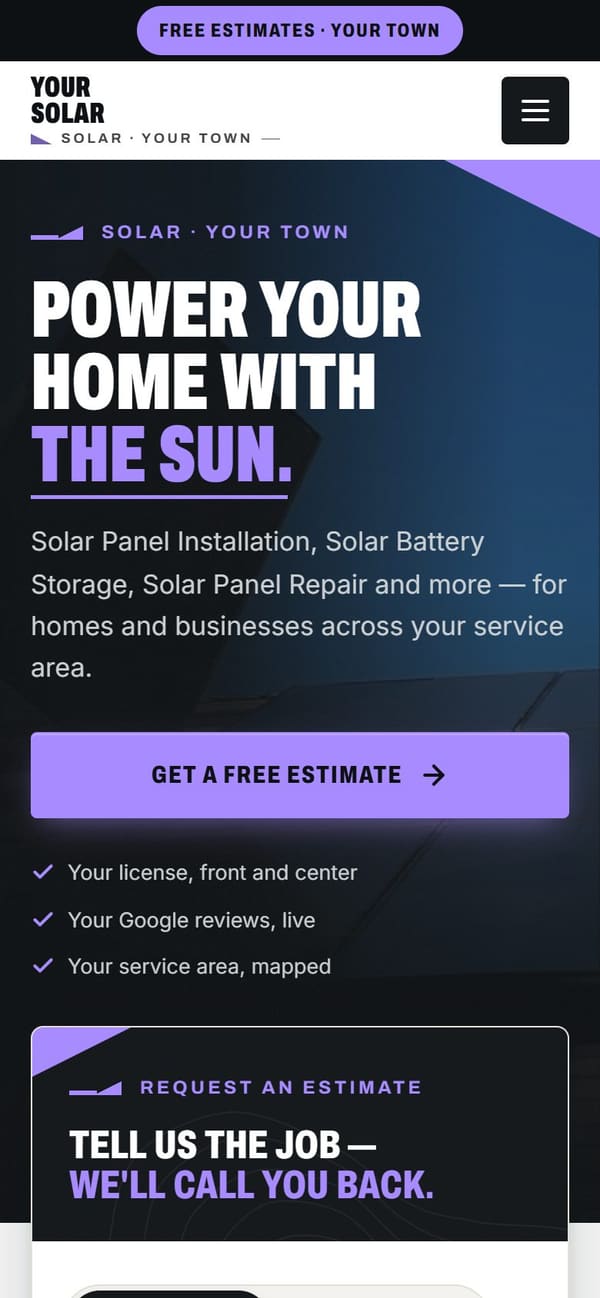
The same sample site on a phone.
Sample demo · the kind of site we build for solar installers

What does this include?

AI assistants answer solar questions by reading clear, consistent sources. Vevang Sites writes plain answer blocks on your pages, keeps your business facts identical everywhere, adds structured data, and builds pages for the questions homeowners actually ask about panels, batteries, permits and incentives. No assistant can be promised to name you.

Why it matters

Why it’s different for your trade.

01

Solar research starts with questions, not installers

Most homeowners spend weeks asking how solar works, what payback looks like, and whether their roof qualifies. They ask an assistant first. Pages that answer those questions plainly are the ones that get read and summarized.

02

Vague pages get skipped

Marketing copy about clean energy gives an assistant nothing to work with. Specific answers about panel warranties, inverter types, interconnection steps and permit timelines give it something concrete tied to your company and your area.

03

Conflicting facts cause doubt

If your license number, service radius, phone number and brands vary between your site, Google Business Profile and directories, nothing lines up. Consistent facts make it easier for any system, or any homeowner, to trust what it reads.

What we do

The work, step by step.

01

Collect the questions you already answer

Write down what homeowners ask on consultations. Roof age. Shading. Net metering rules. Battery sizing. Loan versus cash. Those questions are the outline for your site, because they are the same ones typed into AI assistants.

02

Put a direct answer at the top of every page

Two or three sentences that answer the page title before any sales copy. On a battery page, say what a battery does during an outage, what it will and will not run, and how long a typical backup lasts.

03

Lock down your business facts

One phone number, one address, one service area list, one set of license and certification details. We match them across your site, Google Business Profile and listings so nothing contradicts anything else.

04

Add structured data to your pages

Markup for your business, service pages, project examples and FAQs. It labels your details so machines read them correctly instead of guessing at what your headings and paragraphs mean.

05

Build the pages the questions demand

Residential, commercial, battery storage, incentives and programs, financing, roof assessment and reroofing, repair for existing systems, panel removal and reinstall, and your install process. Each with a clear answer and local specifics.

06

Track what arrives and keep updating

Call and form tracking shows which pages produce consultations. SEO Ranker works on the site every week, updating answers when program rules, equipment lines or utility policies change.

Common mistakes

What usually goes wrong.

Writing about savings without saying how

A page promising lower bills with no explanation of offsets, rate structures or what happens in winter reads as sales talk. Show the math logic in plain words and say clearly what depends on the individual roof and utility.

Hiding incentive details behind a form

Homeowners ask assistants about credits and programs constantly. If your only incentive content is a gated PDF, you have nothing to be read. Explain what exists in your state and who qualifies, and say when rules change.

Ignoring existing system owners

People whose panels stopped producing search for repair, monitoring help and battery retrofits. No service page means those searches go elsewhere, and so does the referral they would have given later.

Copying manufacturer marketing

Pasted brochure text appears on hundreds of installer sites. It says nothing about your crews, your permitting experience or your local utility. Write from your own installs instead.

Checklist

What you can check today.

  • Answer each page's question in the first three sentences.
  • List your license and certification numbers on the site.
  • Match your phone and address everywhere online.
  • Publish an incentives page written in plain language.
  • Add a repair page for systems you did not install.
  • Explain battery backup limits honestly, not just benefits.
  • Name the utilities and permit offices you work with.
  • Answer new consultation calls the same day.

How it works

You see it first. Then you decide.

You don’t sign anything to see it. Book a time, and your demo is ready before we talk.

  1. 01

    Book 15 minutes

    Pick a time — often the same day. Tell us your website, or just your business name and city.

  2. 02

    We build your demo

    Before the call, we build a demo of your new website from your real business: your services, your area, your reviews.

  3. 03

    See it, then decide

    We walk you through the demo on the call. You see exactly what you’d get before you spend anything.

  4. 04

    Launch, then improve weekly

    We build it for real and put it live. After launch, the SEO Ranker agent keeps improving it every week.

15 minutes on Google Meet. No obligation.

Questions

Straight answers.

Can you get ChatGPT or Gemini to recommend my solar company?

No one can promise that, and anyone who does is guessing. What we control is clarity: direct answers on your pages, consistent business facts, structured data, and content covering the questions homeowners ask. That gives assistants accurate material about your company. Whether any of them names you is their decision, not ours.

Is this different from regular local SEO?

It overlaps heavily. Both want clear pages, consistent details and real local content. AI search adds emphasis on answering questions directly and early, keeping facts identical across every listing, and marking up your pages so machines read them correctly. We do both together rather than treating them as separate projects.

What solar questions should my site answer first?

Start with how solar works, what it costs to own versus finance, whether the roof needs work first, how net metering functions with your local utility, what batteries do during outages, and how permits and interconnection run. Those cover most of what a homeowner researches before requesting a consultation.

Do I need to write all this content myself?

No. We draft it, then ask you to correct the technical details only you know: your utilities, your permitting timelines, the equipment you stand behind, the roof conditions you turn down. Your review makes it accurate. Review time is usually short and worth it.

How does AI search affect how fast I respond to leads?

A homeowner may read for weeks before contacting anyone. The call that finally comes is warm. If it goes to voicemail, they contact the next installer they read about. Call and form tracking shows you what came in and from where, so nothing sits unanswered.

How long before this changes anything?

Content and structured data go up quickly. Getting picked up takes longer and varies by market. Nobody can guarantee rankings or AI mentions. What we can do is keep improving the site every week so it stays accurate when programs, rates or equipment lines change.

What happens on the 15-minute call?

We build a demo of your solar site before we talk, so you see real pages instead of a slide deck. On the call we go through your service area, the systems you install, the questions your customers ask most, and what your site should say first.

More for solar installers

One team for the whole job.

Reviewed 2026-09-24

Your demo is free

See your new website on the call.

Tell us your website — or your business name and city — and pick a time. We’ll have your demo ready before we talk.

Pick a 15-minute time. Your demo is built before the call.