Grout and leak calls cannot wait
A stain on the ceiling below the bathroom turns into a search within the hour. Search ads put you in front of that homeowner while the water is still active, before they call the first name they find.
 Sites/ Tile installers · Local ads
Local ads management · Tile installers
Tile leads split two ways: a homeowner with a leaking shower who needs someone this week, and a remodel buyer who chooses with their eyes. Your ads should be built for both.
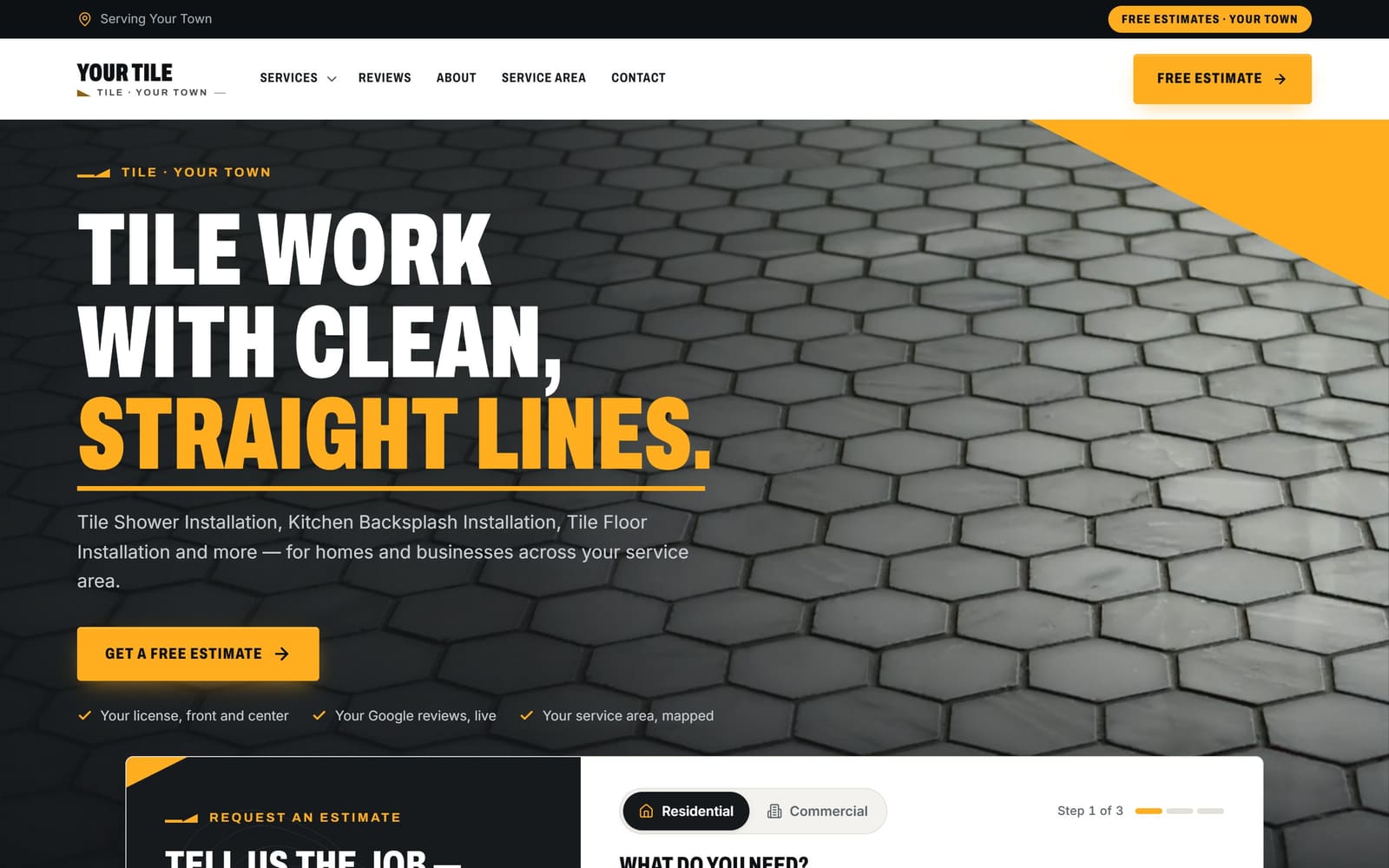
Vevang Sites runs Google and Meta ads for tile installers, with ad spend billed to your own card. We point shower retile, backsplash and regrout searches at pages that show that exact work, then track calls and forms so you know which jobs came from spend. Ads are an add-on; the site comes first.
Why it matters
A stain on the ceiling below the bathroom turns into a search within the hour. Search ads put you in front of that homeowner while the water is still active, before they call the first name they find.
Someone planning a bathroom has already saved photos of niches, herringbone floors and curbless showers. Photo ads on Meta and Instagram work for tile because your finished work is the pitch, not the copy.
Clicks sent to a homepage bounce. Clicks sent to a shower tile page with close-up photos, waterproofing detail and a form that takes photos of the failing grout turn into estimates you can schedule.
What we do
Before a dollar goes out, you need separate pages for shower tile, backsplash, floors and regrouting, a gallery of real jobs, and an estimate form that accepts photos. Ads amplify whatever the page already does.
Repair and regrout searches get their own budget, ad copy and page. Shower remodel and backsplash searches get another. The person with a leak and the person picking porcelain need different promises.
Tile is a crowded word. We add negatives for roof tile, ceiling tile, peel-and-stick, tile stores, DIY grout questions and hiring searches, so your budget stays on people who want an installer.
Google offers Local Services Ads by category and market, and flooring or remodeling categories are not open everywhere. We check your area, handle the license and insurance screening if it applies, and skip it if it does not.
Finished showers, a niche shelf, a large-format floor laid flat and level. We run those to a tight radius and back to people who already viewed your gallery or a remodel page.
Every call and form is tied to its campaign. We watch which ads produce booked estimates, not just leads, and shift spend toward the job sizes you actually want on the schedule.
Common mistakes
A homeowner searching to regrout a shower should not land on a page about your company history. One click, one job type, one page with photos of that exact work and a way to send pictures.
Broad tile terms pull roofing, ceiling panels, tile calculators and people pricing material by the box. You pay for all of it. Tight phrase matching and a real negative list cost less and book more.
If you will not do a four-tile patch or a small laundry floor, say so in the ad and on the page. Naming your minimum project up front saves the drive and the awkward estimate.
Tile work sits inside someone else's schedule, so bookings arrive in waves. Killing campaigns during a full month means starting cold later. Lower the budget and keep the repair ads breathing instead.
Checklist
How it works
You don’t sign anything to see it. Book a time, and your demo is ready before we talk.
Pick a time — often the same day. Tell us your website, or just your business name and city.
Before the call, we build a demo of your new website from your real business: your services, your area, your reviews.
We walk you through the demo on the call. You see exactly what you’d get before you spend anything.
We build it for real and put it live. After launch, the SEO Ranker agent keeps improving it every week.
Questions
No. Paid clicks land somewhere, and if that somewhere is a thin homepage with three phone photos, you are buying bounces. We build the site, the job-type pages and the gallery first, get tracking in place, then turn on ads once there is something worth sending traffic to.
Sometimes. Google opens Local Services Ads by category and market, and flooring or remodeling categories are not available everywhere. We check your area before promising anything. Where it is offered, we handle the screening steps. Where it is not, the budget goes to search and photo ads instead.
Google first for repair work. Someone with cracked grout or a soft floor by the drain is typing a search right now. Meta earns its place on remodels, where finished shower photos create demand that has not reached a search bar yet. Most tile installers end up running both, weighted by season.
You do, on your own card, straight to the ad platforms. Nothing about your spend is hidden inside a bundle. You see the account, the budget and what each campaign spent. Vevang handles the setup, copy, targeting, negatives and weekly adjustments around it.
Enough to hold a position in your service radius for the job types you want, and no more. A tight radius with strong negatives goes further than a wide net. We start conservatively, watch which searches produce booked estimates, then scale the campaigns that earn it.
Partly. General contractors and builders do search for tile setters when a sub falls through, and a page aimed at trade partners can catch that. But steady subcontract work comes from relationships. Ads are better at bringing you homeowners who hire you directly at full margin.
No, and nobody honestly can. Ad costs shift, competitors change budgets, and tile demand moves with remodel season. What we can do is track every call and form to its campaign, cut what is not converting, and show you clearly what your spend produced each month.
We pull back rather than shut off. Repair and regrout campaigns usually stay on at a lower budget since those jobs slot into short gaps. Remodel campaigns can pause or shift to a lead-time message so callers know your start date before they ever pick up the phone.
More for tile installers
Reviewed 2026-09-24
Your demo is free
Tell us your website — or your business name and city — and pick a time. We’ll have your demo ready before we talk.