Three searches, three intents
A backup at 9pm, an inspection deadline before closing, and a homeowner with no pumping records are three different people. One homepage cannot serve all three. Separate pages let each one land on the answer they typed.
 Sites/ Septic & sewer · SEO
Local SEO · Septic & sewer
Your customers search in three moods: panic, paperwork and planning. Your site should have a page ready for each one, in every county you pump.
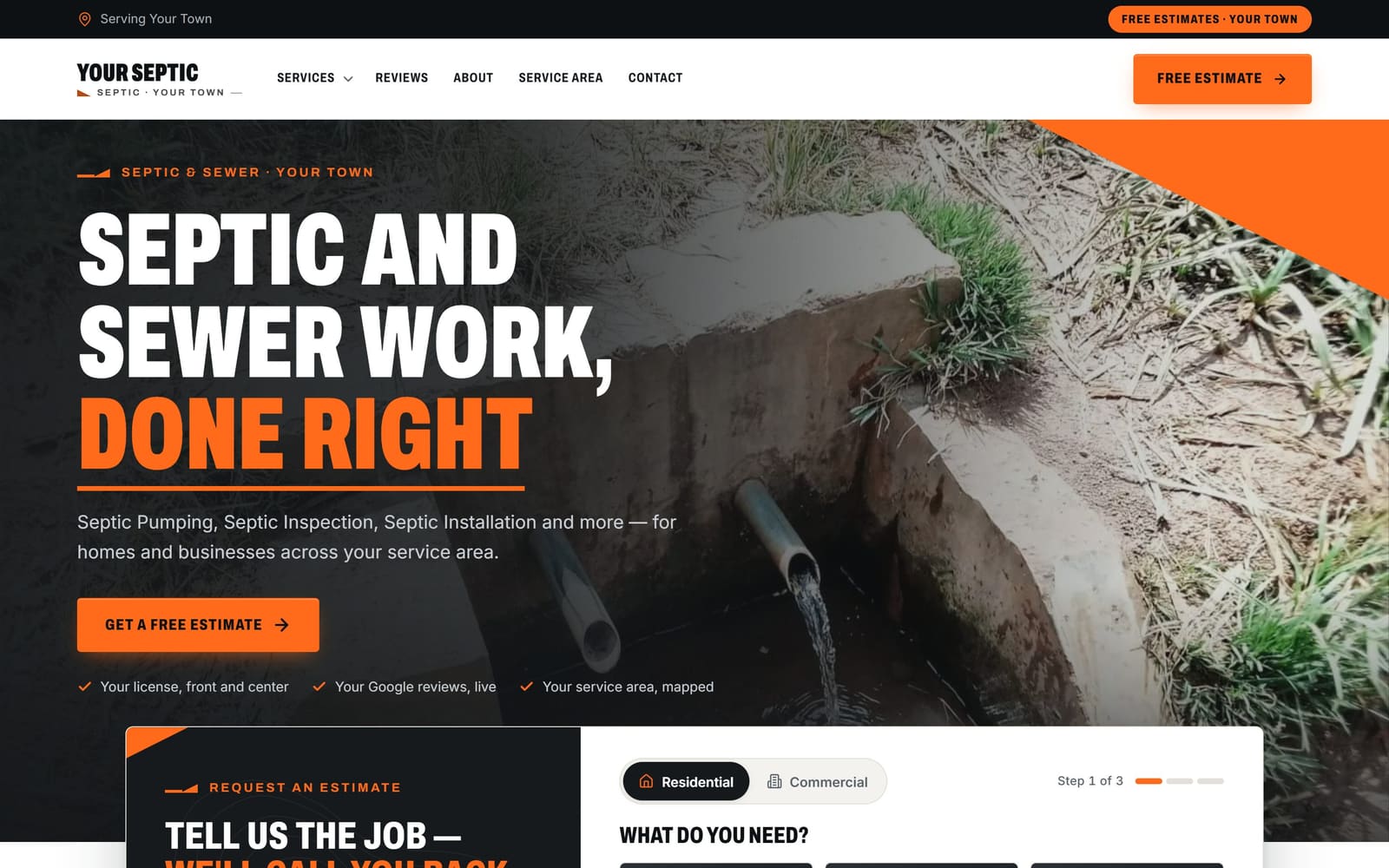
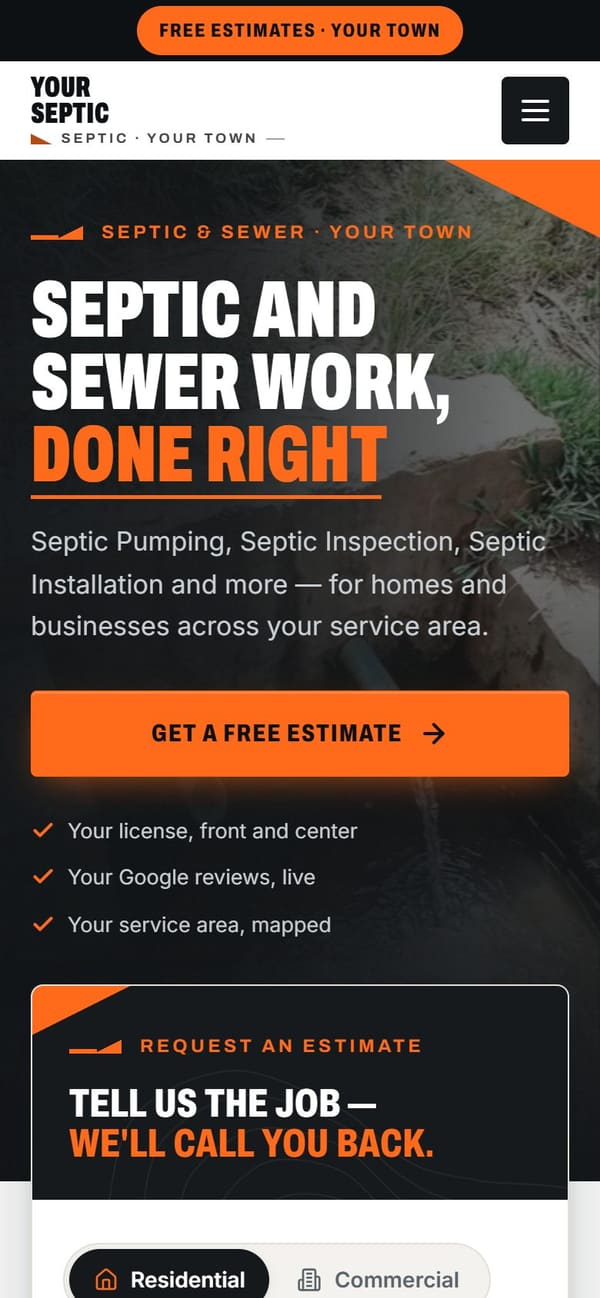
Vevang Sites builds and ranks septic company websites. We create pages for pumping, inspections, drain fields and repair, add county and town pages with real local detail, fix technical issues, and manage your Google Business Profile. Our SEO Ranker agent improves the site every week. We build a demo before your first call.
Why it matters
A backup at 9pm, an inspection deadline before closing, and a homeowner with no pumping records are three different people. One homepage cannot serve all three. Separate pages let each one land on the answer they typed.
Tank sizing, permit rules and inspection forms change by health department. A page that names the county, the rules and the forms outranks a generic service-area list, because it actually answers what the searcher needs to know.
A pumping call becomes a filter cleaning, a camera look, a riser install, then pumping again in a few years. Ranking for the first search is how you get on the maintenance schedule for that property.
What we do
We list what people in your area type: septic pumping, septic inspection for home sale, drain field failure, sewage backup, new system install, permits. Each gets its own page with its own title, not a bullet on a services list.
Backup searches happen on a phone with sewage in the tub. That page loads quickly, puts your phone number at the top, states your response window and says which counties you can reach today.
Agents and lenders search this one. The page covers what the inspection includes, how long the report takes, what happens if the tank fails, and which county forms you complete and file.
Each page names the health department, permit and record rules, common system types in that area, soil conditions and access issues. Generic copy with a town name swapped in does nothing.
Clear titles, headings that match the search, internal links from pumping to inspections to drain field repair, fast pages on mobile, and no broken or duplicate pages competing with each other.
SEO Ranker reviews rankings and search terms weekly, then updates content, adds pages for gaps and tightens what is close to the top. Heavy rain weeks and selling season get different attention.
Common mistakes
A single Services page covering pumping, inspections, repair and installs ranks for none of them. Google cannot tell what the page is about, and neither can the homeowner who needs an inspection date this week.
Many people search how often a tank should be pumped before they search for a company. Answer it honestly on your site, with the variables that matter, and you get the call when they decide it is time.
A footer listing forty towns with no content behind them looks thin. A handful of real county and town pages with permit detail, soil notes and local rules will outperform the whole list.
You fix the backup and never see them again. Link the emergency page to pumping schedules, riser installs and inspection services so the customer sees what comes next while they still trust you.
Checklist
How it works
You don’t sign anything to see it. Book a time, and your demo is ready before we talk.
Pick a time — often the same day. Tell us your website, or just your business name and city.
Before the call, we build a demo of your new website from your real business: your services, your area, your reviews.
We walk you through the demo on the call. You see exactly what you’d get before you spend anything.
We build it for real and put it live. After launch, the SEO Ranker agent keeps improving it every week.
Questions
Pages usually start showing in search within weeks, and competitive terms like septic pumping in a large county take longer. Nobody can guarantee rankings. What we can do is publish the right pages, fix technical issues, and keep improving weekly so your position moves in the right direction over months.
Both, on separate pages. Emergency searches bring urgent high-value work but are unpredictable. Pumping and inspection searches are steadier and start long maintenance relationships. We build for both, then adjust weight based on which terms actually produce calls in your area.
Yes, more than in most trades. Permit rules, inspection forms, required tank sizes and record keeping differ by health department. When your page names those specifics, you rank locally and you look like the company that already knows the process in that county.
We build a dedicated page written for buyers, sellers and agents. It covers what the inspection includes, turnaround on the written report, what a failed inspection means, and which county forms you file. Agents who find it once tend to call again for the next closing.
Saturated drain fields drive a wave of backup calls. We keep a drain field page and an emergency page ready, and SEO Ranker can push that content forward when weather and search activity shift. Same for holiday weeks and spring selling season.
No. We write it, then ask you to correct the technical details: system types you see most, counties you pump in, permit steps, what you will and will not take on. Your corrections are what make the pages better than generic septic copy.
A lot. Many septic searches show the map pack first. We manage your profile, keep categories and service areas accurate, request reviews and reply to them, and make sure the profile and site say the same thing about what you do and where.
We build a demo of your septic site before we talk, so you see real pages for pumping, inspections and your counties instead of a slide deck. On the call we go through it, you tell us what is wrong, and you decide from there.
More for septic & sewer
Reviewed 2026-09-24
Your demo is free
Tell us your website — or your business name and city — and pick a time. We’ll have your demo ready before we talk.