Septic questions are research questions
Most tank owners do not know the rules. They ask how often to pump, what a riser is, whether a soggy yard means a failed field. AI answers those first. Your pages should be the source that gets summarized.
 Sites/ Septic & sewer · AI search
AI search visibility · Septic & sewer
Homeowners now ask AI how often a tank gets pumped, what an inspection costs at closing, and who services their county. Your site should answer in language a machine can repeat.
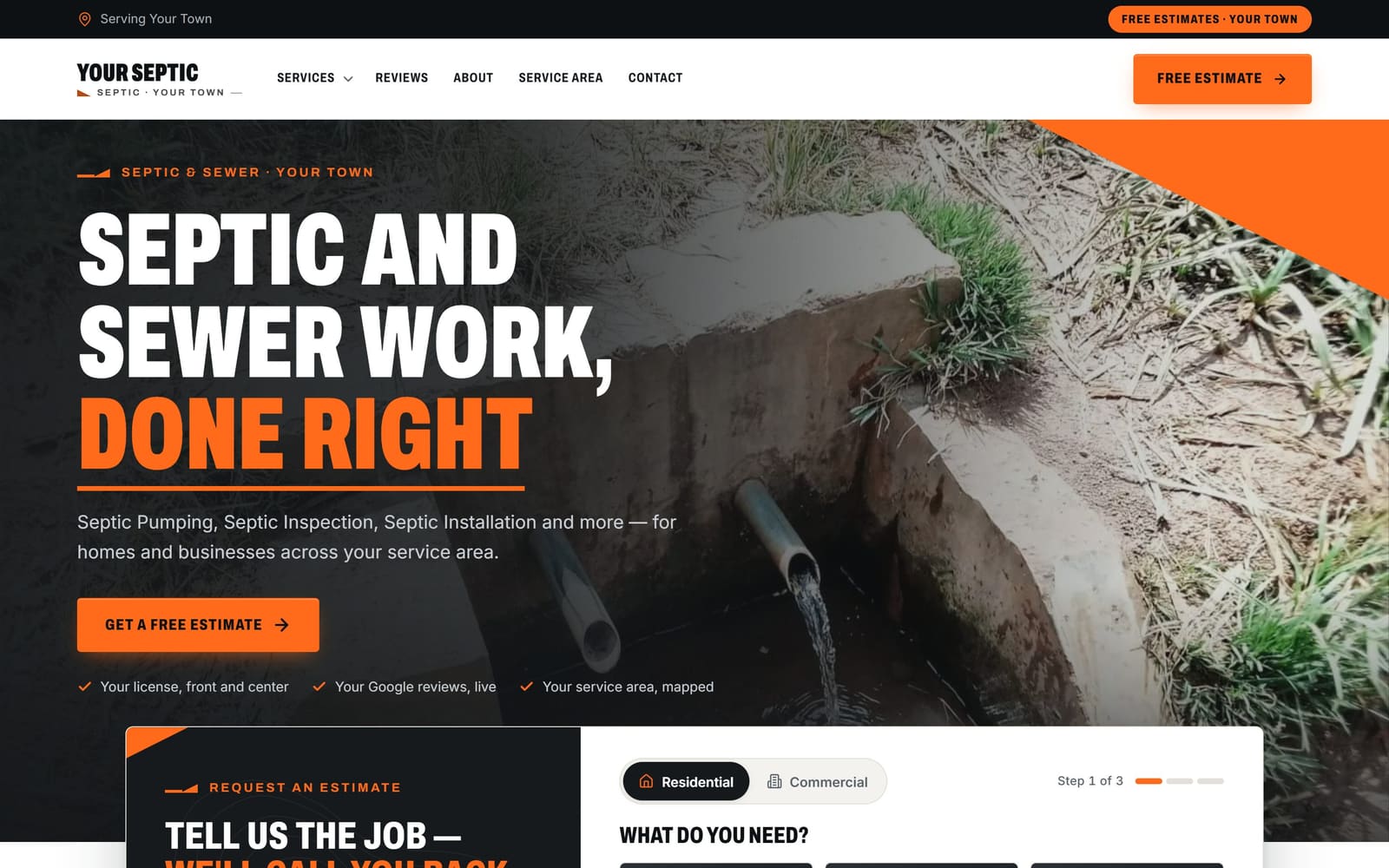
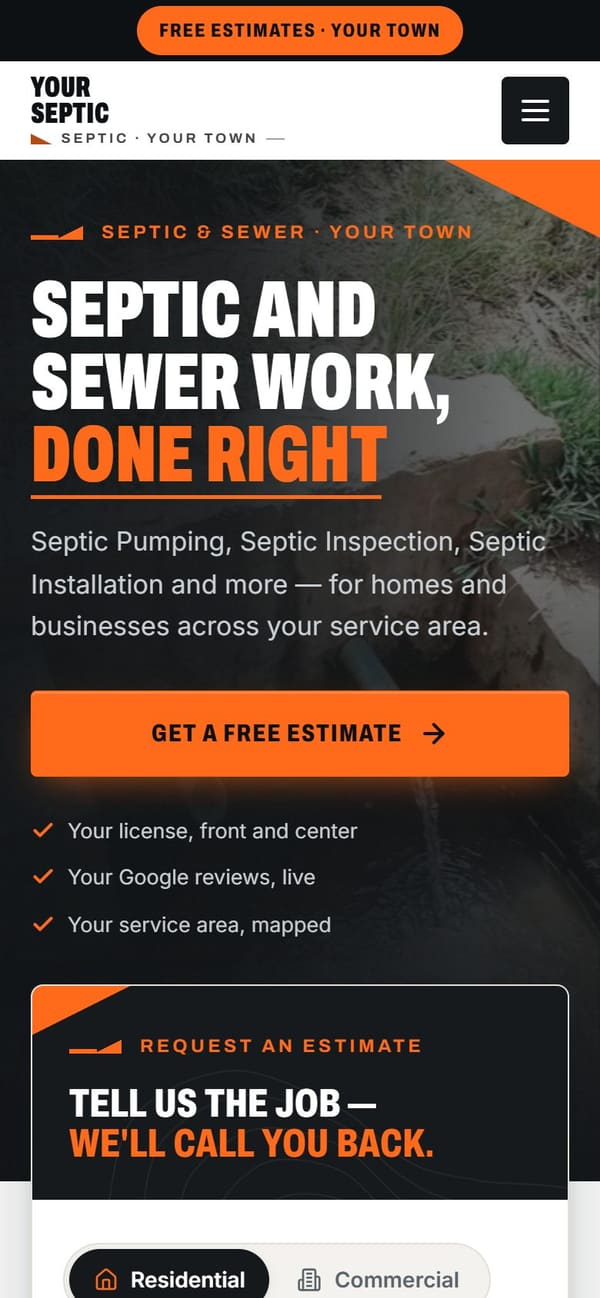
AI answers pull from pages that state facts plainly. Vevang Sites writes clear answer blocks for pumping, inspections and drain fields, keeps your name, address, phone, service counties and licenses identical everywhere, adds structured data, and builds pages for the questions septic customers ask. No AI tool can be promised to name you.
Why it matters
Most tank owners do not know the rules. They ask how often to pump, what a riser is, whether a soggy yard means a failed field. AI answers those first. Your pages should be the source that gets summarized.
Agents and buyers ask AI what a septic inspection involves in your county and how long a report takes. A page that answers that in plain sentences travels further than a page that just says "call us today."
If your phone number, county list or license number reads differently on your site, your Google Business Profile and old directory listings, machines have no single answer to give. Consistency is the quiet half of this work.
What we do
We start from your call log and inbox. Pumping intervals, tank size, permits, drain field failure signs, inspection turnaround for a closing. Those questions become headings on your site instead of buried paragraphs.
Each page opens with two or three sentences that answer the question directly, then the detail. A machine can lift the short answer. A homeowner standing over a gurgling drain can read it in five seconds.
One phone number, one address, one list of counties served, one set of licenses and certifications. We match your site to your Google Business Profile so the facts line up wherever they get read.
We mark up your services, service area, hours, emergency availability and FAQs in code. It tells search engines and AI tools what each page is, instead of leaving them to guess from paragraphs.
Health department rules, pumping schedules, inspection requirements and drain field repair get their own pages with local detail. Broad pages give AI nothing specific to repeat about your area.
SEO Ranker reviews your pages every week, tightens answers, adds the questions that came in since, and keeps facts consistent. Rankings and AI mentions can't be guaranteed by anyone, so we keep working.
Common mistakes
A site that says "septic pumping done right" answers no question. Write what pumping includes, how long it takes, what access you need, and what happens if the tank lid is buried. Explanation is what gets summarized.
Machines can't read a shaded map image. List your counties and towns as text, with a page for the ones that matter most. Rural customers search by county name more than by city.
Tracking numbers, an old cell, a dispatch line on the contact page. Pick the number that rings, use it everywhere, and keep the same one on your Google Business Profile.
Agents and buyers ask AI about inspections constantly. If your site only mentions inspections in a service list, there is nothing to cite. Give it a page with process, report and timing.
Checklist
How it works
You don’t sign anything to see it. Book a time, and your demo is ready before we talk.
Pick a time — often the same day. Tell us your website, or just your business name and city.
Before the call, we build a demo of your new website from your real business: your services, your area, your reviews.
We walk you through the demo on the call. You see exactly what you’d get before you spend anything.
We build it for real and put it live. After launch, the SEO Ranker agent keeps improving it every week.
Questions
No one can promise that, and anyone who does is guessing. What we control is clarity: plain answers on your pages, consistent facts across your site and Google Business Profile, and structured data. That gives AI tools something accurate to work with when your area and your services come up.
It overlaps. Local SEO gets you found on Google Maps when someone searches for septic pumping nearby. AI search work makes your pages easy to quote when someone asks a question in a chat window. Both need the same foundation: real pages, correct facts and clear writing.
Many do, often without calling it that. AI summaries appear at the top of Google results now, so a homeowner searching "how often pump septic tank" sees an answer before any listing. Buyers, agents and lenders handling closings ask questions this way too.
The ones your office answers by phone all day. How often to pump, what size tank you have, what a soggy patch in the yard means, whether a permit is needed for a repair, how long an inspection report takes, and what your county health department requires.
Yes. Someone with sewage in the tub is not reading a long page, but they may ask a phone assistant who is open now near them. Clear hours, emergency availability and a working phone number in your structured data help that answer be right.
Usually we build a new one designed for septic work, then keep improving it. Emergency path up top, pages for pumping, inspections, drain fields, repairs and installations, and county pages with local rules. Before our first call we build a demo so you can see it rather than imagine it.
We track calls and form fills so you can see where work comes from, not just traffic charts. You will also notice the calls change: fewer people asking what you do, more people who already read the answer and want a date on the schedule.
We show you the demo site we built for your company, walk through the pages your customers search for, and talk about your counties, your licenses and your busy season. If it fits, we launch it and SEO Ranker improves it every week. Book a call.
More for septic & sewer
Reviewed 2026-09-24
Your demo is free
Tell us your website — or your business name and city — and pick a time. We’ll have your demo ready before we talk.