Vevang AISites/ Pest control · SEO

Local SEO · Pest control

SEO for pest control companies that stays booked

Your customers don't search "pest control." They search bed bugs, yellowjackets in the soffit, or mice in the garage. Your site should have a page waiting for each one.

Pick a 15-minute time. Your demo is built before the call.

  • Your demo, built before the call
  • Improved every week
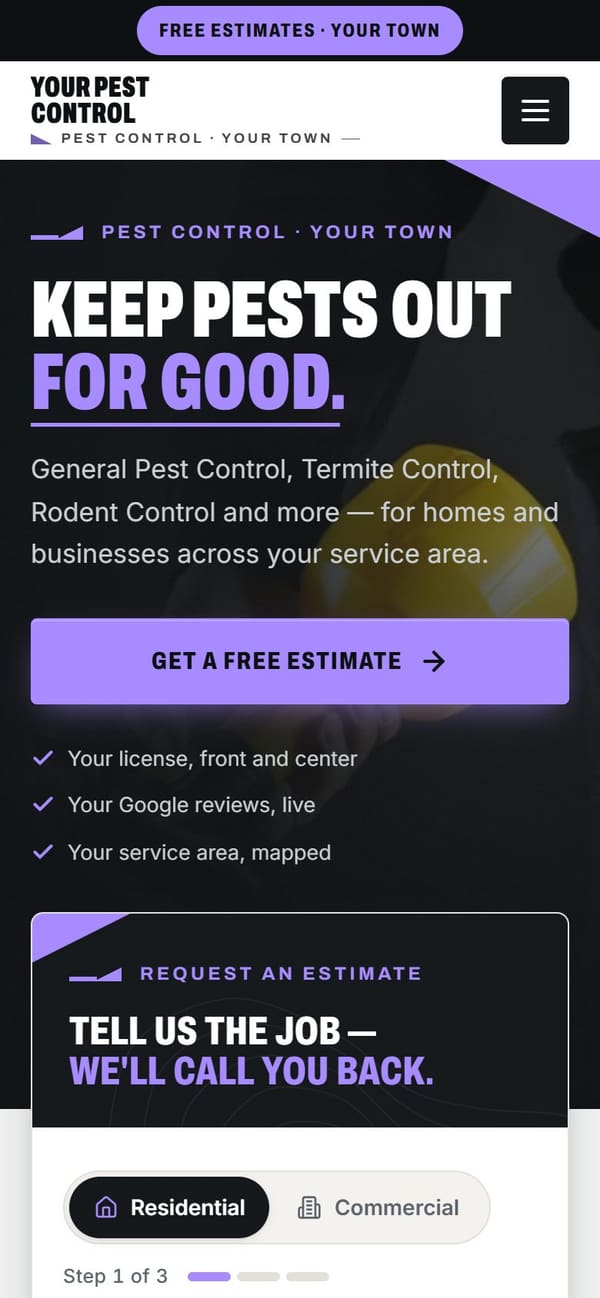
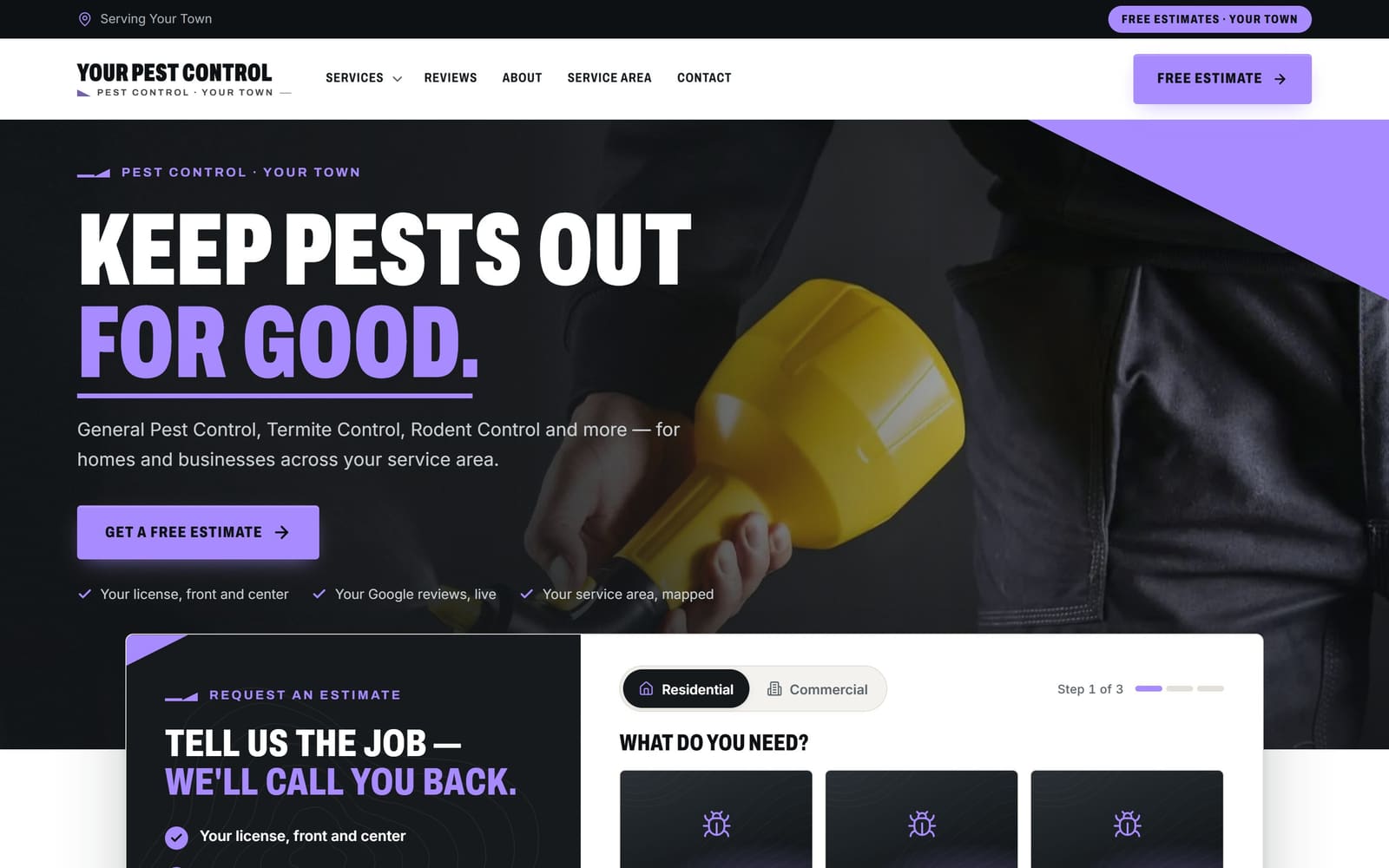
A sample pest control website, the kind Vevang builds and keeps improving.
The same sample site on a phone.
Sample demo · the kind of site we build for pest control

What does this include?

Vevang Sites builds your pest control website, then works on it every week. You get a page for each pest you treat, service-area pages for the towns you cover, clean structure and internal links, plus Google Business Profile management, review requests and call tracking. We build a demo before your first call.

Why it matters

Why it’s different for your trade.

01

People search the pest, not the industry

Someone who found droppings under the sink types the pest, the room and the town. A single services page mentioning rodents in a bullet list rarely answers that. A rodent control and exclusion page written for that moment can.

02

The calendar moves your traffic

Termite swarms and ants in spring, wasps and mosquitoes in summer, rodents pushing indoors when nights cool. Pages need to be live, linked and indexed before each wave. Publishing the wasp page in July means missing most of the season.

03

One sighting can become years of service

The first roach call often turns into a quarterly plan that renews. If your page is the one that gets the call, you keep that address. If the caller scrolls past you, a competitor holds it for years.

What we do

The work, step by step.

01

One page per pest you actually treat

Termites, bed bugs, rodents, ants, roaches, stinging insects, mosquitoes and ticks, wildlife. Each gets its own URL, its own photos and its own answers. We only build pages for work you want more of, so the phone rings for the right jobs.

02

Service-area pages with real local detail

Every town you cover gets a page that mentions the housing you actually work in: older homes with fieldstone foundations, crawl spaces, slab ranches, lake cabins. Technicians tell us what they see, and that detail goes on the page.

03

Answer the questions in the order they're asked

How does pricing work, how soon can you come, is it safe for the dog and the baby, do we have to leave, what if the bugs come back. Each treatment page handles these before the call, so the call is shorter.

04

Build the paperwork tracks

A termite and WDO inspection page written for agents, buyers and closing deadlines. A commercial page covering documented visits, logbooks and restaurant or property-manager expectations. These readers search differently and they book repeat work.

05

Fix structure and technical health

Fast mobile pages, click-to-call in the header, a form that accepts a photo of the bug, and internal links from general pest control down to each pest and out to each town. Clear structure also helps AI assistants describe what you treat.

06

Improve it every week and track what pays

Our SEO Ranker agent works the site weekly: seasonal pages pushed forward, new questions answered, links tightened. Call and form tracking shows which pest pages produce booked jobs, so effort goes where the money is.

Common mistakes

What usually goes wrong.

One services page with a bullet list of pests

Bed bugs, termites and wildlife are different searches with different fears and different prices. Listing them together gives Google one thin page to rank for a dozen intents, and gives the reader nothing that matches their situation.

Writing seasonal pages during the season

A new page needs time to be found and linked. Publish the stinging insect page in spring and the rodent exclusion page in late summer. Building in the middle of the rush means the wave passes before the page ranks.

Skipping safety, license and process details

Parents and pet owners want to know what is applied, where, and when they can come back inside. Leaving that off pushes the question to the phone, or to a competitor whose page already answered it.

Copying town pages and swapping the name

Ten near-identical service-area pages read as filler to both readers and search engines. A page that names the neighborhoods, the common construction and the pests you actually pull out of homes there is worth more than ten.

Checklist

What you can check today.

  • Give every pest you treat its own page and URL
  • Put your license and applicator certification on each service page
  • Answer pet, child and re-entry questions on every treatment page
  • Explain how recurring plans work, including re-treats between visits
  • Publish a termite inspection page aimed at agents and buyers
  • Link next season's pest pages from your homepage a month early
  • Add a form that accepts a photo of the bug or damage
  • Track calls and form fills separately for each pest page

How it works

You see it first. Then you decide.

You don’t sign anything to see it. Book a time, and your demo is ready before we talk.

  1. 01

    Book 15 minutes

    Pick a time — often the same day. Tell us your website, or just your business name and city.

  2. 02

    We build your demo

    Before the call, we build a demo of your new website from your real business: your services, your area, your reviews.

  3. 03

    See it, then decide

    We walk you through the demo on the call. You see exactly what you’d get before you spend anything.

  4. 04

    Launch, then improve weekly

    We build it for real and put it live. After launch, the SEO Ranker agent keeps improving it every week.

15 minutes on Google Meet. No obligation.

Questions

Straight answers.

How long before SEO brings in pest calls?

Nobody can guarantee rankings or a date. In practice, new pest and town pages need weeks to be crawled, linked and tested, and seasonal pages do best when they've been live through a prior cycle. The fastest movement usually comes from your Google Business Profile and from pages that already exist but were never finished.

Do I really need a separate page for every pest?

For the pests you want more of, yes. Someone searching bed bug treatment has different fears, different prep questions and a different budget than someone with pantry ants. One page cannot speak to both. If you don't want wildlife work, skip that page and put the effort into termites or rodents instead.

Should I list prices for treatments?

You don't have to post figures. You do need to explain how pricing is set: inspection first, then home size, severity, pest type and whether it's one visit or a plan. Readers who understand the process call anyway. Readers who find nothing about cost usually keep scrolling.

How do service-area pages work for a large territory?

We build pages for the towns you'll actually drive to, not every dot on the map. Each one names neighborhoods, common housing types and the pests you pull out of them. A handful of specific pages outperform a long list of thin ones that all say the same thing.

Does SEO help with termite inspections for home sales?

It can, because agents and buyers search differently. They need turnaround time, report format and closing deadlines addressed. A page written for that audience, linked from your termite page, gives agents something to bookmark and forward. Repeat referrals from a few agents often beat one-off treatment calls.

What about reviews?

Vevang sends review requests after jobs and helps you reply to what comes in, good or bad. We ask every customer, not a filtered group, and we never write or edit reviews. Replies that mention the pest and the town also give search engines and readers more useful signal about your work.

Will this help when people ask AI assistants for a pest company?

We can't promise any assistant will name you. What we can do is make your site easy to read: clear pest pages, stated service areas, license details, hours and consistent contact information. Tools like ChatGPT, Gemini and Perplexity summarize what they can parse, so clarity is the work that matters.

Do I need ads too, or is SEO enough?

Ads are optional and billed to your card, not marked up. They help most during a pest wave or when you're new in a town and organic pages are still young. SEO is the part that keeps working between waves. Most owners start with the site and profile, then add ads seasonally.

More for pest control

One team for the whole job.

Reviewed 2026-09-24

Your demo is free

See your new website on the call.

Tell us your website — or your business name and city — and pick a time. We’ll have your demo ready before we talk.

Pick a 15-minute time. Your demo is built before the call.