Pest calls do not wait
Someone who just found bed bugs or a wasp nest by the back door calls the first two or three companies they see. Paid placement puts you in that short list while organic pages are still climbing.
 Sites/ Pest control · Local ads
Local ads management · Pest control
Paid clicks only pay off when the ad, the pest page and the phone line all line up. We set up that path, then watch which pests actually book.
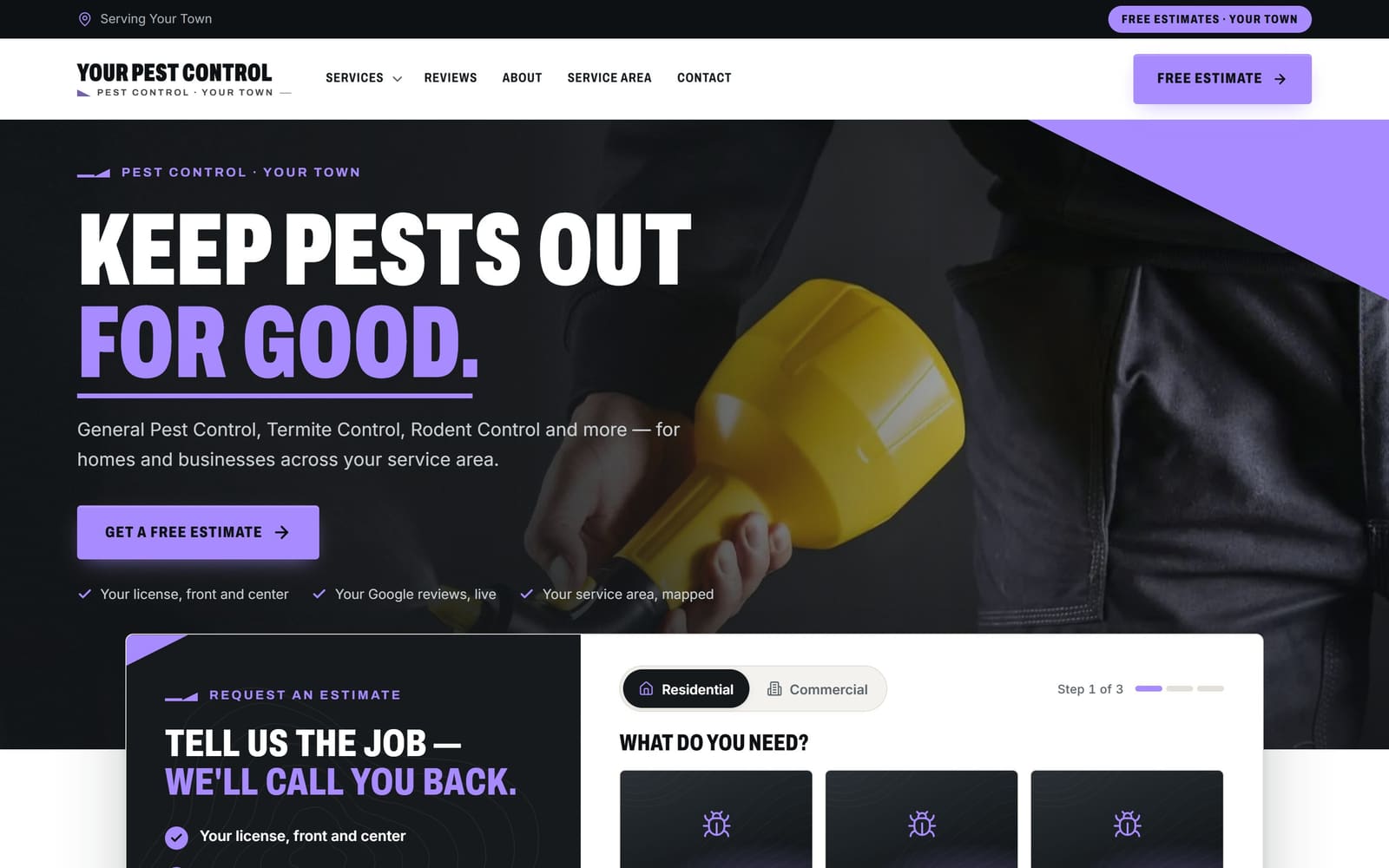
Vevang Sites builds your website and local SEO first, then runs Google Search, Local Services and Meta ads as an optional add-on. Ad spend is billed to your own card. Each ad points at the page for that pest, and every call and form is tracked so you see what booked.
Why it matters
Someone who just found bed bugs or a wasp nest by the back door calls the first two or three companies they see. Paid placement puts you in that short list while organic pages are still climbing.
A rodent job in October or a mosquito job in June often turns into quarterly service that renews. That changes the math on a paid lead, because you are not buying one visit.
Termite swarms, ant trails, wasps, then rodents pushing indoors. Ads let you move budget to the pest that is actually in people's houses this week instead of waiting for pages to catch up.
What we do
We build the pages before we buy a click. A bed bug ad needs a bed bug page with prep steps, heat or chemical options and what happens on treatment day. No landing page, no campaign.
Pest control qualifies in many areas. We help gather your license, insurance and background check paperwork so the Google Guaranteed badge sits above the regular search results when a homeowner looks for an exterminator.
Termite, bed bug, rodent, wasp and general pest searches behave differently and are worth different amounts. Separate ad groups let us bid and write copy for each instead of one blurred campaign.
A termite inspection ad lands on the termite page with the real-estate closing timeline spelled out. A commercial ad lands on the restaurant and warehouse page. Nobody gets dropped on the homepage.
Search catches emergencies. Meta catches the homeowner who has not searched yet. We run mosquito and quarterly plan offers to nearby neighborhoods, using clean yard and technician photos rather than close-up infestation shots.
Call and form tracking ties each lead to its campaign. We tell you which pests booked and which burned budget, and shift spend toward the ones filling routes.
Common mistakes
A homeowner searching bed bug treatment lands on a page listing twelve pests and a phone number. They leave. Every dollar of that click was spent to make someone read a menu.
Without them you pay for how to get rid of ants yourself, pest control salary, exterminator jobs and pests you do not treat. Search terms need review, because the waste hides in small repeated clicks.
Evening and weekend searches convert well for pest work, but only if a person picks up. Paying for clicks that hit voicemail hands that recurring plan to the next company on the list.
Spending flat through a quiet January and a swarming April means you underspend when demand is real and overspend when it is not. The calendar should drive the budget.
Checklist
How it works
You don’t sign anything to see it. Book a time, and your demo is ready before we talk.
Pick a time — often the same day. Tell us your website, or just your business name and city.
Before the call, we build a demo of your new website from your real business: your services, your area, your reviews.
We walk you through the demo on the call. You see exactly what you’d get before you spend anything.
We build it for real and put it live. After launch, the SEO Ranker agent keeps improving it every week.
Questions
No. Ads send traffic somewhere, and if that somewhere is thin, you pay to lose people. We build the site and pest pages first, get the organic work moving, then add ads as an option. Ads are an accelerator on a path that already converts, not a substitute for having one.
Pest control is an eligible category in many markets. Qualification depends on your license, insurance and a background check, and availability varies by area. We help you assemble the paperwork and submit it. Approval is decided by Google, not by us, so we treat it as one channel among several rather than the whole plan.
You do, on your own card, directly to the ad platforms. You keep the account and see every charge. We build, run and adjust the campaigns. That separation means you can read the spend yourself and there is no markup buried between you and the platform.
They work differently than search. Search catches the person who just saw a roach. Meta reaches the neighborhood before mosquito season or before rodents move indoors, selling quarterly plans and prevention. Keep the images clean, technicians and homes rather than close-up infestation photos, which often get flagged or simply repel people.
Often yes, because the job value is high and termite work can lead to ongoing bond or inspection revenue. But it only pays if the landing page answers prep questions and the phone gets answered. We track those campaigns separately so you can see whether they book or just spend.
Call tracking and form tracking tie each lead back to its campaign and keyword. You see which pest searches produced calls, and we ask you which of those turned into treatments or plans. That feedback is what we use to move budget, rather than clicks or impressions on their own.
No. Demand rises and falls with weather, swarms and competition in your area, and no one can guarantee rankings or lead volume. What we can do is control the parts that are controllable: matched landing pages, tight keywords, hours that match your answering, and honest reporting on what booked.
We pull back on pests that are dormant and push plan and prevention messaging instead. Winter is a reasonable time to sell quarterly service and rodent exclusion work. The budget follows the calendar rather than sitting flat while the phones go quiet.
More for pest control
Reviewed 2026-09-24
Your demo is free
Tell us your website — or your business name and city — and pick a time. We’ll have your demo ready before we talk.