Vevang AISites/ Pest control · Google Business Profile

Google Business Profile management · Pest control

Google Business Profile for Pest Control Companies

Most pest jobs start with someone tapping a map listing minutes after a sighting. We set your profile up properly and keep it current through every season.

Pick a 15-minute time. Your demo is built before the call.

  • Your demo, built before the call
  • Improved every week
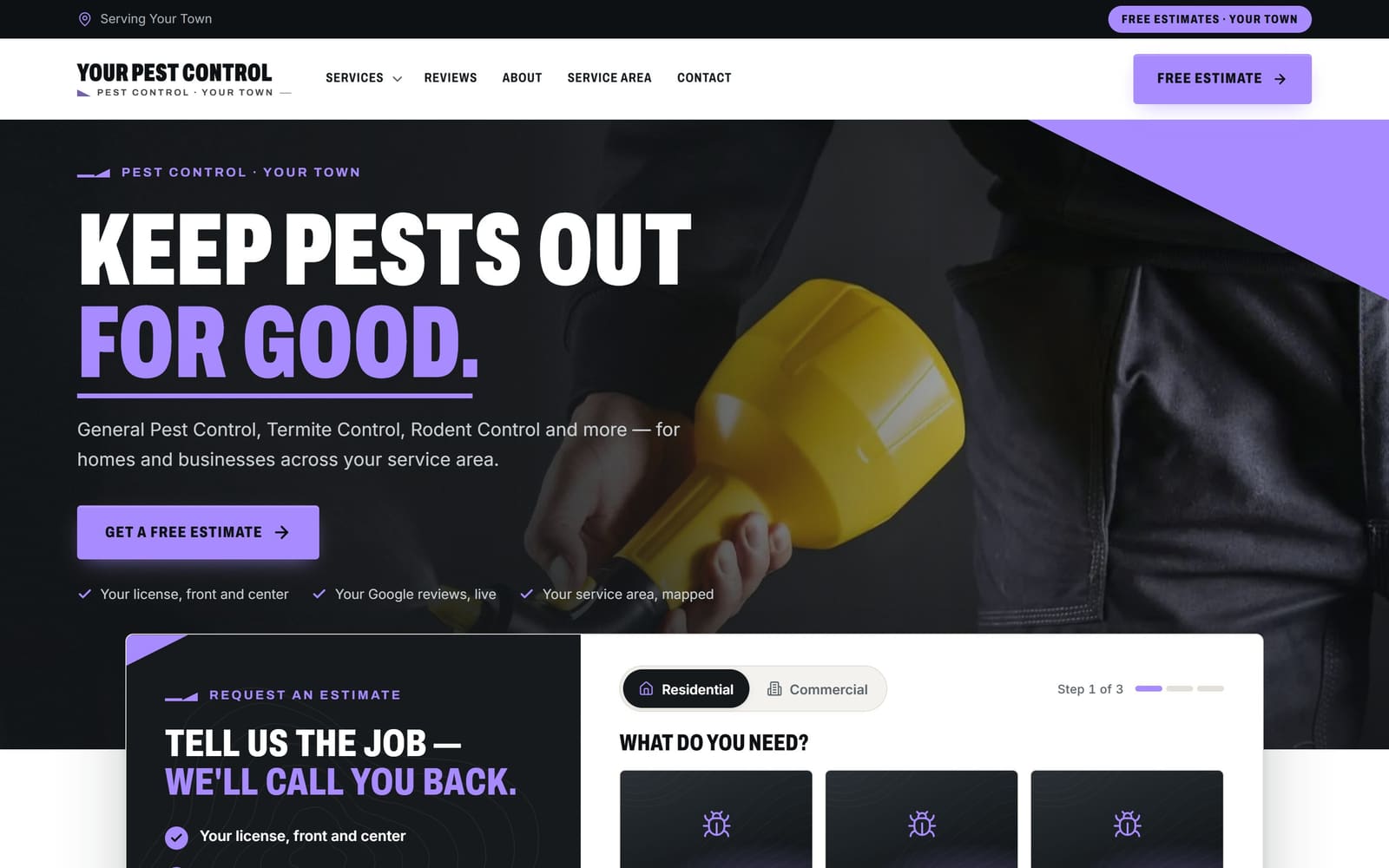
A sample pest control website, the kind Vevang builds and keeps improving.
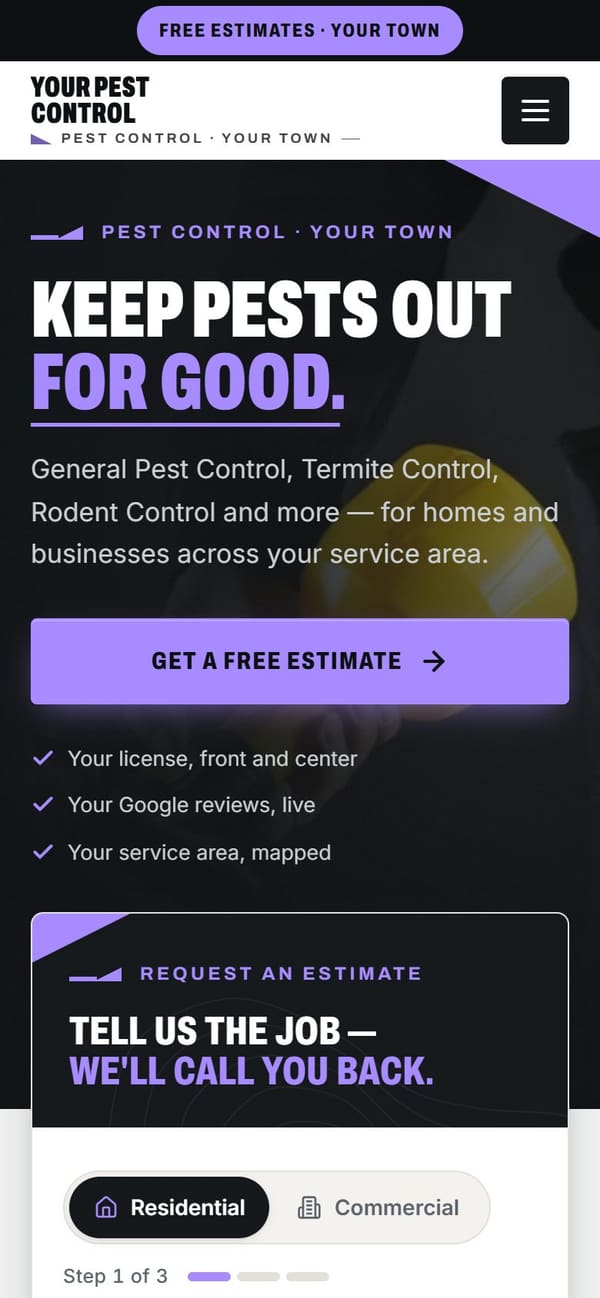
The same sample site on a phone.
Sample demo · the kind of site we build for pest control

What does this include?

Your Google Business Profile is the map listing pest customers tap when they see a mouse or roach. Vevang Sites sets it up, picks categories, lists every pest you treat, sets your service area, adds photos and posts, and keeps it matching your website every week.

Why it matters

Why it’s different for your trade.

01

The sighting search ends on the map

Someone finds droppings under the sink and searches on their phone. The map pack loads first. Whoever looks closest, open and reviewed gets the tap. Your profile is doing the selling before anyone ever reaches your website.

02

Categories decide which pests you hear about

Google matches searches to categories and services. If your profile only says pest control, termite inspection and bed bug searches may never surface you. Listing each pest you actually treat puts you in more of the searches that already fit your truck.

03

An active profile follows the season

Ants in spring, wasps in summer, rodents in fall. Posts and photos let you put the right work in front of people the week they start looking, instead of leaving a profile that was last touched two years ago.

What we do

The work, step by step.

01

Claim, verify and clean up what's there

We find every listing with your name on it, including old ones from a former address or a tech who made one. Duplicates get merged or removed so reviews and calls land on one profile.

02

Set categories and list every pest

Primary category for pest control, plus secondary ones only for work you truly do, like wildlife or animal control. Then a service entry for each pest: termites, bed bugs, rodents, ants, roaches, wasps, mosquitoes, with plain descriptions.

03

Define your service area and hours

We list the towns and zips your techs actually drive to, not the whole state. If you work out of a shop or home and meet customers at their property, we hide the address so the listing stays eligible and clean.

04

Add photos that show real work

Techs in uniform, trucks, bait stations, sealed entry points, crawlspace work, a finished inspection report. Not stock roaches. People want to see who is coming into their house and what the job looks like when it is done.

05

Connect the profile to your website

Each service links to the matching page, so a bed bug tap lands on your bed bug page instead of the homepage. We tag the links and phone number so you can see which calls and forms came from the map.

06

Keep it moving every week

SEO Ranker posts ahead of each pest wave, adds new photos, answers questions on the profile and drafts review replies. Hours change before holidays. Services get added as you add them. The listing never sits still for a season.

Common mistakes

What usually goes wrong.

One service called "pest control"

A homeowner searching for termite inspection or bed bug treatment is looking for those words. A single catch-all entry hides the specific work you do best and sends the paperwork jobs, like real-estate termite reports, to someone else.

Showing a home address

Plenty of pest operators run from a garage or small shop. Leaving that address public invites walk-ins, confuses the map and can put verification at risk. Serving customers at their location means the address should be hidden and the service area listed instead.

Going quiet in the slow months

Profiles that only get attention in June look abandoned in January. Winter is when you sell rodent exclusion and prevention plans. Steady posts and photos through the slow season keep you visible when the next wave starts.

Ignoring reviews about a callback

Pests come back sometimes, and that review will show up. No reply reads worse than the complaint. A short, calm answer explaining your retreatment terms tells the next reader how you handle problems.

Checklist

What you can check today.

  • Search your business name and merge any duplicate listings.
  • Set pest control service as your primary category.
  • Add one service entry per pest you treat.
  • Hide your address if you work at customer properties.
  • List only the towns your techs actually drive to.
  • Upload recent photos of techs, trucks and finished work.
  • Post about the pest that is coming into season next.
  • Reply to every review, including the difficult ones.

How it works

You see it first. Then you decide.

You don’t sign anything to see it. Book a time, and your demo is ready before we talk.

  1. 01

    Book 15 minutes

    Pick a time — often the same day. Tell us your website, or just your business name and city.

  2. 02

    We build your demo

    Before the call, we build a demo of your new website from your real business: your services, your area, your reviews.

  3. 03

    See it, then decide

    We walk you through the demo on the call. You see exactly what you’d get before you spend anything.

  4. 04

    Launch, then improve weekly

    We build it for real and put it live. After launch, the SEO Ranker agent keeps improving it every week.

15 minutes on Google Meet. No obligation.

Questions

Straight answers.

Should I hide my address on the profile?

If you go to the customer rather than having them come to you, yes. Hide the address and set a service area of the towns and zips you cover. This is standard for pest control and keeps stray visitors away from a home or small shop. If you have a real storefront with counter sales, show it.

Which categories should a pest control company use?

Primary category should be pest control service. Add secondary categories only for work you genuinely perform, such as animal or wildlife control if you trap and exclude. Padding the list with categories you do not serve brings calls you have to turn down and muddies what Google understands your business to be.

Can I show up in towns where I have no office?

You can appear for service-area searches in towns you cover, but map results lean heavily on distance from the searcher. The further a town is from your verified location, the harder it gets. Service area pages on your website plus a complete profile help, and no one can guarantee a map position anywhere.

Do posts on the profile actually do anything?

They give you a way to put seasonal work in front of people at the right moment: termite swarms in spring, wasp nests in summer, rodent exclusion in fall. They also show the listing is maintained. Treat posts as short, timely notes about real work, not marketing filler.

How should I handle a review after pests returned?

Reply publicly, briefly and without arguing. Note your retreatment or warranty terms and invite them to call the office. Future readers judge how you respond more than the complaint itself. Never write reviews yourself, offer anything in exchange for one, or ask only the customers you think are pleased.

Should termite inspections be listed separately?

Yes. Real-estate termite inspections are a different search with a different buyer, often an agent or a homeowner under a closing deadline. Give it its own service on the profile and its own page on the site, and mention the written report, since that is what the transaction actually needs.

What about messages and the booking button?

Turn messaging on only if someone will answer within minutes during business hours. A pest caller with a mouse in the kitchen moves to the next company fast. If nobody can watch messages, leave it off and make the phone number and request form the clear path instead.

What happens on the 15-minute call?

We build a demo of your site before we talk, so you see pest pages, a photo-friendly request form and how the profile would connect to it. On the call we review your current listing, point out what is missing, and you decide whether to go ahead. No prep needed.

More for pest control

One team for the whole job.

Reviewed 2026-09-24

Your demo is free

See your new website on the call.

Tell us your website — or your business name and city — and pick a time. We’ll have your demo ready before we talk.

Pick a 15-minute time. Your demo is built before the call.