Vevang AISites/ Locksmiths · Local ads

Local ads management · Locksmiths

Local Ads for Locksmiths Who Answer Fast

Paid search puts you in front of someone standing next to a locked car door. We only turn it on once the pages behind the ad are ready to take the call.

Pick a 15-minute time. Your demo is built before the call.

  • Your demo, built before the call
  • Improved every week
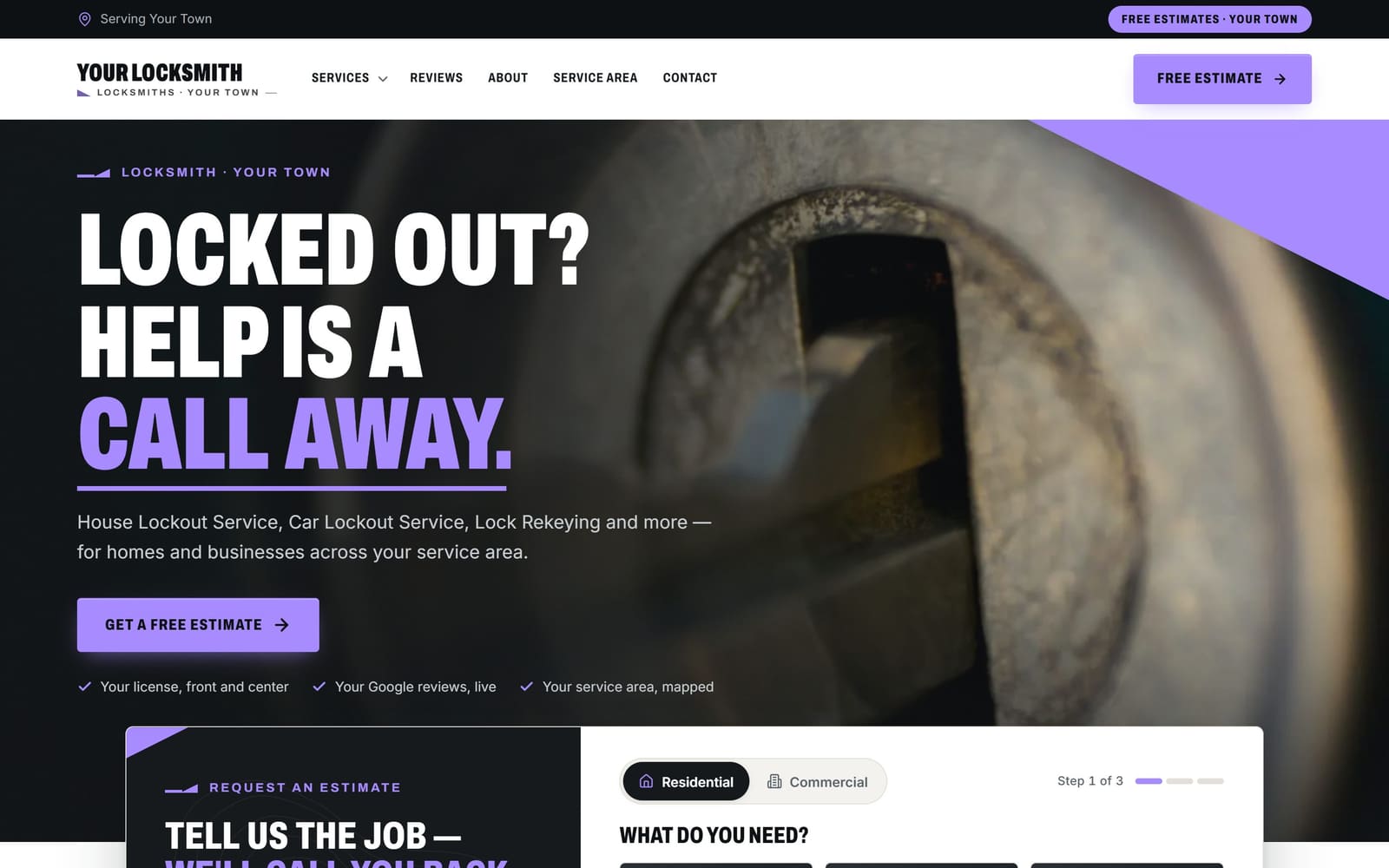
A sample locksmiths website, the kind Vevang builds and keeps improving.
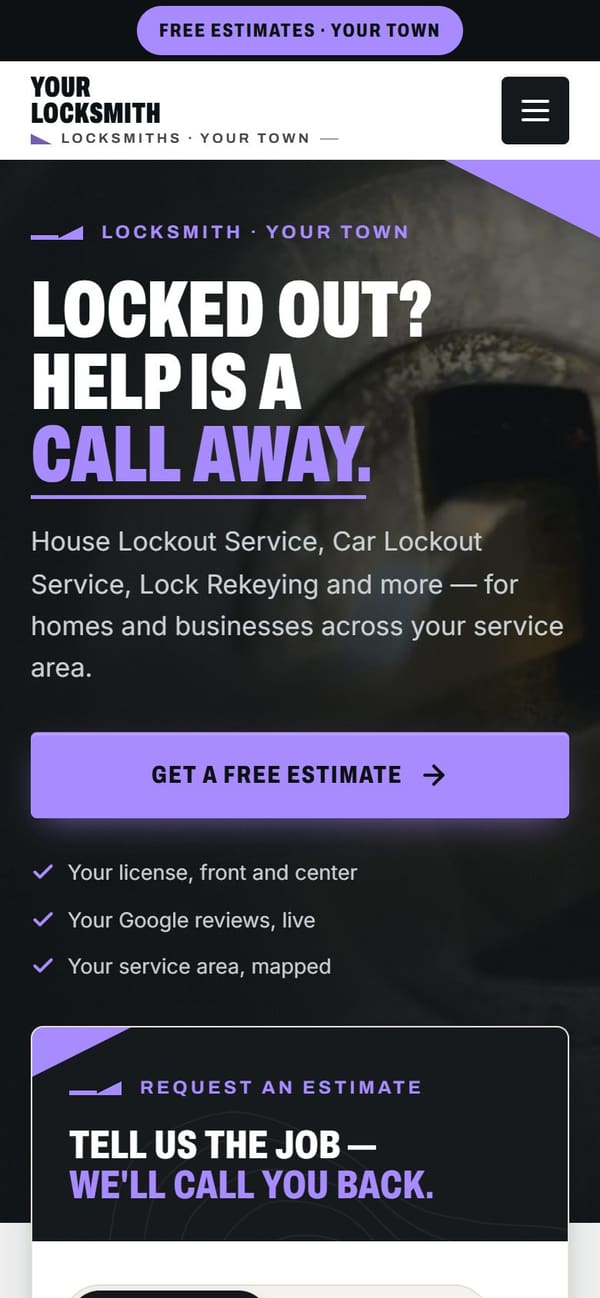
The same sample site on a phone.
Sample demo · the kind of site we build for locksmiths

What does this include?

Vevang Sites builds your locksmith website first, then runs local ads as an optional layer: Google search campaigns split by lockout, key and commercial work, Google Local Services Ads where you qualify, and Meta for rekey and property-manager jobs. Ad spend is billed to your own card, and calls are tracked.

Why it matters

Why it’s different for your trade.

01

Lockout searches are bought in seconds

Someone locked out scrolls for a few seconds and taps the first believable option. Paid placement sits above the map, so a well-written ad with your town in it can win the call before the organic listings are even read.

02

Your best jobs hide behind different words

Car key replacement, master keying and access control pay far better than a house lockout. Those searches happen at different hours with different intent, so they need their own campaigns, their own pages and their own bids.

03

Ads expose a weak phone process fast

Paid clicks show you exactly what happens after the tap. If nights go to voicemail or quotes get fumbled, tracking makes it visible in a week instead of a year, and you can fix the schedule or the script.

What we do

The work, step by step.

01

Get the pages ready first

Ads point at a lockout page, a car key page, a rekey page and a commercial page, not the homepage. Each one leads with tap-to-call, your town names, your license if your state requires it, and plain talk about how pricing works.

02

Apply for Local Services Ads

Google screens locksmiths closely, so we help you gather license documents, insurance and business verification and submit the application. If you clear it, the badge sits at the very top of the page where lockout searches start.

03

Split campaigns by job type

Emergency lockout, automotive keys and fobs, residential rekey, and commercial hardware each get their own campaign. Negative keywords block lock-picking tutorials, locksmith courses, job seekers and any service you do not actually run trucks for.

04

Track every call and form

Tracking numbers on ad pages tell you which campaign produced the call, how long it lasted, and whether anyone picked up. Missed calls after hours show up as a list you can act on the next morning.

05

Set hours and radius honestly

Ads run when you genuinely answer and inside the drive time you can actually cover. If you do not work 2am car lockouts, we do not pay for those clicks. Overnight bids go up only if you take overnight calls.

06

Review and shift spend weekly

Each week we read the call log with you in mind: which search terms produced booked jobs, which ones produced price shoppers, what to pause. Spend moves toward the job types your shop actually wants more of.

Common mistakes

What usually goes wrong.

Sending every ad to the homepage

A man standing beside his running car with the keys inside will not read your About section. He needs a lockout page with one phone number near his thumb. Generic landings burn spend on clicks that never dial.

Running night ads you cannot answer

Bidding on overnight lockouts and letting voicemail catch them is paying for your competitor's next customer. Either staff the phone for those hours or set the schedule to match when a human picks up.

Treating all locksmith clicks the same

A transponder key job and a house rekey are different money and different urgency. One bid and one ad group means your budget drains on the cheapest work while the profitable searches go to someone else.

Turning ads on instead of fixing the site

Paid traffic magnifies whatever is already there. If the site hides your service area, skips licensing or never explains pricing, ads just buy more people who bounce. Build the pages, then add spend.

Checklist

What you can check today.

  • Point each ad at its matching service page
  • Put tap-to-call above the fold on landing pages
  • Add negatives for courses, jobs and lock-picking how-tos
  • Set ad hours to match when you answer
  • Separate car key campaigns from lockout campaigns
  • Gather license and insurance docs for Local Services Ads
  • Use a tracking number on every ad page
  • Review the call recordings once a week

How it works

You see it first. Then you decide.

You don’t sign anything to see it. Book a time, and your demo is ready before we talk.

  1. 01

    Book 15 minutes

    Pick a time — often the same day. Tell us your website, or just your business name and city.

  2. 02

    We build your demo

    Before the call, we build a demo of your new website from your real business: your services, your area, your reviews.

  3. 03

    See it, then decide

    We walk you through the demo on the call. You see exactly what you’d get before you spend anything.

  4. 04

    Launch, then improve weekly

    We build it for real and put it live. After launch, the SEO Ranker agent keeps improving it every week.

15 minutes on Google Meet. No obligation.

Questions

Straight answers.

Should I run ads before my website is finished?

No. Ads send strangers to your worst page first. We build the site, the lockout and rekey pages, and the tracking, then add paid traffic once there is somewhere solid to send it. Organic work keeps running underneath, so you are not renting every call forever.

Do locksmiths qualify for Google Local Services Ads?

Often, but verification is stricter for this trade because of past fraud in the category. Google typically wants business verification, insurance and license documents where your state issues them. We help you assemble and submit everything. Approval is Google's decision, not ours, and we cannot promise it.

Who pays for the ad spend?

You do, on your own card, directly to the ad platform. You see every charge and you can cap or pause the budget whenever you want. We build and manage the campaigns and report on what the spend produced in calls and booked work.

Are Meta ads worth it for a locksmith?

Not for lockouts. Nobody scrolls social media while standing outside a locked door. Meta works better for planned work: rekey offers aimed at recent movers, landlord and property-manager audiences around tenant turnover, and commercial hardware or access control in your service area.

How do I stop paying for tire-kickers?

Negative keywords, tight radius targeting, and ad copy that states how your pricing works instead of teasing a low number. We also read call recordings to find the search terms that produce price shoppers and cut them. It takes a few weeks of trimming, not one setup.

Can you guarantee a certain number of calls?

No, and nobody honest can. Ad auctions, weather, moving season and your own answer rate all move the numbers. What we can do is track every call to a campaign, cut what wastes money, and show you plainly what the spend returned each week.

What happens to the ads if I stop?

They stop the day you pause them, which is why the website and local SEO come first. Your pages, your Google Business Profile and your reviews keep working when paid traffic is off. Ads are the dial you turn up in slow weeks.

What do I get before the first call?

We build a demo of your locksmith website before we talk, using your services, your towns and your real job types. On the 15-minute call you can see it, say what is wrong, and decide whether ads make sense on top of it.

More for locksmiths

One team for the whole job.

Reviewed 2026-09-24

Your demo is free

See your new website on the call.

Tell us your website — or your business name and city — and pick a time. We’ll have your demo ready before we talk.

Pick a 15-minute time. Your demo is built before the call.