Vevang AISites/ Lawn care · SEO

Local SEO · Lawn care

SEO that fills your mowing route

Homeowners search for a lawn service the weekend the grass gets tall. Local SEO decides whether they find your pages or the crew two towns over.

Pick a 15-minute time. Your demo is built before the call.

  • Your demo, built before the call
  • Improved every week
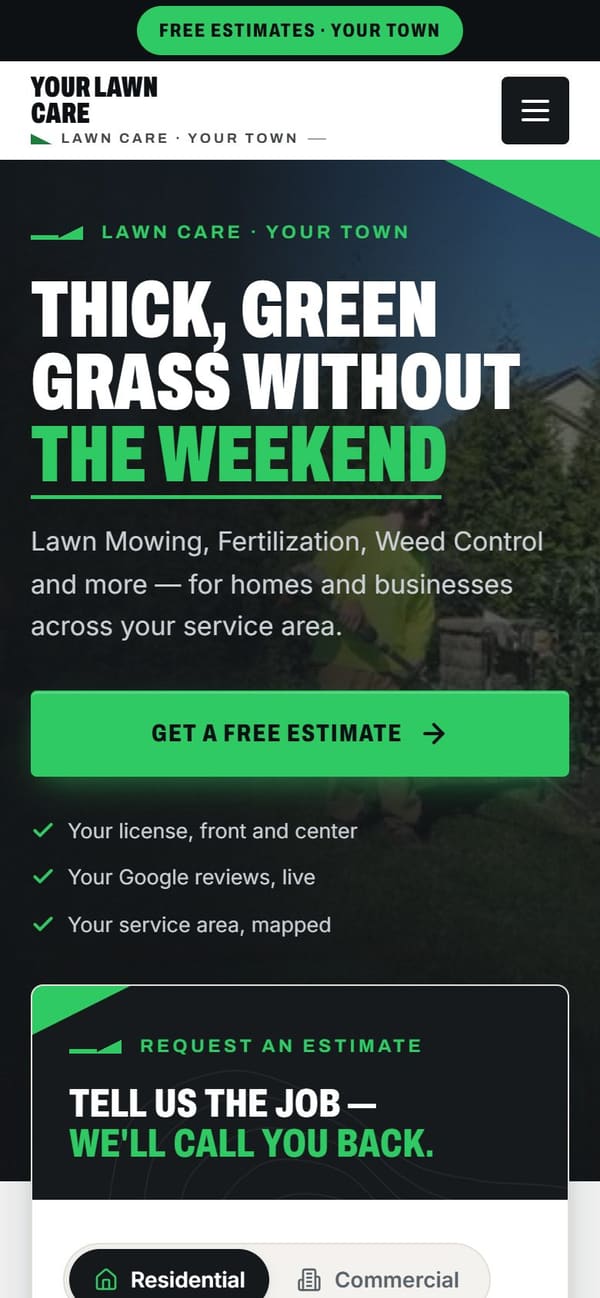
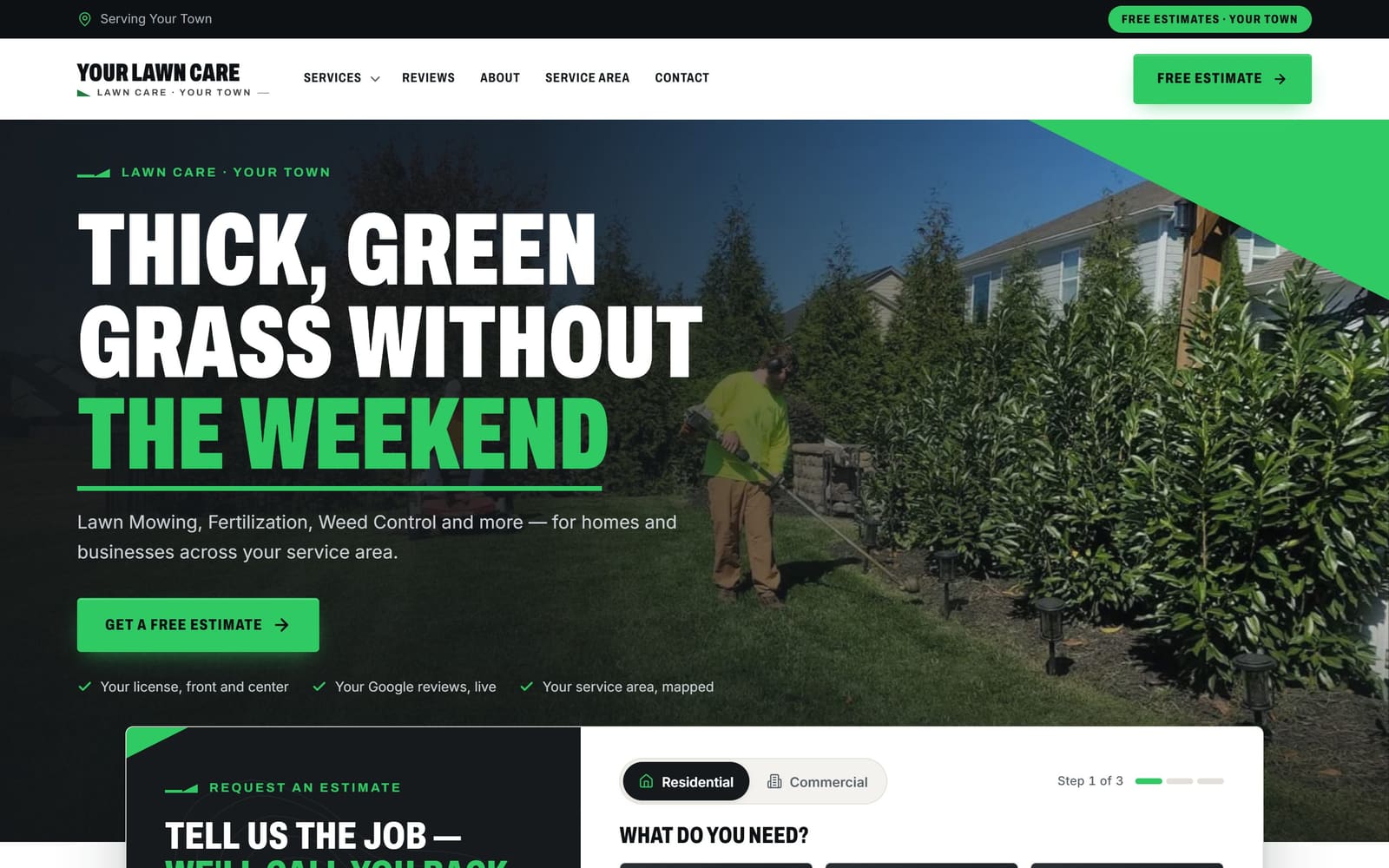
A sample lawn care website, the kind Vevang builds and keeps improving.
The same sample site on a phone.
Sample demo · the kind of site we build for lawn care

What does this include?

Vevang Sites builds your lawn care website and runs the local SEO: pages for mowing, fertilization, aeration and fall cleanup, service-area pages for the neighborhoods on your routes, clean on-page structure, and call tracking. SEO Ranker improves the site every week. We build a demo before your first call.

Why it matters

Why it’s different for your trade.

01

Search demand arrives in a rush

The first warm weekend creates a week of heavy searching, and most of those homeowners sign up with whoever is easy to find and easy to contact. Pages that rank in March are worth far more than pages that rank in June.

02

Route density beats raw traffic

A signup three miles off your route costs you drive time every week. Search pages built around the subdivisions you already service bring calls where your trailer is already parked, so each new lawn adds margin instead of miles.

03

One customer is a whole season

A mowing signup means weekly visits, treatment rounds and a fall cleanup, often again next spring. Ranking for the searches that lead to recurring plans is worth more than ranking for a one-time overgrown-yard cleanup.

What we do

The work, step by step.

01

Map searches to real pages

Homeowners search different things: weekly mowing, weed control, grub damage, aeration, leaf pickup. Each gets its own page with its own wording, timing and frequency. One combined services page cannot rank for all five.

02

Make plans the destination

Your mowing and treatment pages should lead to a plan: what a visit includes, how often you come, how billing works, what happens if it rains. Search brings the visitor; the plan page turns them into a route stop.

03

Build service-area pages you can defend

We write a page per town and per key subdivision, with the streets and neighborhoods you actually cut, local turf notes and nearby reviews. No copied paragraphs with the city name swapped, which search engines ignore anyway.

04

Fix structure and speed

Clear headings, one topic per URL, internal links from mowing to treatments to aeration, working forms, fast loading on a phone held in a driveway. Boring work that decides whether the good pages get read at all.

05

Publish ahead of each season

Aeration and overseeding content goes live weeks before late summer. Leaf removal goes up before the first drop. Pre-season signup pages run through winter, plus snow work if you offer it.

06

Track the calls, then improve weekly

Call and form tracking shows which pages produce signups and which produce driveway-only price shoppers. SEO Ranker works on the site every week, adjusting pages, links and copy based on what the search data shows.

Common mistakes

What usually goes wrong.

Calling yourself a landscaper everywhere

If your site says landscaping and design, you compete with patio and retaining wall companies while missing the person typing lawn mowing service near me. Use the words homeowners use for recurring cutting and treatment work.

One services page for everything

Mowing, fertilization, grub control and leaf removal squeezed onto a single page gives search engines nothing specific to rank and gives the homeowner no answer about frequency or cost structure.

City pages built from a template

Twenty pages with the same three paragraphs and a different town name do not rank and do not read well. Fewer pages with real neighborhood detail work better and reflect routes you can actually serve.

Hiding how signup works

No frequency, no plan detail, no lawn-size quote form. The homeowner who wanted weekly service leaves to find someone who explains it, and that recurring revenue lands on another route.

Checklist

What you can check today.

  • Give mowing, fertilization, aeration and leaf removal separate pages
  • Name the frequency and what each visit includes
  • Write one real page per town and top subdivision
  • Add a quote form that asks lawn size and gate access
  • Publish aeration content before late summer starts
  • List add-ons like hedge trimming and grub control
  • Ask every customer for a review after their first month
  • Check every page loads fast on a phone

How it works

You see it first. Then you decide.

You don’t sign anything to see it. Book a time, and your demo is ready before we talk.

  1. 01

    Book 15 minutes

    Pick a time — often the same day. Tell us your website, or just your business name and city.

  2. 02

    We build your demo

    Before the call, we build a demo of your new website from your real business: your services, your area, your reviews.

  3. 03

    See it, then decide

    We walk you through the demo on the call. You see exactly what you’d get before you spend anything.

  4. 04

    Launch, then improve weekly

    We build it for real and put it live. After launch, the SEO Ranker agent keeps improving it every week.

15 minutes on Google Meet. No obligation.

Questions

Straight answers.

How long before SEO brings lawn signups?

Local search work builds over months, not days. New service and neighborhood pages usually need several weeks to settle, and competitive mowing searches take longer. No one can guarantee rankings. The practical move is starting in winter so your pages are established before the first warm weekend brings the rush.

Should I put prices on my mowing pages?

Ranges help more than they hurt. A starting price for a typical lot size filters out people shopping for the cheapest cut and gives serious homeowners a reason to fill out the form. If your pricing depends on lot size and gate access, say that and ask for both.

Do I need a page for every town I serve?

Only for the ones you genuinely want more work in. A handful of detailed pages covering your real routes, with neighborhood names, turf conditions and local reviews, outperforms a long list of thin pages. Adding towns you cannot service efficiently just brings calls you will turn down.

What should I do with my site in winter?

Keep it working. Run a pre-season signup page so spring calls come in early, and keep aeration, cleanup and plan pages live for anyone planning ahead. If you plow or do snow removal, that gets its own page. Winter is also when new pages can age before the March surge.

How does SEO work alongside my Google Business Profile?

They support each other. Your profile handles map results and the calls that come from them; your site pages explain plans, frequency and treatment programs in detail. We manage both, link your service pages to the right profile services, and keep the details consistent across them.

Does this help when people ask AI assistants for a lawn service?

Assistants pull from clear, well-structured pages. When your site states your service area, plan frequencies, treatment rounds and contact details plainly, that information is easier for any system to read. We write for that clarity, but no one can promise an assistant will name your company.

Can SEO help me get commercial accounts?

Yes, with its own page. Property managers and HOA boards search differently than homeowners and want crew size, insurance, scheduling windows and contract terms. That belongs on a commercial page with its own wording, not mixed into a residential mowing page built for weekly signups.

What happens on the first call?

We build a demo of your lawn care site before we talk, so you are looking at real pages instead of a pitch. Fifteen minutes: we ask about your routes, your plans and your season, then show what we would change. You decide after that.

More for lawn care

One team for the whole job.

Reviewed 2026-09-24

Your demo is free

See your new website on the call.

Tell us your website — or your business name and city — and pick a time. We’ll have your demo ready before we talk.

Pick a 15-minute time. Your demo is built before the call.