Vevang AISites/ Lawn care · AI search

AI search visibility · Lawn care

Get found when homeowners ask AI about lawn care

Homeowners now type whole questions about mowing, weeds and plan pricing into AI assistants. Your site should answer those questions in plain text an assistant can read and repeat.

Pick a 15-minute time. Your demo is built before the call.

  • Your demo, built before the call
  • Improved every week
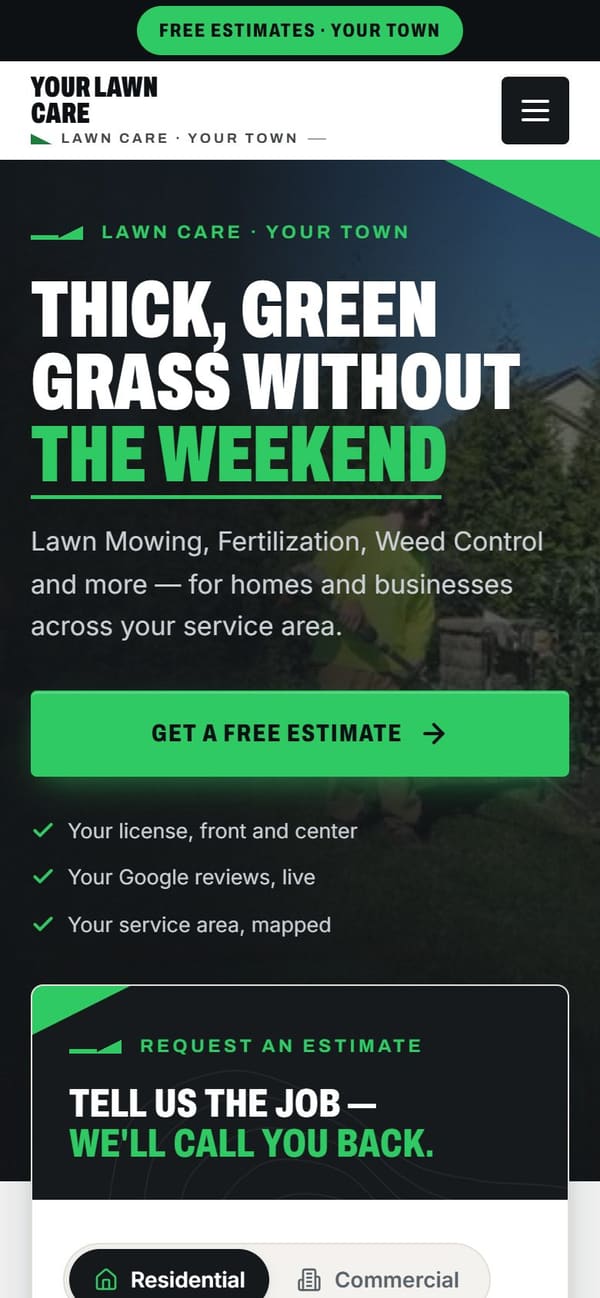
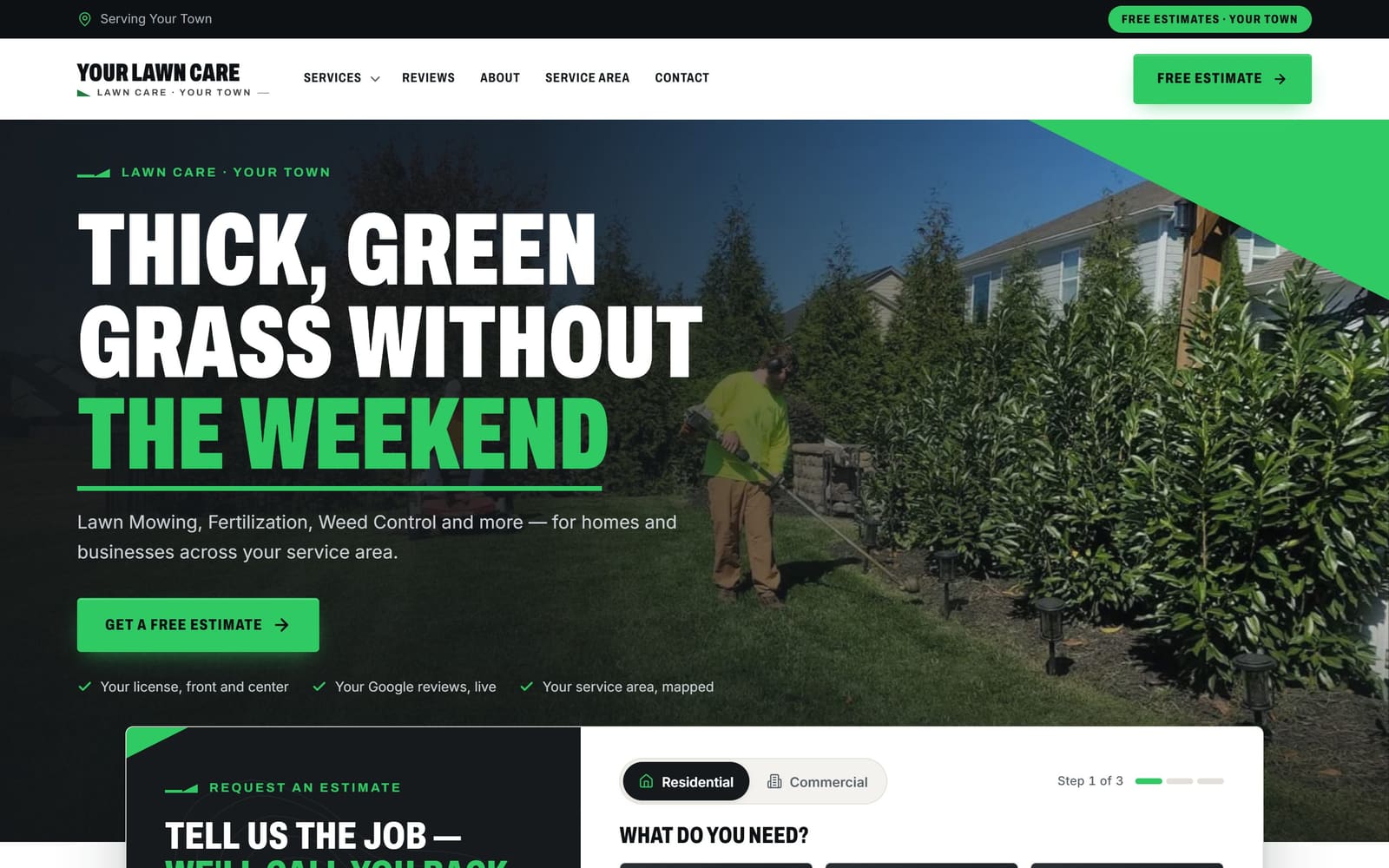
A sample lawn care website, the kind Vevang builds and keeps improving.
The same sample site on a phone.
Sample demo · the kind of site we build for lawn care

What does this include?

AI assistants answer lawn questions by reading plain text on the open web. Vevang Sites writes direct answers about your plans, mow frequency, lot-size pricing and service area, keeps your business facts identical everywhere, adds structured data, and improves the pages weekly. No one can promise an AI names your company.

Why it matters

Why it’s different for your trade.

01

The question comes before the search

People ask an assistant how often fescue should be cut in July, or what a treatment program includes, before they ever type "lawn service near me." If your pages answer those questions, you are part of that conversation instead of arriving after it.

02

One answer can be a full season

A mowing customer is a visit every week from spring to leaf drop, plus fertilization rounds and a fall cleanup. Being the company an assistant can describe clearly is worth more here than in trades built on one-off jobs.

03

Assistants trust facts that match

If your service area, phone number, hours and season start date say different things on your site, your Google Business Profile and old directory listings, an assistant has no clear version of your business to summarize. Consistency is the work.

What we do

The work, step by step.

01

Write the questions down first

We list what your customers actually ask: cost per cut for a quarter acre, whether you bag or mulch clippings, when crabgrass pre-emergent goes down in your area, how many treatment rounds a year, whether you require a contract.

02

Put a plain answer at the top of every page

Each mowing, fertilization, aeration and cleanup page opens with two or three direct sentences answering the question in that page's title. No slogans, no stock lawn photos standing in for text.

03

Publish your plans and how you price them

Weekly, biweekly, mow-only versus full program, what each treatment round covers. Say how price is figured, by lot size, frequency and terrain. Assistants can summarize a structured plan. They cannot summarize "call for a quote."

04

Name your routes and towns

We build pages for the neighborhoods and towns your trucks already pass, with the service day if you run fixed routes. That tells both assistants and homeowners whether you actually mow their street.

05

Add structured data and matching facts

Service, service area, hours and FAQ markup go on the site, and the same name, phone, address and coverage go on your Google Business Profile. We fix listings that still show an old number or a dropped town.

06

Improve it every week

SEO Ranker reviews your pages weekly, tightens answers, adds questions customers started asking, and refreshes seasonal content when aeration season or leaf season arrives. Call and form tracking shows which pages produce signups.

Common mistakes

What usually goes wrong.

Treating price as a secret

A page that refuses to hint at cost gives an assistant nothing to work with. You do not need a fixed number. Explain the range for a small city lot versus a half acre and what changes it.

Letting seasonal pages go stale

Your leaf removal page still names last fall's cutoff date and your aeration page reads like September is coming. Outdated timing makes the whole site look abandoned, and assistants read it as current.

Service pages that are only photos

Striped lawns and before-and-afters prove you can mow. They contain no readable text about frequency, clipping handling, edging, trimming or what happens after a rainy week. Describe the visit in words.

A service area that changes by page

Your homepage lists five towns, your Google Business Profile lists three, and an old directory shows a county you left years ago. Pick the real coverage and repeat it in the same words everywhere.

Checklist

What you can check today.

  • Write a two-sentence answer at the top of each service page
  • List what every mowing plan and treatment round includes
  • Explain how lot size and frequency change your price
  • Publish the towns and neighborhoods you actually route
  • Update aeration, overseeding and leaf dates for this season
  • Match your phone, hours and coverage on Google Business Profile
  • Answer bagging, mulching and rain-delay questions in plain text
  • Ask every customer for a review after their first month

How it works

You see it first. Then you decide.

You don’t sign anything to see it. Book a time, and your demo is ready before we talk.

  1. 01

    Book 15 minutes

    Pick a time — often the same day. Tell us your website, or just your business name and city.

  2. 02

    We build your demo

    Before the call, we build a demo of your new website from your real business: your services, your area, your reviews.

  3. 03

    See it, then decide

    We walk you through the demo on the call. You see exactly what you’d get before you spend anything.

  4. 04

    Launch, then improve weekly

    We build it for real and put it live. After launch, the SEO Ranker agent keeps improving it every week.

15 minutes on Google Meet. No obligation.

Questions

Straight answers.

Will this make ChatGPT recommend my lawn company?

No one can promise that, and anyone who does is guessing. What you can control is whether an assistant finds clear, current, consistent information about your plans, coverage and pricing logic. That is the same work that helps a homeowner decide in thirty seconds on your site. We do the work and skip the promise.

Is this different from regular local SEO?

It overlaps. Local SEO gets you into the map results when someone searches "lawn service near me." AI clarity is about being summarizable: direct answers, structured data, and facts that match across your site and listings. We do both together, because the same weak page hurts you in search results and in AI answers.

Do I really have to put prices on my site?

You do not need a published number for every yard. You need the logic. Say a standard suburban lot falls in a range, that price moves with size, slope and how overgrown it is, and that a free on-site or satellite estimate confirms it. That is enough for an assistant and for a homeowner.

What lawn questions do homeowners ask AI?

How often to mow in peak growth, whether to bag or mulch clippings, when to apply pre-emergent, why the lawn has brown patches, whether grubs or fungus caused the damage, when to aerate and overseed, and what a fertilization program should include. Your pages should answer the ones tied to services you sell.

Does my Google Business Profile affect AI answers?

It is one of the clearest public records of your business, so it matters. We keep the categories, service list, hours, service area and photos accurate, post seasonal updates, and reply to reviews. When your profile and your site say the same thing, there is one version of your business to read.

How long before I see anything?

Search and AI results move at their own pace and nobody controls the timing. The site itself works immediately: clearer plan pages and an easy quote form convert the traffic you already get. Weekly improvements build from there. Call and form tracking tells you what is producing signups rather than guesswork.

I sign most customers in March. Is it worth starting in winter?

Winter is a good time. Pages need weeks of crawling and refinement before the first warm weekend, and that weekend is when a season of recurring routes gets decided. Starting early also lets you take next-season signups and promote snow work if you run it.

What happens before the first call?

We build a demo of your lawn care site before we talk, using your services, your towns and your existing reviews. You spend fifteen minutes looking at real pages instead of a slide deck, and you can tell us what we got wrong about your routes and plans.

More for lawn care

One team for the whole job.

Reviewed 2026-09-24

Your demo is free

See your new website on the call.

Tell us your website — or your business name and city — and pick a time. We’ll have your demo ready before we talk.

Pick a 15-minute time. Your demo is built before the call.