The spring window is short
Most recurring signups happen over a handful of warm weekends. Ads put you in front of a homeowner on the afternoon they decide they are done mowing, instead of waiting for organic pages to catch up mid-season.
 Sites/ Lawn care · Local ads
Local ads management · Lawn care
Paid ads work for lawn care when they are aimed at the streets you already drive and the weeks people actually sign up. We build the site first, then add ads if they make sense.
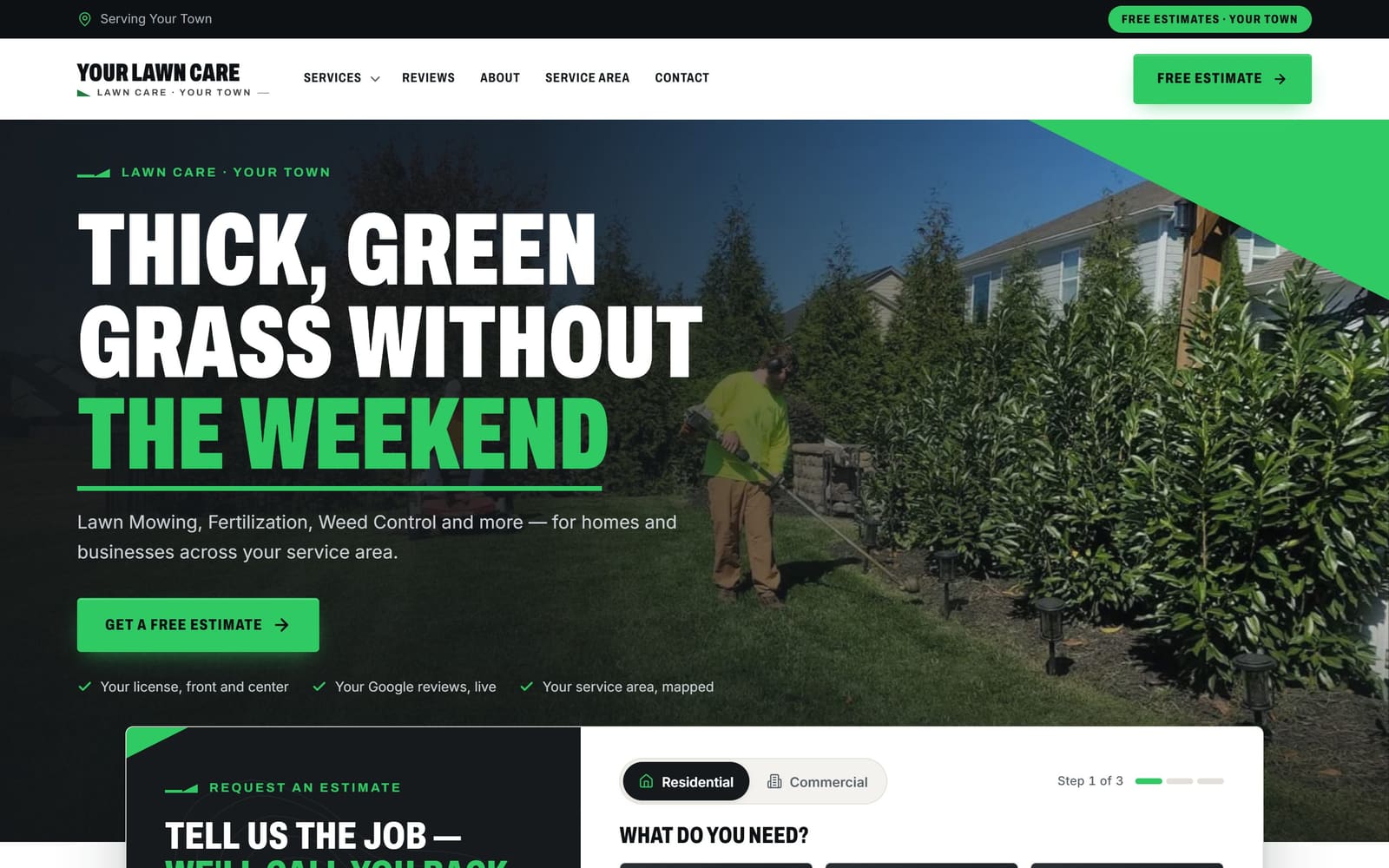
Vevang Sites builds your lawn care website, then runs optional Google and Meta ads pointed at pages built for mowing plans and quote requests. Ad spend goes on your own card. We track calls and forms, watch cost per signup by neighborhood, and shift budget with the mowing season.
Why it matters
Most recurring signups happen over a handful of warm weekends. Ads put you in front of a homeowner on the afternoon they decide they are done mowing, instead of waiting for organic pages to catch up mid-season.
A weekly mow customer often adds treatments, aeration and fall cleanup, then renews. That changes what a lead is worth to you. It also means you only learn if ads paid off by tracking signups, not clicks.
Ads let you target the subdivisions your trailer already visits. A customer two streets from Thursday's route is profitable. The same customer across town eats drive time and breaks your schedule. Targeting decides which one you buy.
What we do
We build your mowing, fertilization, aeration and cleanup pages and start weekly SEO work. Ads to a weak site waste money. Once the pages convert on their own, paid traffic has somewhere useful to land.
You tell us which days have open capacity and which neighborhoods you want more density in. We build the targeting around those streets and leave out areas you would rather not drive to.
Mowing ads go to a mowing plan page. Aeration ads go to the aeration page. Each has a short quote form asking for the address and lot size, plus what to expect on service day.
Google search ads for people typing lawn service near me, Local Services Ads if your area and category qualify, and Meta for neighborhood campaigns, seasonal pushes and reaching people who started a quote and stopped.
Every ad call and form is tracked. We mark which ones became recurring customers instead of one-time cleanups, so you can see cost per signup rather than a pile of lead counts.
Heavier before the first warm weekend, steady through the fired-provider stretch of summer, then shifted to aeration, overseeding and leaf removal. Off-season spend goes to early signups and snow work if you offer it.
Common mistakes
Running the same daily spend in February and July ignores how lawn customers behave. You underspend during the weeks people choose a provider for the whole season and overspend when routes are already full.
Someone searching for grub treatment or fall leaf removal lands on a general page and leaves. Send each ad to the page that answers that exact problem, with a quote form right there.
Plenty of ad calls are sod questions, mower repair or a single overgrown lot an hour away. If nobody marks which calls became weekly customers, you cannot tell a good campaign from an expensive one.
Without them you pay for mower parts, equipment sales, hiring searches and people looking up how to kill crabgrass themselves. Lawn terms attract a lot of traffic that will never hire a crew.
Checklist
How it works
You don’t sign anything to see it. Book a time, and your demo is ready before we talk.
Pick a time — often the same day. Tell us your website, or just your business name and city.
Before the call, we build a demo of your new website from your real business: your services, your area, your reviews.
We walk you through the demo on the call. You see exactly what you’d get before you spend anything.
We build it for real and put it live. After launch, the SEO Ranker agent keeps improving it every week.
Questions
No. Ads send people to a page, and if that page does not explain your plans, service day or pricing structure, the click is wasted. We build the site and start organic work first. Ads are an optional add-on once the pages are converting and you know which routes need filling.
It depends on your category and area. Availability changes by market, so we check your address before promising anything. If Local Services Ads are open to you, we help with the setup and screening steps. If not, we run standard search ads pointed at your mowing and treatment pages.
Start with an amount that fills one open day on a route without straining cash flow, then adjust from what the tracking shows. Ad spend is billed straight to your card by the ad platforms, so you see every charge. We do not mark it up or hold your account.
Google catches people already searching for a lawn service, which is where most new signups start. Meta is better for neighborhood awareness, seasonal pushes like aeration and fall cleanup, and reaching people who opened your quote form and never finished. Many lawn companies run Google first and add Meta seasonally.
No. Nobody can guarantee ad results or search rankings, and you should be careful with anyone who does. What we can do is aim ads at the neighborhoods you want, track calls and forms, and stop spending on the campaigns and areas that are not producing signups.
Light spend that takes early signups for next season, plus snow work if you offer it. Late winter is when we raise budget, because people start thinking about mowing before the grass moves. Going dark completely means restarting from zero right when the season opens.
Call tracking and form tracking show which campaign, keyword and neighborhood produced each lead. You tell us which turned into a weekly customer. That gives you cost per signup by area, so you can put more budget behind the routes that are actually profitable to service.
They are separate. Paid clicks do not lift organic position. What ads do is bring in work while SEO Ranker keeps improving your pages week after week. Over time the organic side should carry more of the load, and ads become something you turn up in spring and down in summer.
More for lawn care
Reviewed 2026-09-24
Your demo is free
Tell us your website — or your business name and city — and pick a time. We’ll have your demo ready before we talk.