Vevang AISites/ Hauling & dumpsters · SEO

Local SEO · Hauling & dumpsters

SEO for hauling and dumpster rental companies

Your customers search by size, by material and by town. Your site should answer all three before the phone rings.

Pick a 15-minute time. Your demo is built before the call.

  • Your demo, built before the call
  • Improved every week
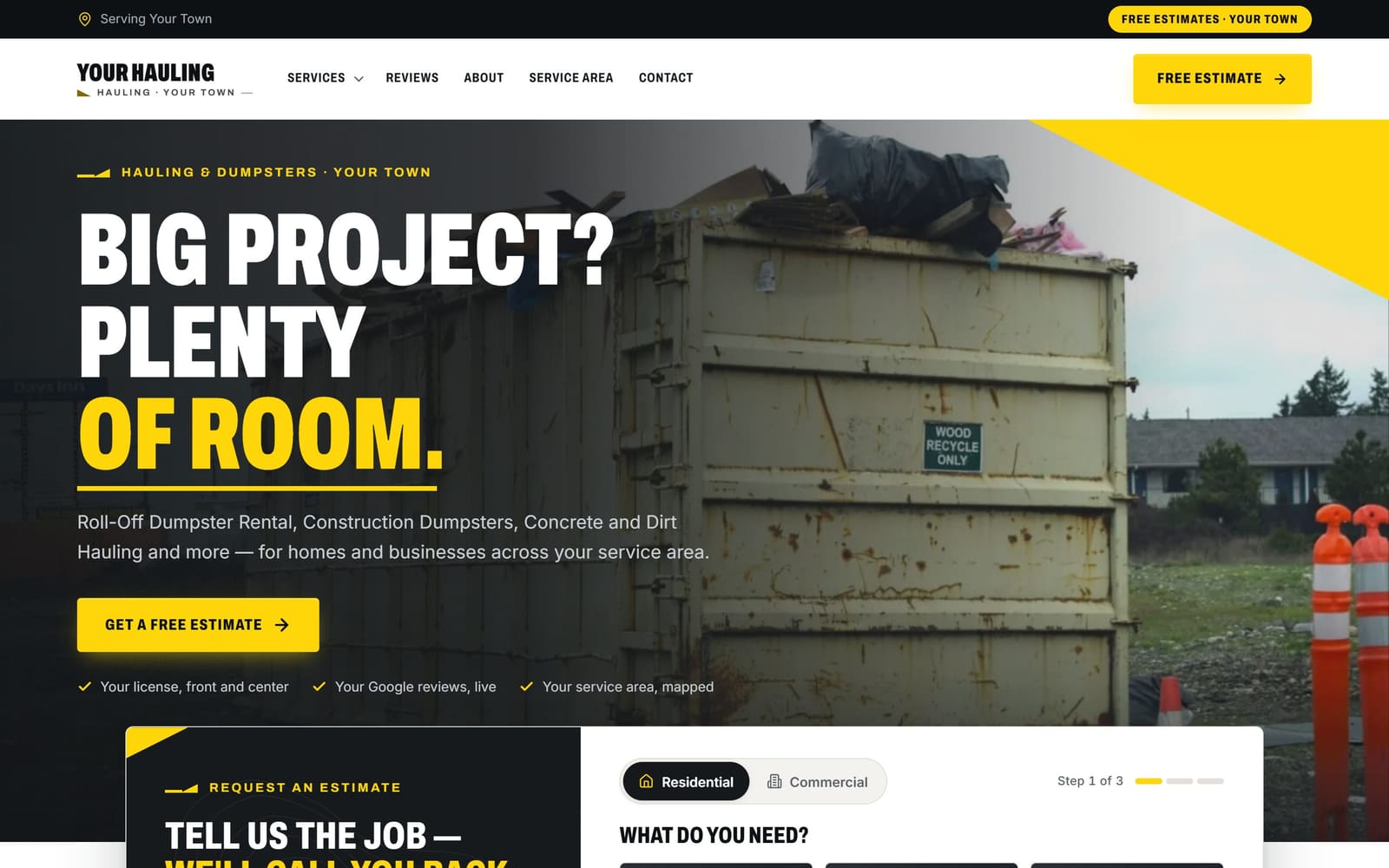
A sample hauling & dumpsters website, the kind Vevang builds and keeps improving.
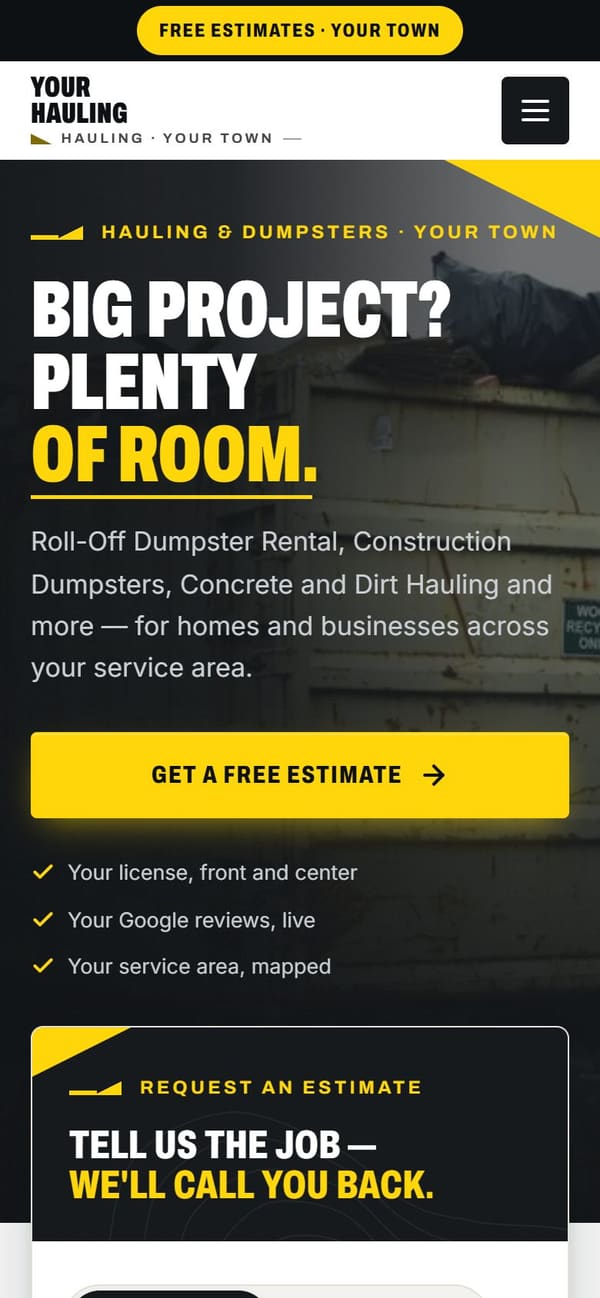
The same sample site on a phone.
Sample demo · the kind of site we build for hauling & dumpsters

What does this include?

Vevang Sites builds your hauling website and runs the local SEO on it: a page per container size, material and cleanout type, service-area pages matched to your real delivery radius, clean structure, internal links, and weekly improvements from our SEO Ranker agent. We build a demo of your new site before the first call.

Why it matters

Why it’s different for your trade.

01

Searches are specific, not general

Nobody searches "waste services." They search a size, a material or a job: shingle disposal, concrete-only load, estate cleanout, brush hauling. Each of those is a separate page with its own words. One catch-all page competes for none of them.

02

The first confirmed date wins

A homeowner calls two or three companies and books whoever confirms delivery first. Search brings them to you, but only if your page answers size, placement and rental period fast enough that they stop comparing and pick up the phone.

03

Contractors search once and stay

A remodeler or roofer who finds you, gets a swap on time and books again becomes steady volume. A page written for contractors — swap-outs, standing accounts, jobsite delivery windows — earns that search before a homeowner page ever could.

What we do

The work, step by step.

01

Map what you actually haul

We list every container size on your lot, every material you accept, and every material you refuse. That list becomes the page plan. Nothing gets a page you cannot deliver on tomorrow morning.

02

Build size and material pages

One page per container size with real project examples: a garage, a kitchen tear-out, a roof. Separate pages for clean concrete, dirt, brush and construction debris, since those loads carry different rules and different weights.

03

Write the pages that stop calls

A prohibited-items page, a permits and driveway placement page, and a plain explanation of rental period, included tonnage and overage. These answer the questions that otherwise eat your dispatcher's morning.

04

Build service-area pages you can serve

A page for each town inside your delivery radius, with local placement notes, permit offices where they apply, and any delivery fee difference. No towns you would turn down.

05

Fix structure and speed

Clean headings, internal links from size pages to material pages, fast loading on a phone with one bar at a jobsite, and a scheduling form plus tracked phone number on every page.

06

Improve it every week

Our SEO Ranker agent reviews the site weekly: new questions answered, seasonal pages pushed forward in spring and after storms, thin pages strengthened, broken links and slow pages fixed.

Common mistakes

What usually goes wrong.

One page for the whole business

Roll-off rental, junk removal and dirt hauling on a single page reads like a brochure and ranks for nothing. They are three different customers with three different searches and three different objections.

Service-area pages for towns you won't drive to

Listing every town in the county to look bigger brings calls you have to turn down and pages with nothing local in them. Cover your real radius well instead.

Hiding how pricing works

You do not have to post a rate. But if the page never explains rental period, included weight and overage, the homeowner assumes surprise fees and calls the company that explained it.

No prohibited-items page

Mattresses, tires, paint, appliances with refrigerant. People search these words before they book. Answering them earns the search and keeps contaminated loads off your truck.

Checklist

What you can check today.

  • Give each container size its own page with project examples
  • Write separate pages for concrete, dirt, brush and demo debris
  • Publish a plain prohibited-items list
  • Explain rental period, included weight and overage fees
  • Build a contractor page covering swaps and standing accounts
  • Create a page for each town you actually deliver to
  • Add permit and driveway placement guidance
  • Put a scheduling form and phone number on every page

How it works

You see it first. Then you decide.

You don’t sign anything to see it. Book a time, and your demo is ready before we talk.

  1. 01

    Book 15 minutes

    Pick a time — often the same day. Tell us your website, or just your business name and city.

  2. 02

    We build your demo

    Before the call, we build a demo of your new website from your real business: your services, your area, your reviews.

  3. 03

    See it, then decide

    We walk you through the demo on the call. You see exactly what you’d get before you spend anything.

  4. 04

    Launch, then improve weekly

    We build it for real and put it live. After launch, the SEO Ranker agent keeps improving it every week.

15 minutes on Google Meet. No obligation.

Questions

Straight answers.

How long before SEO brings in calls?

Usually months, not weeks. New size and material pages need time to get indexed and earn trust. Service-area pages for towns near your yard tend to move first. Rankings cannot be guaranteed by anyone, so we track calls and form submissions instead and report what the site is actually producing each month.

Do I need a page for every container size?

Yes, if you carry them. People search by size because they are trying to avoid ordering wrong. A page that shows what fits, how much driveway it takes and what the weight allowance covers answers the question and earns the booking. Skip sizes you do not stock.

Should junk removal and dumpster rental share a page?

No. One customer wants a container dropped and left. The other wants a crew to carry it out. Different price logic, different objections, different searches. Separate pages let you rank for both and stop the wrong calls from tying up your dispatcher.

How many service-area pages should I have?

As many towns as you will actually drive to, each with something local on it: permit rules for street placement, common neighborhood driveway constraints, your usual delivery window. A thin page repeating your city name helps nothing. A useful page for a real town earns real calls.

What about storm debris and seasonal work?

Spring cleanouts, summer construction and post-storm debris each drive different searches. We build those pages ahead of season so they are indexed before demand hits, and SEO Ranker brings the right ones forward on your site when weather or the calendar changes.

Do I need to post prices?

Not rates. But explain the structure: what the rental period covers, how much weight is included, what an overage costs and what an extra day costs. Homeowners fear surprise fees more than they fear the base price. Clear terms win the call against a vague competitor.

How do I get found by contractors instead of homeowners?

Write for them directly. A contractor page covering swap-out turnaround, early-morning delivery, jobsite access, standing accounts and invoicing uses the words they search. Link it from your construction debris and shingle disposal pages so the whole set reinforces itself.

Does any of this help with AI search answers?

Clear pages help. When your sizes, accepted materials, service area and hours are stated plainly and consistently, assistants like ChatGPT, Gemini and Perplexity have something accurate to read. No one can promise an assistant will name your company, but vague sites give them nothing to work with.

More for hauling & dumpsters

One team for the whole job.

Reviewed 2026-09-24

Your demo is free

See your new website on the call.

Tell us your website — or your business name and city — and pick a time. We’ll have your demo ready before we talk.

Pick a 15-minute time. Your demo is built before the call.