Vevang AISites/ Hauling & dumpsters · AI search

AI search visibility · Hauling & dumpsters

Make your hauling business clear to AI answers

Homeowners now ask an AI tool what size can they need and what they can throw in it before they ever dial. Your pages have to answer those questions in plain words.

Pick a 15-minute time. Your demo is built before the call.

  • Your demo, built before the call
  • Improved every week
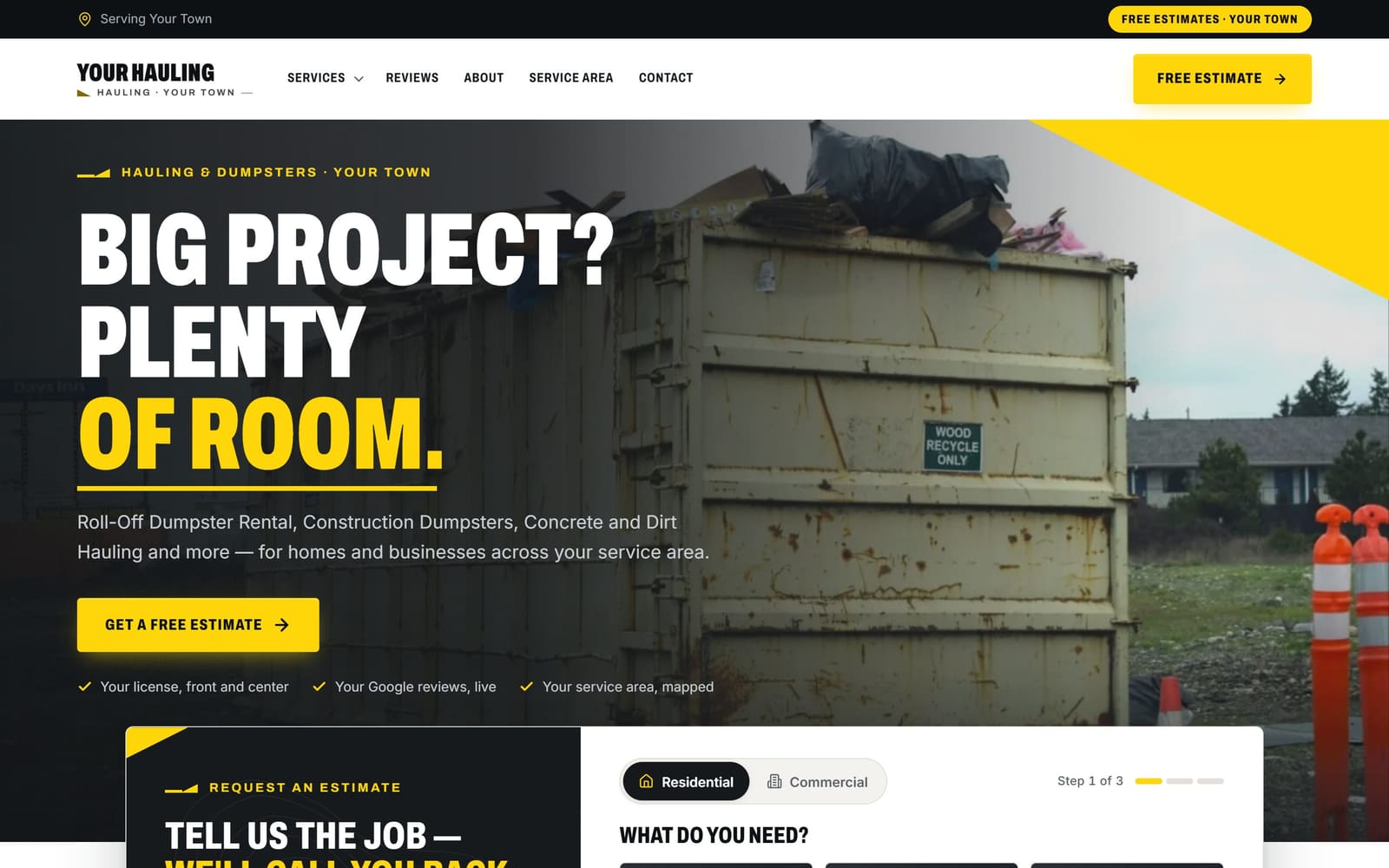
A sample hauling & dumpsters website, the kind Vevang builds and keeps improving.
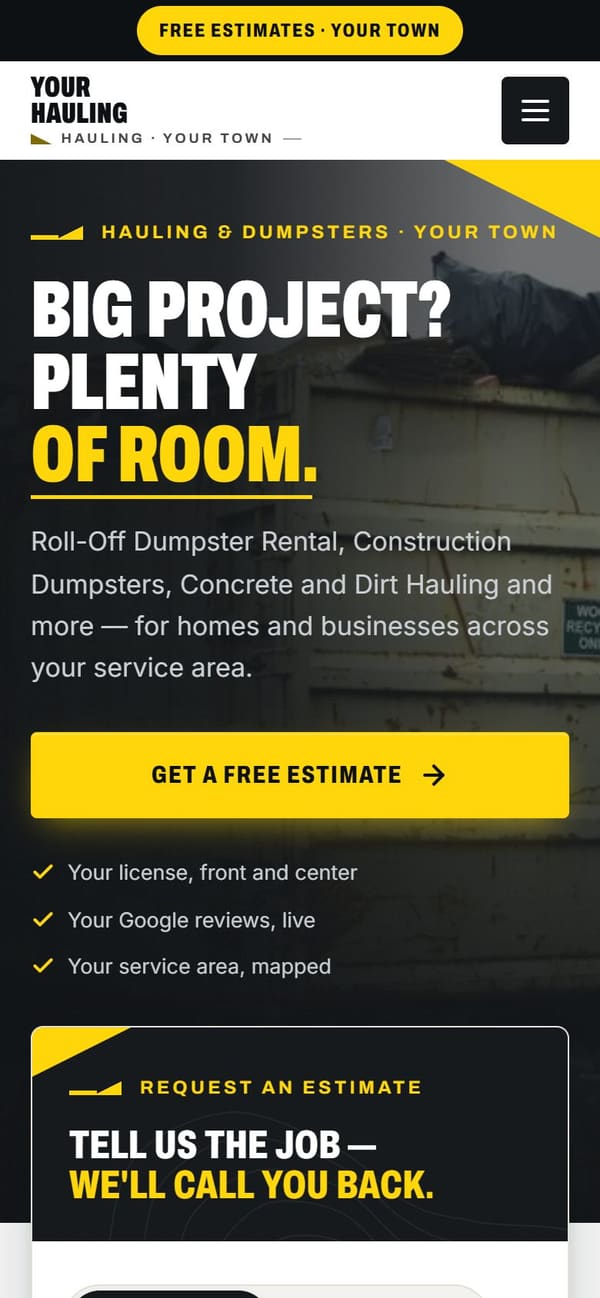
The same sample site on a phone.
Sample demo · the kind of site we build for hauling & dumpsters

What does this include?

Vevang Sites builds your hauling and dumpster site so AI tools can read it. We write plain answers to the questions renters ask — sizes, allowed items, permits, delivery timing — keep your business facts identical everywhere, add structured data, and improve pages weekly. No one can promise an AI will name you.

Why it matters

Why it’s different for your trade.

01

Renters research before they dial

Someone clearing out a garage has no idea whether they need a small can or your largest roll-off. They ask an AI tool first, then call two companies. If your site never states sizes in plain text, you are not in that answer.

02

Contractors ask about speed and swaps

A roofer with a tear-off Monday wants to know who can drop a container tomorrow and swap it full. Answers get built from pages that state delivery days, swap timing and accepted materials. Vague pages give nothing to pull from.

03

One wrong fact travels

An old phone number on a listing, hours you changed last spring, a prohibited-items note that only lives on one page. AI tools use whatever they find. Matching facts across your site, Google Business Profile and directories keeps the summary accurate.

What we do

The work, step by step.

01

List the questions you answer by phone

Write down what your dispatcher repeats all day: what size do I need, can it sit on my driveway, do I need a permit, can I put concrete in it, how long do I get it. That list becomes your page list.

02

Answer in the first paragraph

Every page opens with a short, direct answer before the sales copy. Your sizes page says which container fits a garage cleanout, a kitchen tear-out and a roof tear-off. Skimming homeowners and AI tools both read the top.

03

Put the size guide in text

A chart saved as an image cannot be read or quoted. We publish each container you stock as text: the jobs it suits, the driveway space it needs, the weight guidance and the materials that belong in it.

04

Lock your facts everywhere

Phone, hours, rental period, cutoff for next-morning delivery, delivery area and what you refuse to haul. Same wording on your site, your Google Business Profile and your listings. Contradictions make you look like the risky booking.

05

Add structured data

We mark up your services, service area, hours and FAQs so machines read them without guessing. The same markup helps Google understand which of your pages answers which hauling question, so it is not wasted effort.

06

Keep it current every week

SEO Ranker reviews your pages weekly: new questions coming off the phones, cleanout pages in spring, storm debris pages when weather hits, thin answers rewritten. Call and form tracking shows which pages produce booked drop-offs.

Common mistakes

What usually goes wrong.

The size chart is a download

The one page every renter needs is a file they have to open, and nothing inside it can be read or quoted. Put dimensions, job examples and weight limits in plain text directly on the page.

Every price question ends in "call us"

You do not have to publish rates. You do have to explain how pricing works: what the rental period covers, how overweight loads are handled, what a swap involves. Pages that explain nothing get passed over.

Your service area is just a map pin

A pin does not tell a homeowner in the next town whether you deliver there. Name the towns and counties you haul to, and say where delivery fees begin and where you will not go.

Prohibited items live in one place only

You stopped taking mattresses, but only the FAQ says so while the cleanout page still invites them. Mixed answers become wrong answers, and end with a driver refusing a load at the curb.

Checklist

What you can check today.

  • Write every container size as text with a job example.
  • Put a plain answer in the first lines of each page.
  • Publish one prohibited-items list and link every page to it.
  • Explain rental period, swap process and overage policy in words.
  • Name each town and county you deliver to.
  • Match phone, hours and address across site and Google Business Profile.
  • Add a permits and driveway placement page for your city.
  • Request a review after pickup and reply to every one.

How it works

You see it first. Then you decide.

You don’t sign anything to see it. Book a time, and your demo is ready before we talk.

  1. 01

    Book 15 minutes

    Pick a time — often the same day. Tell us your website, or just your business name and city.

  2. 02

    We build your demo

    Before the call, we build a demo of your new website from your real business: your services, your area, your reviews.

  3. 03

    See it, then decide

    We walk you through the demo on the call. You see exactly what you’d get before you spend anything.

  4. 04

    Launch, then improve weekly

    We build it for real and put it live. After launch, the SEO Ranker agent keeps improving it every week.

15 minutes on Google Meet. No obligation.

Questions

Straight answers.

Can you guarantee ChatGPT recommends my dumpster company?

No, and nobody can. We do not control what an AI tool says about any hauler. We control the input: readable pages, matching facts, structured data and questions answered in plain language. That is the same groundwork that helps you in Google search, where rankings also cannot be guaranteed.

How is this different from regular local SEO?

Mostly it overlaps. Both need fast pages, consistent business facts, real service-area pages and a maintained Google Business Profile. AI search adds one habit: writing direct answers as answers, near the top of the page, instead of burying them under paragraphs about your family-owned trucks.

Do I have to publish my prices?

No. Hauling prices move with size, material and weight, and you may quote by job. Describe the structure instead: what the base rental covers, how many days a can stays, how heavy loads like concrete and dirt are handled, and what a swap involves. Clear structure beats silence.

Does any of this help with contractor work?

Yes. Contractors get their own page: swap turnaround, standing accounts, jobsite delivery, shingle and demolition debris loads, and who to text after hours. They look up suppliers the same way homeowners do, and they call the company whose terms are already obvious.

What is structured data, in plain terms?

It is code behind the page that labels what is on it: your business, your services, your hours, your delivery area, your FAQs. Visitors never see it. Machines read it instead of guessing. We add it and keep it matched to what the visible page actually says.

How quickly does anything change?

Gradually. Search engines and AI tools re-read sites on their own schedule, so treat this as months of steady work rather than a switch you flip. SEO Ranker improves pages every week, and call and form tracking shows you which pages started producing bookings.

Do I need a whole new website?

Not always, though it is often faster. If your sizes live in an image, your service area is a map and your prohibited-items list contradicts itself, rebuilding beats patching. Book a call and we will build a demo of your hauling site before we talk.

What do you need from me to start?

Your container sizes, what you haul and what you refuse, your delivery area and fees, rental terms, cutoff times, and the questions you answer most on the phone. One call covers most of it. After that we write, publish and maintain, and check anything unclear before it goes live.

More for hauling & dumpsters

One team for the whole job.

Reviewed 2026-09-24

Your demo is free

See your new website on the call.

Tell us your website — or your business name and city — and pick a time. We’ll have your demo ready before we talk.

Pick a 15-minute time. Your demo is built before the call.