Small jobs get searched on a phone
Nobody researches a door that sticks. They search from the hallway, tap the top few map results, and call whoever looks real. Your profile is the whole pitch for that decision.
 Sites/ Handymen · Google Business Profile
Google Business Profile management · Handymen
Most handyman work is won on the map, by someone with a list and a free Saturday. Your profile decides whether they tap your name or the next one.
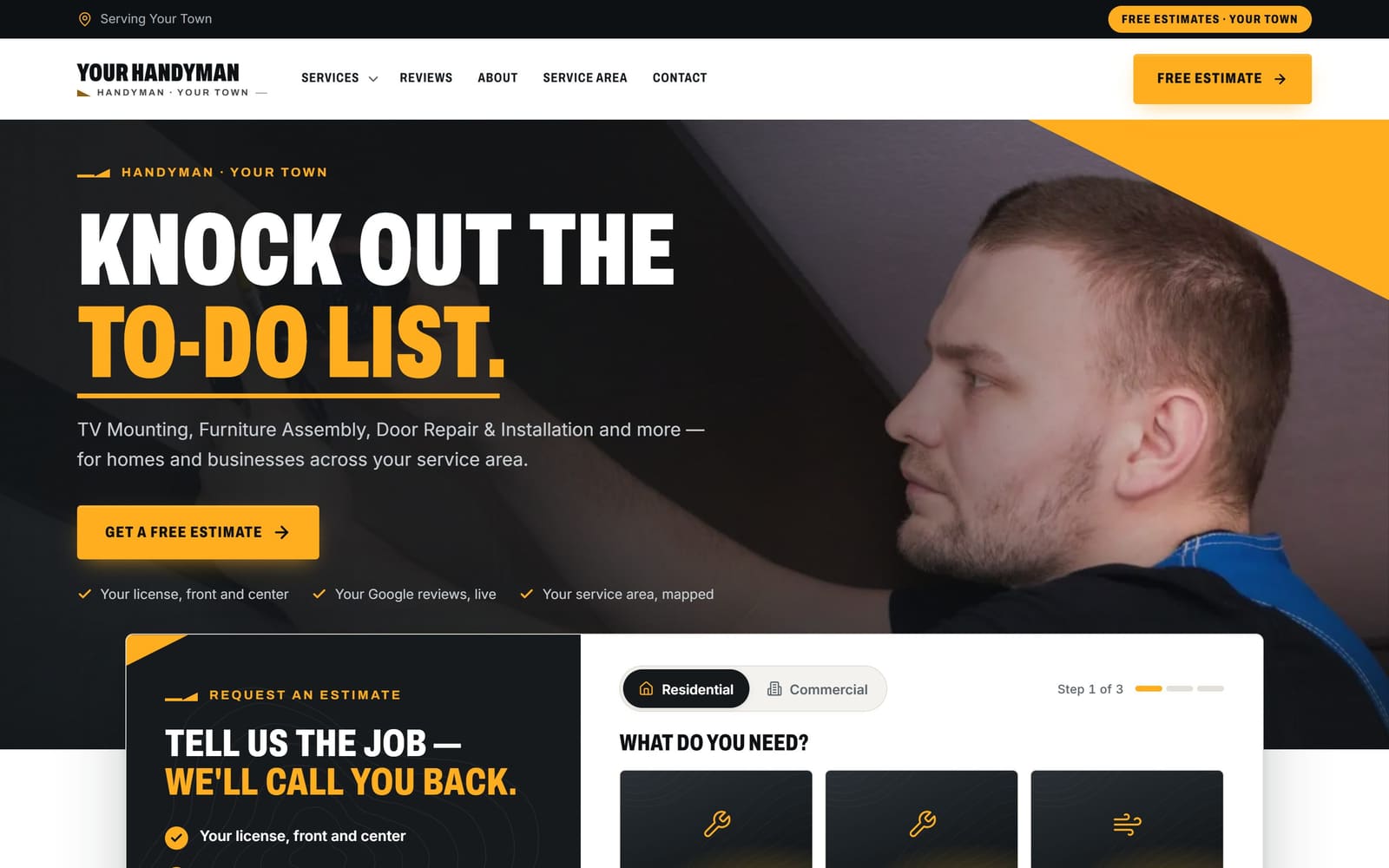
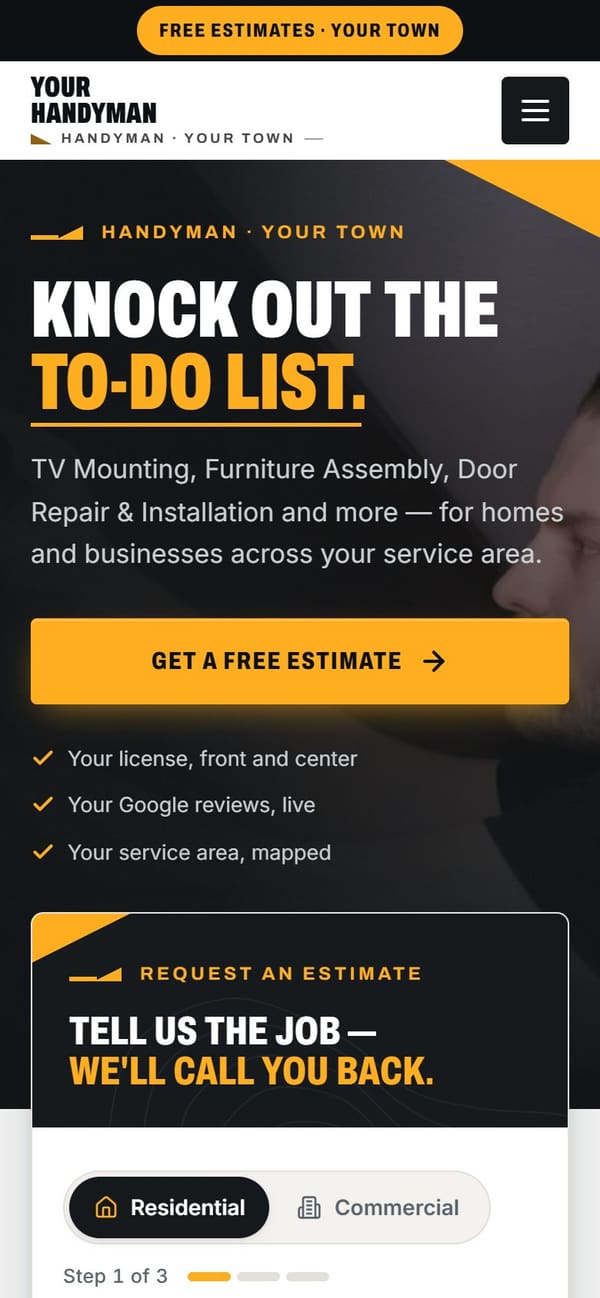
Your Google Business Profile is the map listing homeowners tap when they search handyman near me. Vevang Sites sets up your categories, services, service area, hours and photos, keeps posts and Q&A current, handles review requests and replies, and connects the profile to a website that says the same thing.
Why it matters
Nobody researches a door that sticks. They search from the hallway, tap the top few map results, and call whoever looks real. Your profile is the whole pitch for that decision.
A daughter looking for someone to fit grab bars for her father reads your reviews and studies your photos. A profile with a stock image and no replies loses that job in silence.
A homeowner who likes your work keeps a running list for you and passes your name over the fence. The map listing is how that first list finds you.
What we do
We verify the profile, fix the business name to what is on your van and invoices, and set the phone number that actually rings your pocket. One number, tracked, so you know which calls came from the map.
Handyman is the primary. Then the secondary categories for the work you genuinely do: carpenter, drywall, furniture assembly, deck builder. Categories decide which searches you appear in, so we keep them honest and narrow.
You work from a truck, not a storefront, so we hide the address and list the towns and neighborhoods you cover. Stretching the area across the whole metro only waters down the searches close to home.
Every service gets its own entry: drywall patch, door adjustment, TV mount, fixture swap, caulking, punch lists. Photos are yours, taken on site, including before and after shots of small fixes people recognize.
Minimum charge, hourly or flat, do you supply the fixture, do you take licensed electrical or plumbing work. We post and answer these so the awkward questions get settled before the phone rings.
SEO Ranker posts seasonal jobs, adds new photos, updates hours around holidays, and requests and replies to reviews. The site and the profile stay matched so nothing on the map contradicts your pages.
Common mistakes
Adding plumber, electrician and roofer to catch more searches brings calls you have to turn down and puts you next to specialists you cannot compete with. Pick categories that match what you invoice for.
A home address on the map sends strangers to your driveway and limits how the listing shows for nearby towns. Set it as a service area business and list the areas you drive to.
Downloaded images of tidy workshops fool nobody. Homeowners want to see a patched wall, a level shelf, a straightened door. Take ten seconds at the end of each job and shoot it.
A profile with last year's hours, no new photos and unanswered reviews reads as a business that closed. Small, regular updates keep it looking like someone is behind it.
Checklist
How it works
You don’t sign anything to see it. Book a time, and your demo is ready before we talk.
Pick a time — often the same day. Tell us your website, or just your business name and city.
Before the call, we build a demo of your new website from your real business: your services, your area, your reviews.
We walk you through the demo on the call. You see exactly what you’d get before you spend anything.
We build it for real and put it live. After launch, the SEO Ranker agent keeps improving it every week.
Questions
Handyman, in almost every case. Then add secondary categories only for work you do often enough to defend: carpenter, drywall contractor, furniture assembly service, deck builder. Categories are how the map decides which searches you belong in. A long list of trades you rarely touch brings calls you refuse and weakens the searches that matter.
No. Set the profile as a service area business so the address stays hidden and you list the towns and neighborhoods you cover instead. Homeowners do not need to find your garage, and an exposed address invites walk-ups. The service area tells the map where you work, which is what matters for small jobs.
Only as wide as you will honestly drive for a two-hour job. Listing the entire metro does not put you in front of everyone, it just spreads you thin. Name the towns and neighborhoods where you already take work, and build matching pages on your site so the two agree.
No, and anyone who promises that is selling something. Ranking depends on where the searcher stands, competition in that town, and dozens of signals nobody controls. What we do control is a complete, active profile, real photos, steady reviews and a matching website. That is the work, done every week.
Seasonal jobs. Spring outdoor repairs and pre-listing punch lists, fall weatherproofing and caulking before guests arrive, storm-season fence and trim fixes. Post the job you want more of this month, with a photo from a recent one. Posts also give homeowners something current to read, which makes the listing look alive.
We send a review request after the job, to every customer, and reply to what comes in. A steady flow of recent reviews matters more than a pile of old ones. We never filter who gets asked and never offer anything for a review. Replies to the rough ones show the next reader how you handle problems.
Yes. The profile is a summary. The site is where a landlord reads your punch list page, a family checks your grab bar work, and anyone sends you a list through a form at 10pm. The two feed each other: the map sends the tap, the site closes it. We keep both saying the same thing.
We build a demo of your handyman site before we talk, so you can see real pages for drywall repair, door fixes, punch lists and your service areas instead of a slide deck. On the call we walk through it, look at your current profile, and tell you what we would fix first.
More for handymen
Reviewed 2026-09-24
Your demo is free
Tell us your website — or your business name and city — and pick a time. We’ll have your demo ready before we talk.