Handyman questions are list questions
People rarely ask for one repair. They ask if someone can handle five small things in a morning. If your site never states that you do multi-job visits, an assistant has nothing to summarize.
 Sites/ Handymen · AI search
AI search visibility · Handymen
Homeowners now ask an assistant whether a handyman can mount a TV, fix a sticking door and swap a fixture in one visit. Your site should answer that in plain words.

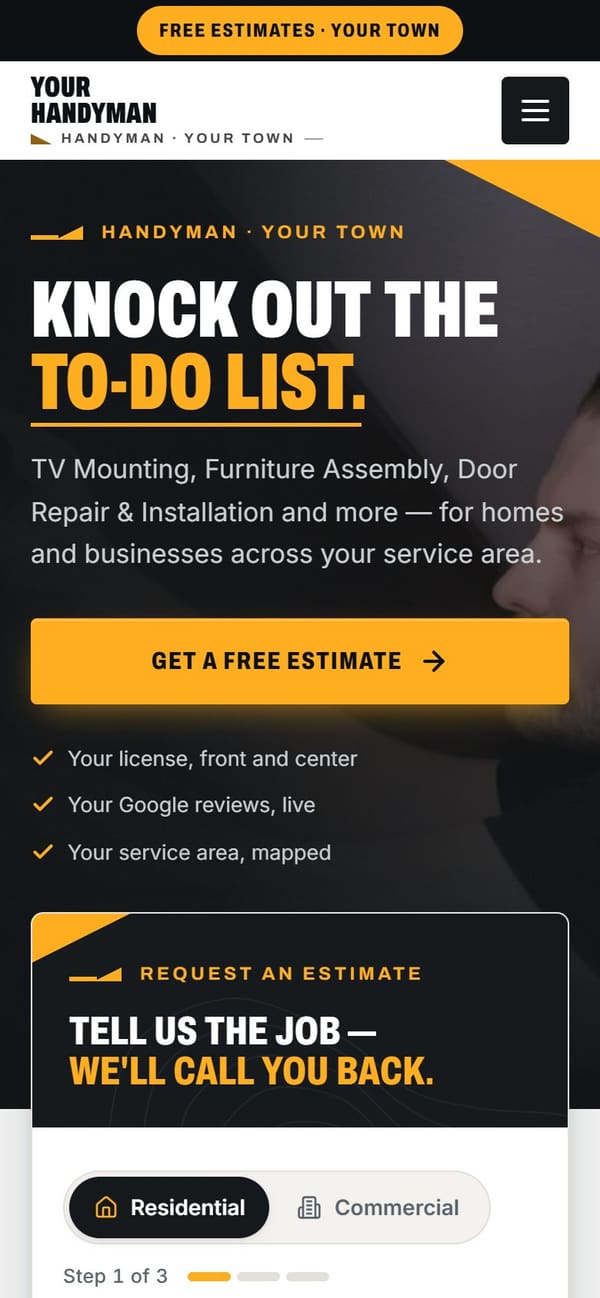
AI assistants summarize what they can read. Vevang Sites builds your handyman website with plain answer blocks, a clear list of jobs you take and skip, consistent business facts, and structured data. Our SEO Ranker agent improves those pages every week. No one can promise an assistant will name you.
Why it matters
People rarely ask for one repair. They ask if someone can handle five small things in a morning. If your site never states that you do multi-job visits, an assistant has nothing to summarize.
Assistants get asked whether a handyman can do electrical panels or move a gas line. If your pages never say where you stop, you get lumped in with the wrong trade or left out of the answer.
A daughter asking about grab bars for her father wants license, insurance and years working named plainly. Facts written in sentences travel into answers. Facts buried in a header image do not.
What we do
Drywall patches, door and window adjustments, TV mounting, fan and fixture swaps, trim, caulking, grab bars. Each one a short line an assistant can read and repeat, not a gallery of icons.
A kind, direct paragraph: no panel work, no repiping, no roof replacement, and who to call instead. Clear limits make the rest of your list more believable to people and to machines.
Hourly, half-day, minimum visit, trip fee. Written in sentences, not hidden behind a call. This is one of the most asked handyman questions and one of the least answered on the web.
Name, phone, service area towns, hours, license number if you carry one. The same on your site, your Google Business Profile and anywhere else you appear, so nothing contradicts.
Markup for your business, services and FAQs, plus short question-and-answer sections on each job page. This gives assistants clean facts instead of guesses pulled from a paragraph.
Every week the agent reviews your pages, adds answers to questions people actually ask, and rotates seasonal work like weatherproofing or pre-listing punch lists to the top.
Common mistakes
That phrase tells an assistant nothing. It cannot match it to a sticking patio door or a wobbly stair railing. Name the jobs, one line each, in words homeowners use.
When a homeowner asks an assistant what a handyman charges, sites that explain their minimum and hourly structure get used. Sites that say call for a quote get passed over in the summary.
Before-and-after shots prove you can work. They do not tell an assistant you install grab bars in bathrooms. Every job in your portfolio needs a sentence next to it.
A tracking number on the site, an old cell on your profile, a third on a directory. Mismatched facts make you look unreliable and give assistants reason to pick a clearer competitor.
Checklist
How it works
You don’t sign anything to see it. Book a time, and your demo is ready before we talk.
Pick a time — often the same day. Tell us your website, or just your business name and city.
Before the call, we build a demo of your new website from your real business: your services, your area, your reviews.
We walk you through the demo on the call. You see exactly what you’d get before you spend anything.
We build it for real and put it live. After launch, the SEO Ranker agent keeps improving it every week.
Questions
No, and no one can. Assistants change how they pick sources and none of them sell placement. What we control is clarity: a readable job list, consistent facts, structured data, and answers to the questions homeowners actually ask. That is the honest version of this work, and it also helps regular search.
Because small jobs are exactly what people ask assistants about. Whether a handyman can hang a heavy mirror, what a fair hourly rate is, whether one person can do five tasks in a visit. Those questions get asked constantly, and the answers come from sites that state things plainly.
No. Most handyman calls still come from local search and your Google Business Profile, and we manage that too. AI clarity is the same work pointed at a new surface. Clean facts, clear service pages and consistent listings help both, so you are not choosing between them.
You do not have to post a full price list. Publishing your minimum visit, your hourly or half-day structure, and whether a trip fee applies is enough. It answers the question without locking you in. Homeowners filter you out for silence more often than for a number they dislike.
A question in the homeowner's words, then two or three sentences that actually answer it. For example, whether you can patch and paint drywall in the same visit, or how much notice a rental turnover list needs. Short, specific, no sales language wrapped around it.
Assistants and homeowners both read them. We send review requests after completed work and help you reply to what comes in, good or bad. We never filter who gets asked and never write reviews for you. A steady stream of honest ones, with replies, is the useful part.
We build a demo of your handyman site first, using your real jobs and service area, then walk you through it. You will see how your job list, pricing explanation and answer blocks would read. Ask hard questions. If it is not right for you, nothing happens.
Structured data and clear pages get read on the next crawl, but appearing in summaries takes time and is not something we can schedule. SEO Ranker keeps working weekly instead of stopping at launch, which is how the answer coverage grows across your job pages.
More for handymen
Reviewed 2026-09-24
Your demo is free
Tell us your website — or your business name and city — and pick a time. We’ll have your demo ready before we talk.