Handyman searches are scattered
Nobody searches "handyman" the same way twice. It is drywall patch, door won't latch, TV mounting, grab bar install. Ads let you cover those separate searches without waiting for ten pages to rank.
 Sites/ Handymen · Local ads
Local ads management · Handymen
Ads work when the page behind them lists the jobs you take and makes it easy to send a list. We build that first, then turn ads on if you want them.
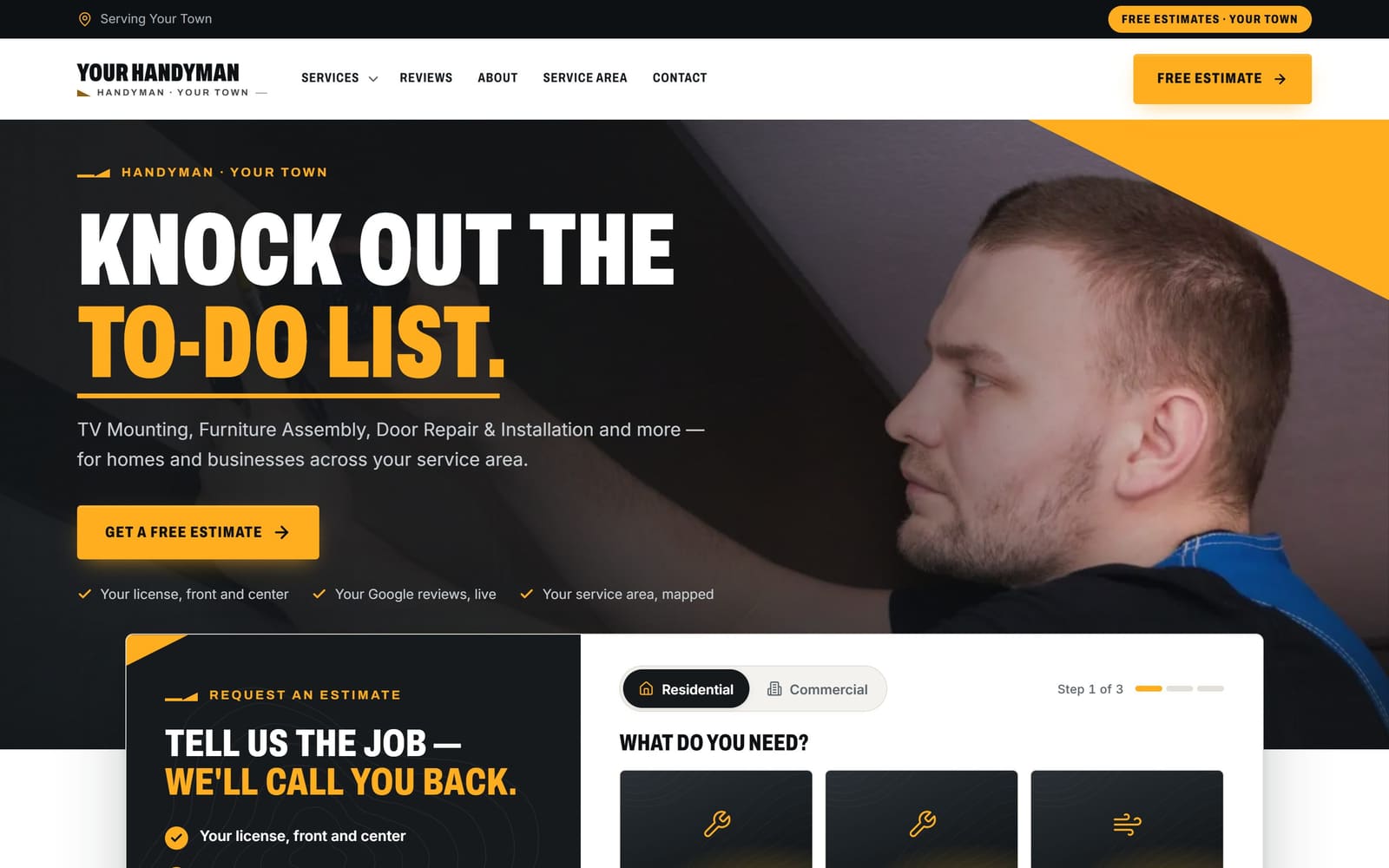
Vevang Sites builds your handyman website, handles local SEO and your Google Business Profile, and can run local Google and Meta ads as an optional add-on. Ad spend goes on your own card. We point every ad at a page for that job, track calls and forms, and tell you which jobs the ads actually brought in.
Why it matters
Nobody searches "handyman" the same way twice. It is drywall patch, door won't latch, TV mounting, grab bar install. Ads let you cover those separate searches without waiting for ten pages to rank.
A homeowner who likes your work saves up the next five jobs for you. An ad that wins the first small visit can be worth far more than that visit, which changes how you judge the cost.
Handyman work has quiet stretches between spring outdoor repairs and fall weatherproofing. Ads fill those gaps on demand, then come back down when your schedule is full again.
What we do
We build pages for the work you actually take: drywall repair, door and window fixes, fixture swaps, trim carpentry, grab bars. Ads with nowhere good to land waste money, so this comes before any spend.
We ask which jobs you want to fill your week. Half-day punch lists pay better than a single shelf. We aim ads at the work you want, not whatever clicks first.
Ad spend goes on your card, so you see every dollar. We add call tracking and form tracking so each lead ties back to the job page and the ad that produced it.
We run ads on job-specific searches, with your service area drawn tight around the neighborhoods you will actually drive to. Each ad lands on the matching job page, not your homepage.
Meta ads suit landlords, realtors doing pre-listing punch lists, and families arranging grab bars for a parent. They are browsing, not searching. We keep the message plain and the form short.
We read the call recordings and form entries, cut the searches sending you ladder-free wishes and jobs you don't take, and shift budget toward the job types that booked.
Common mistakes
The broad term pulls in price shoppers and jobs you refuse, like gas lines or full remodels. Job-level ads cost less per lead and bring people who already know what they need done.
Someone searching for drywall patching should not have to scan your whole service list. They leave. Match the ad to a page about that exact repair, with photos of that repair.
Handyman customers have five things, not one. If the only option is a call button, they wait until they can talk. A job-list form with room for photos captures them at 9pm.
Clicks land on a business with no photos of finished work and no recent reviews. People check before they call. Fix the Google Business Profile and the site before you pay for traffic.
Checklist
How it works
You don’t sign anything to see it. Book a time, and your demo is ready before we talk.
Pick a time — often the same day. Tell us your website, or just your business name and city.
Before the call, we build a demo of your new website from your real business: your services, your area, your reviews.
We walk you through the demo on the call. You see exactly what you’d get before you spend anything.
We build it for real and put it live. After launch, the SEO Ranker agent keeps improving it every week.
Questions
Often no. Organic rankings and your Google Business Profile carry most handyman work over time. Ads make sense when you are new to an area, expanding your service radius, or filling a slow stretch. We treat ads as an add-on, not the foundation, and we will say so if your money is better spent elsewhere.
You do, on your own card, directly to the ad platform. You see every charge and you set the ceiling. Vevang manages the campaigns, the pages behind them and the tracking. If you stop ads, your website, local SEO and Google Business Profile work continue unchanged.
Sometimes. Eligibility depends on your location and the job categories you work in, and handyman work sits near licensed trades in some areas. We check whether you qualify and help with the screening and insurance requirements. If you do not qualify, we run standard search ads instead.
Start small enough that a bad month does not hurt, and only after your job pages are live. We watch which searches book real work for a few weeks, cut the rest, then decide together whether to add budget. Spending more on untested searches just buys more wrong calls.
Some, yes. That is manageable if you set a minimum on the page and in the ad copy, and if you group small jobs into a half-day visit. Many small first jobs turn into standing lists, so we track repeat customers rather than judging by first-visit value alone.
No. Paid and organic are separate. Running ads does not lift your map or search position, and stopping them does not drop it. We keep the weekly SEO work going either way, and nobody can guarantee rankings on any platform.
Call tracking and form tracking tie each lead to the ad and the page it came from. You see which job types produced calls and which produced booked work. We review it with you monthly and cut what is not paying, in plain language.
Before we talk, we build a demo of your handyman site so you can see real job pages instead of a pitch. The call is fifteen minutes. We go through the demo, the jobs you want more of, and whether ads are worth adding yet.
More for handymen
Reviewed 2026-09-24
Your demo is free
Tell us your website — or your business name and city — and pick a time. We’ll have your demo ready before we talk.