Vevang AISites/ General contractors · SEO

Local SEO · General contractors

SEO for general contractors planning next year's jobs

Homeowners spend months reading before they call a builder. Local SEO puts your name in front of them during that reading, not after they've shortlisted someone else.

Pick a 15-minute time. Your demo is built before the call.

  • Your demo, built before the call
  • Improved every week
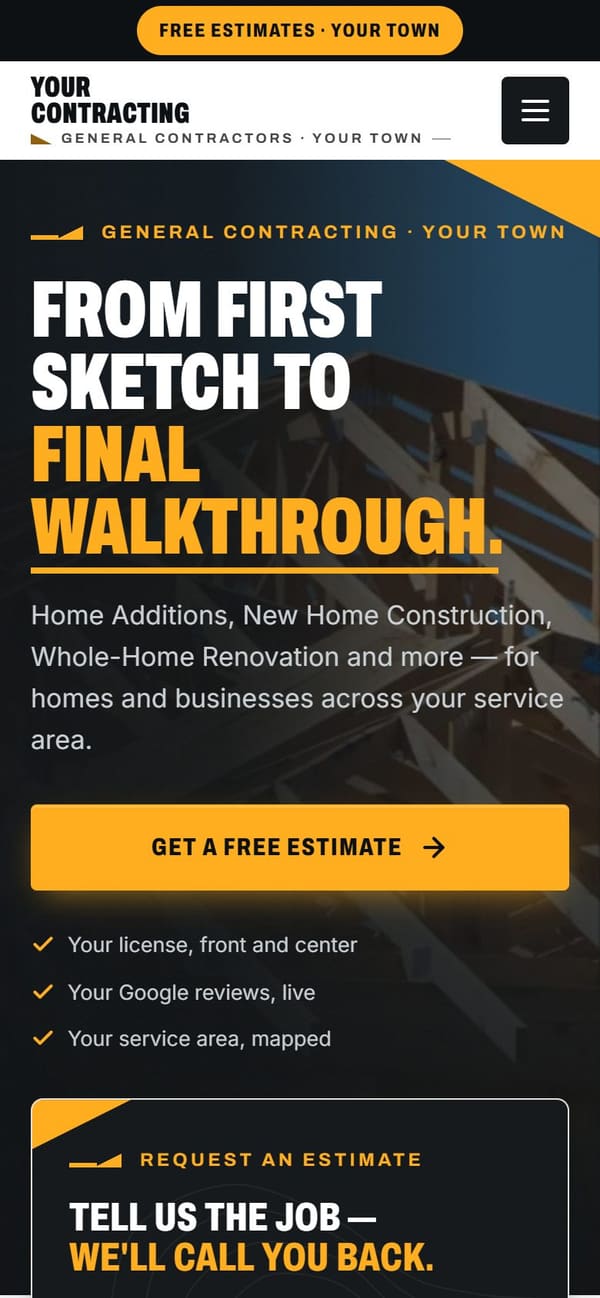
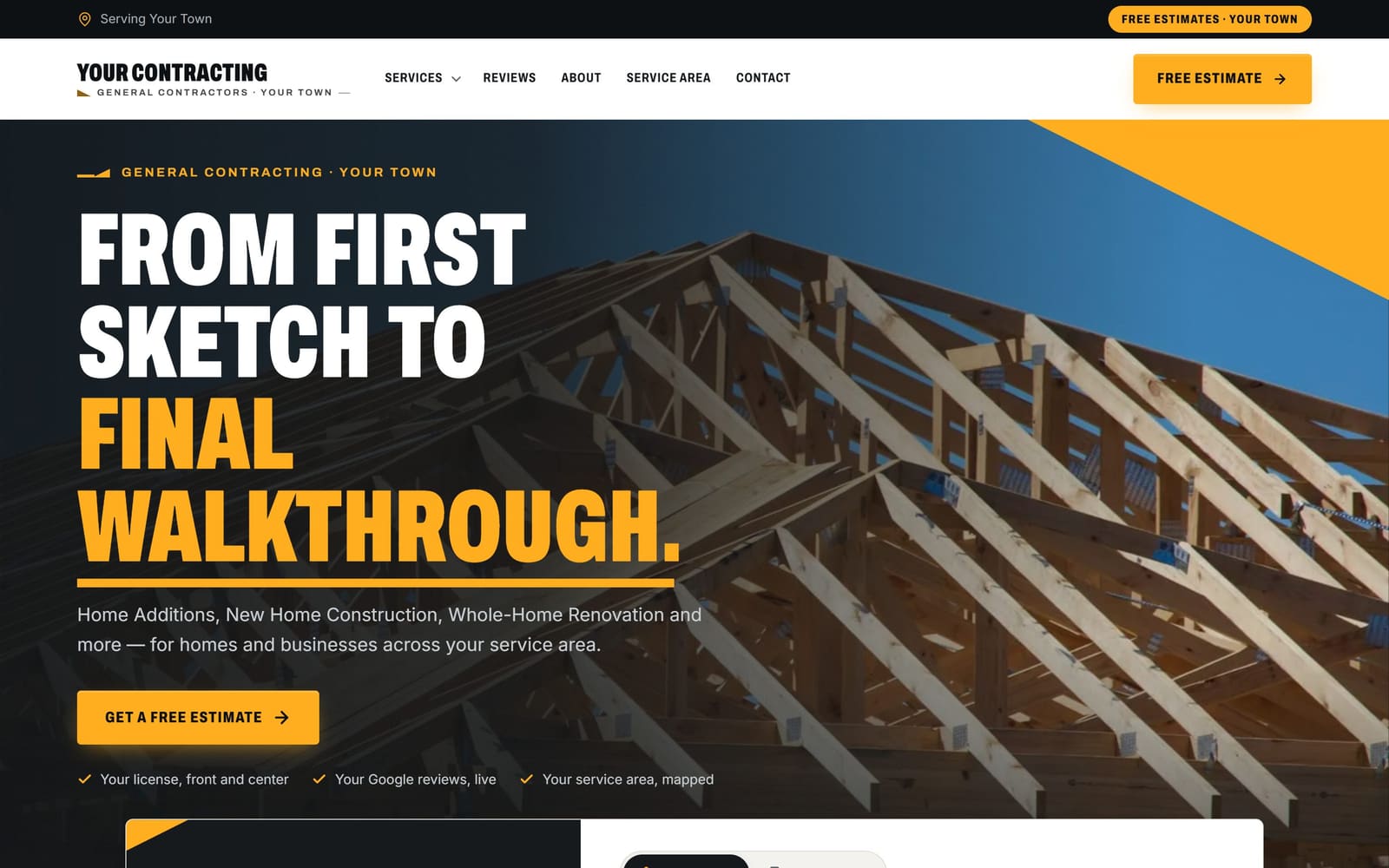
A sample general contractors website, the kind Vevang builds and keeps improving.
The same sample site on a phone.
Sample demo · the kind of site we build for general contractors

What does this include?

Vevang Sites builds the website and runs the local SEO for your contracting business: a page for each project type, portfolio pages with real detail, service-area pages for the towns you build in, and technical fixes. Our SEO Ranker agent improves the site every week. We build a demo before your first call.

Why it matters

Why it’s different for your trade.

01

The research phase is long, and it happens on Google

An owner thinking about a second-story addition reads for weeks before contacting anyone. If your pages answer their early questions about permits, sequencing and budget ranges, you are on the shortlist before the first conversation.

02

Referrals still get searched

When an architect or a past client gives an owner your name, the owner types it into Google that night. What loads next decides whether you look like a builder who runs organized jobs or a contact with no proof.

03

You need a handful of right-sized projects

Volume traffic is worthless to you. The point of SEO here is being found by the few owners in your towns with the scope and budget you want, then filtering everyone else out before they call.

What we do

The work, step by step.

01

Separate the work you want from the work you don't

We list your project types by revenue and preference: additions, custom homes, whole-home renovations, commercial build-outs. Each becomes a page that describes scope, typical duration and what you need from the owner before you can quote.

02

Match the searches owners actually type

Nobody searches "general contracting services." They search things like home addition builders in your town, kitchen and bath gut renovation, or who builds ADUs nearby. Pages are written to those phrases and to the towns where you pull permits.

03

Turn finished jobs into pages, not just photos

Each project gets its own page: the town, the scope, what the owner wanted, the structural or permitting problem you solved, the timeline, the trade partners. Those pages rank and they answer the vetting question at the same time.

04

Publish the process, licensing and money pages

Your process page, your license and insurance page, and a page explaining budget ranges, allowances and draw schedules. These are the pages an owner reads before filling out a form, and they quietly reduce bad inquiries.

05

Fix the structure and speed

Portfolio pages carry a lot of photography. We compress images, set clean headings, link every project page back to its service and service-area page, and make the inquiry form work on a phone at a job site.

06

Improve it every week

SEO Ranker reviews the site weekly, adds new project pages as jobs wrap, tightens pages that are close to ranking, and keeps technical health clean. Call and form tracking shows which pages produce real inquiries.

Common mistakes

What usually goes wrong.

One services page for everything you build

Additions, custom homes and commercial build-outs are different searches by different people. Stacking them into one paragraph means none of them rank, and the owner reading it can't tell whether you actually do their project.

A gallery with no words

Beautiful photos with no town, no scope, no timeline and no caption give Google nothing to rank and give the owner nothing to judge. Write two hundred words beside every project and it starts working.

Refusing to say anything about budget

When every page avoids the subject, you get inquiries from people expecting a full renovation for the cost of a deck. Publishing honest starting ranges by project type filters those out before they reach your inbox.

Claiming a service area you don't build in

Listing forty towns to look bigger spreads your pages thin and pulls you into drives you'll refuse. Name the towns and counties where you hold permits and relationships with inspectors, and go deep on those.

Checklist

What you can check today.

  • Give each project type its own page with real scope detail
  • Write up your last six jobs as individual project pages
  • Name the towns where you actually pull permits
  • Publish your process from first meeting to punch list
  • Post license, insurance and bonding numbers where they're visible
  • Explain budget ranges and allowances in plain language
  • Add qualifying questions to your inquiry form
  • Test how fast your portfolio loads on a phone

How it works

You see it first. Then you decide.

You don’t sign anything to see it. Book a time, and your demo is ready before we talk.

  1. 01

    Book 15 minutes

    Pick a time — often the same day. Tell us your website, or just your business name and city.

  2. 02

    We build your demo

    Before the call, we build a demo of your new website from your real business: your services, your area, your reviews.

  3. 03

    See it, then decide

    We walk you through the demo on the call. You see exactly what you’d get before you spend anything.

  4. 04

    Launch, then improve weekly

    We build it for real and put it live. After launch, the SEO Ranker agent keeps improving it every week.

15 minutes on Google Meet. No obligation.

Questions

Straight answers.

How long before SEO brings in project inquiries?

Expect months, not weeks. New project and service pages usually need time to be crawled, indexed and trusted, and contractor searches are competitive. That timeline suits your business: owners planning a spring build are searching in January. Nobody can guarantee a ranking position, so we measure inquiries and calls from the site instead.

Do I need a page for every town I work in?

Only for towns where you genuinely build. A service-area page should mention the permit office, the kinds of housing stock there, and a project you completed nearby. Thin pages that just swap a town name into the same paragraph rarely rank and give an owner no reason to trust you.

My work comes from architects and referrals. Is SEO worth it?

Yes, because referred owners still look you up. Your site is where the referral gets confirmed or lost. Strong project pages also help architects and designers point to specific examples of your work, and they catch the owners who never got a referral at all.

Should I publish my prices?

Not fixed prices, which don't exist for custom work. Publish ranges: what a typical addition in your area starts at, what drives cost up, how allowances work. That level of honesty screens out inquiries you'd decline anyway and makes serious owners more comfortable reaching out.

What about commercial build-out work?

It gets its own pages, written for the person searching: a business owner with a lease deadline. Cover tenant improvement work, permitting and inspection coordination, after-hours scheduling and the trades you carry. That language is different from homeowner pages and should not share a page with them.

Can you use my project photos?

Yes. We organize them into project pages, compress them so the page still loads fast, and write the surrounding detail with you: town, scope, challenges, timeline. Photos alone don't rank. Photos with the story of the job do, and they carry the vetting conversation too.

What does SEO Ranker do each week?

It reviews your site, finds pages close to ranking and strengthens them, adds internal links from new project pages to the right service pages, catches broken links and slow pages, and adjusts wording as search behavior shifts. You get the summary without having to manage any of it.

What happens on the first call?

We build a demo of your site before we talk, using your real projects and towns, so the call is about your actual pages rather than a sales pitch. Fifteen minutes. You'll see the structure we'd use for your project types and can decide from there.

More for general contractors

One team for the whole job.

Reviewed 2026-09-24

Your demo is free

See your new website on the call.

Tell us your website — or your business name and city — and pick a time. We’ll have your demo ready before we talk.

Pick a 15-minute time. Your demo is built before the call.