Your buying window is months long
An owner researching an addition in January may sign in April. Ads keep your portfolio in front of them across that stretch, so you are still on the shortlist when they finally call three contractors.
 Sites/ General contractors · Local ads
Local ads management · General contractors
Ads can put your work in front of owners planning an addition or a build-out. They only pay off when the page behind the click answers the questions a serious owner asks.
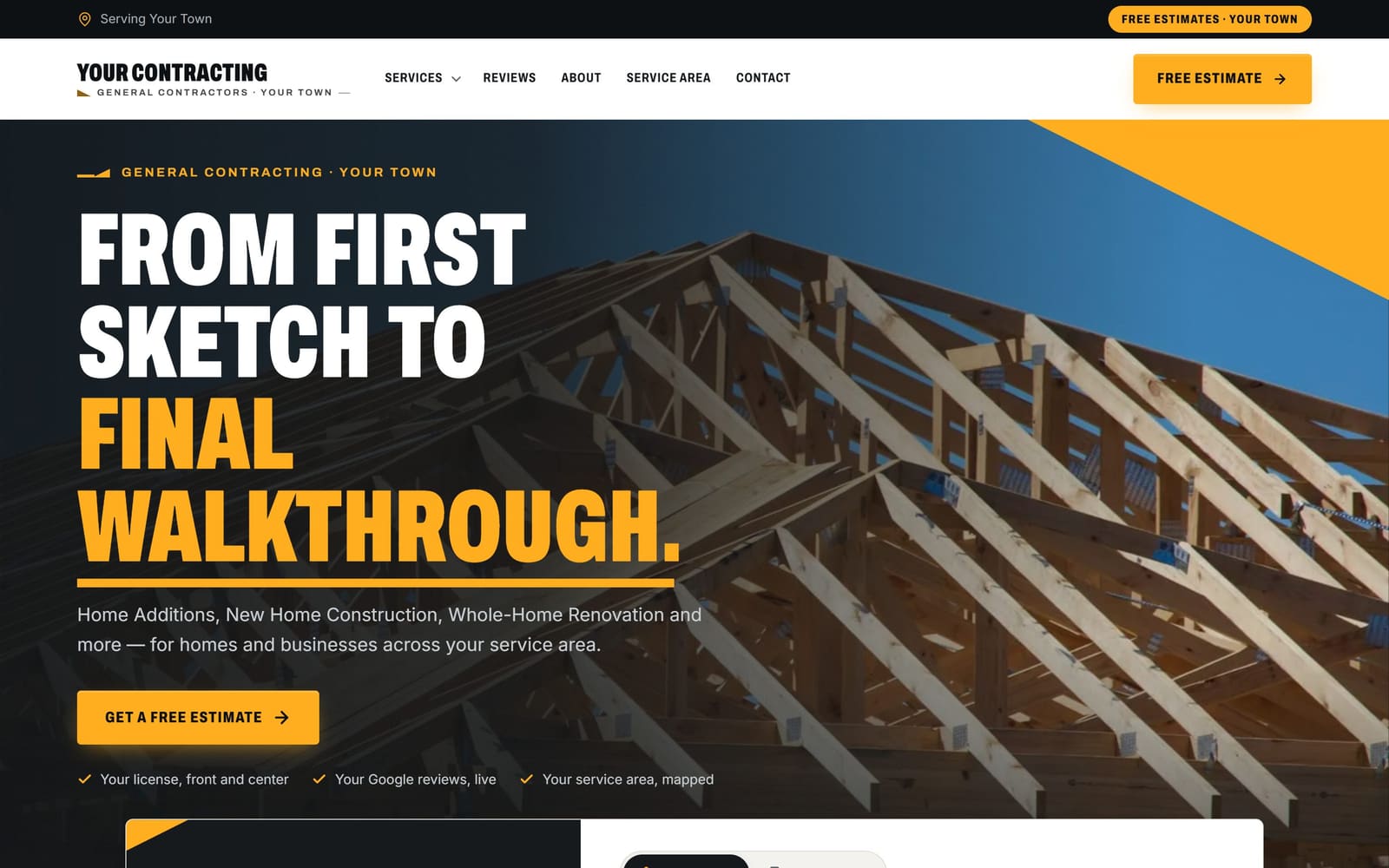
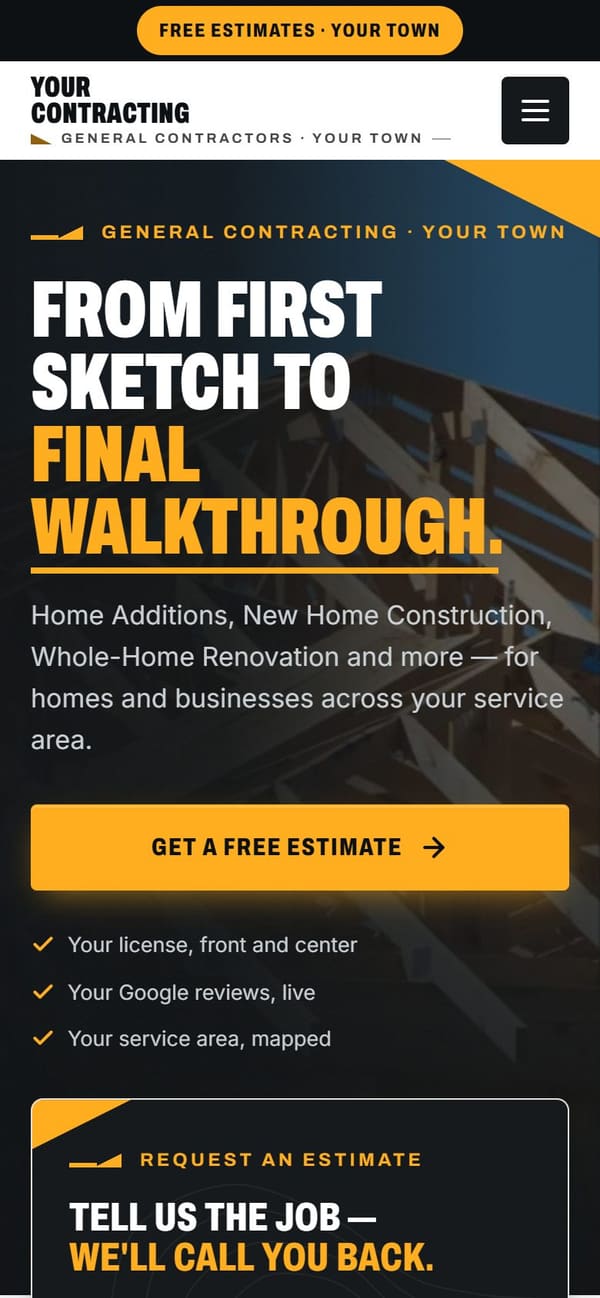
Vevang Sites builds your website first, then runs optional Google and Meta ads pointed at project pages that qualify inquiries. Ad spend is billed to your own card. We track calls and form fills so you can see which campaigns produced real project conversations, not just clicks from people pricing a handyman.
Why it matters
An owner researching an addition in January may sign in April. Ads keep your portfolio in front of them across that stretch, so you are still on the shortlist when they finally call three contractors.
You are not chasing volume. A few qualified inquiries from the right neighborhoods can fill a schedule, which changes what a click is worth and how tightly you should target.
Plenty of owners are not typing anything yet. Meta puts finished kitchens, additions and build-outs in front of homeowners in your area before they start searching contractor names.
What we do
We point ads at a specific page, not the homepage. Someone clicking an addition ad lands on addition projects with photos, scope, process and an inquiry form. Generic landing pages waste qualified clicks.
Custom homes, whole-home renovations, additions and commercial build-outs attract different people and different budgets. Each gets its own campaign so you can fund the work you actually want more of.
We draw targeting around the areas where your jobs make sense to staff and supervise. No spend on towns two hours out where your subs will not travel.
Ads mention project scale, permit handling and that you work with architects. Owners looking for a quick cosmetic fix scroll past, which is the point.
Call tracking and form tracking tie each inquiry back to a campaign. You see which ads produced a site visit and which ones produced tire-kickers.
We cut the searches that bring in unqualified leads, add the phrases that match your work, and shift budget toward the project types filling your calendar.
Common mistakes
Paying to send an owner to a site with four phone photos and no process page burns money. They compare you to contractors with detailed project stories and move on. Build the proof first.
Wide keywords pull in people wanting a bathroom refresh or a deck repair. You spend the afternoon on calls you will never quote. Tight keywords and negative terms keep the phone useful.
Owners do their reading in the off months. Going dark in winter means you are invisible exactly when next year's additions are being planned around kitchen tables.
A cheap lead that wants a $9,000 job is worse than an expensive one that wants a $400,000 addition. Measure by projects signed and contract value, not lead count.
Checklist
How it works
You don’t sign anything to see it. Book a time, and your demo is ready before we talk.
Pick a time — often the same day. Tell us your website, or just your business name and city.
Before the call, we build a demo of your new website from your real business: your services, your area, your reviews.
We walk you through the demo on the call. You see exactly what you’d get before you spend anything.
We build it for real and put it live. After launch, the SEO Ranker agent keeps improving it every week.
Questions
It depends on your category and market. Where general contracting is eligible, we help with the license and insurance verification and manage the profile. Where it is not available, we run standard search ads instead. Either way, the same qualifying page sits behind the click.
You do, on your own card, directly to the ad platform. You see every dollar and can raise, lower or pause it. Vevang manages the campaigns, the targeting and the pages behind them. Nothing about your spend runs through us.
No. Ads send serious owners to your site during a comparison, and a thin site loses that comparison. We build the portfolio, process and project pages first, then add ads once there is something worth sending traffic to.
They can, but it is a different campaign. Business owners searching for a tenant improvement contractor use different language and care about schedule and permits more than finishes. We keep commercial separate from residential so the copy fits.
No, and no one honestly can. Demand for additions and custom builds moves with rates, seasons and your local market. What we can do is track every inquiry to its source and keep shifting budget toward what produces real project conversations.
Search catches owners already looking for a contractor. Meta reaches homeowners earlier, while they are still saving photos. If your pipeline is thin for next spring, weighting toward Meta earlier in the year usually makes sense. We adjust as inquiries come in.
We show you a demo of your new site built beforehand, using your projects and service area. Then we talk through which project types you want more of and whether ads make sense yet or should wait until the site is live.
They do not affect rankings either way. They are separate. What helps is that ad traffic tells us which searches and project pages convert, and we feed that into the weekly organic work our SEO Ranker agent does on your site.
More for general contractors
Reviewed 2026-09-24
Your demo is free
Tell us your website — or your business name and city — and pick a time. We’ll have your demo ready before we talk.