Vevang AISites/ Excavation · AI search

AI search visibility · Excavation

AI Search for Excavation Contractors

Lot owners and builders now ask chat tools about grading, drainage and basement digs before they call anyone. Your site should answer those questions in words a machine can read.

Pick a 15-minute time. Your demo is built before the call.

  • Your demo, built before the call
  • Improved every week
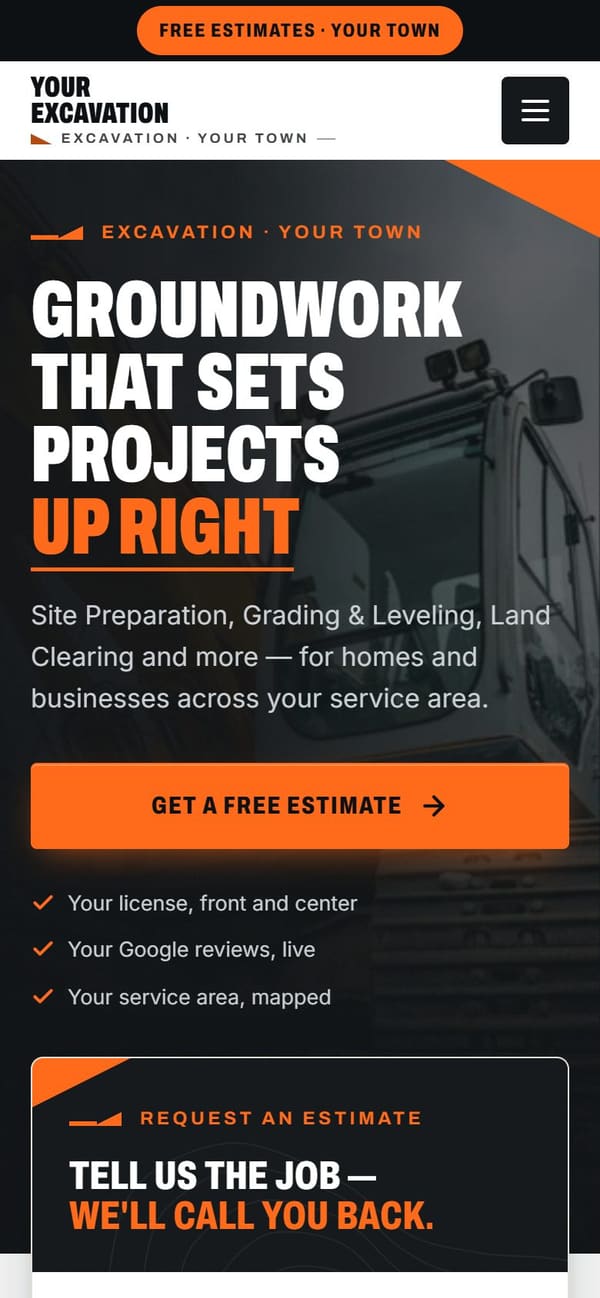
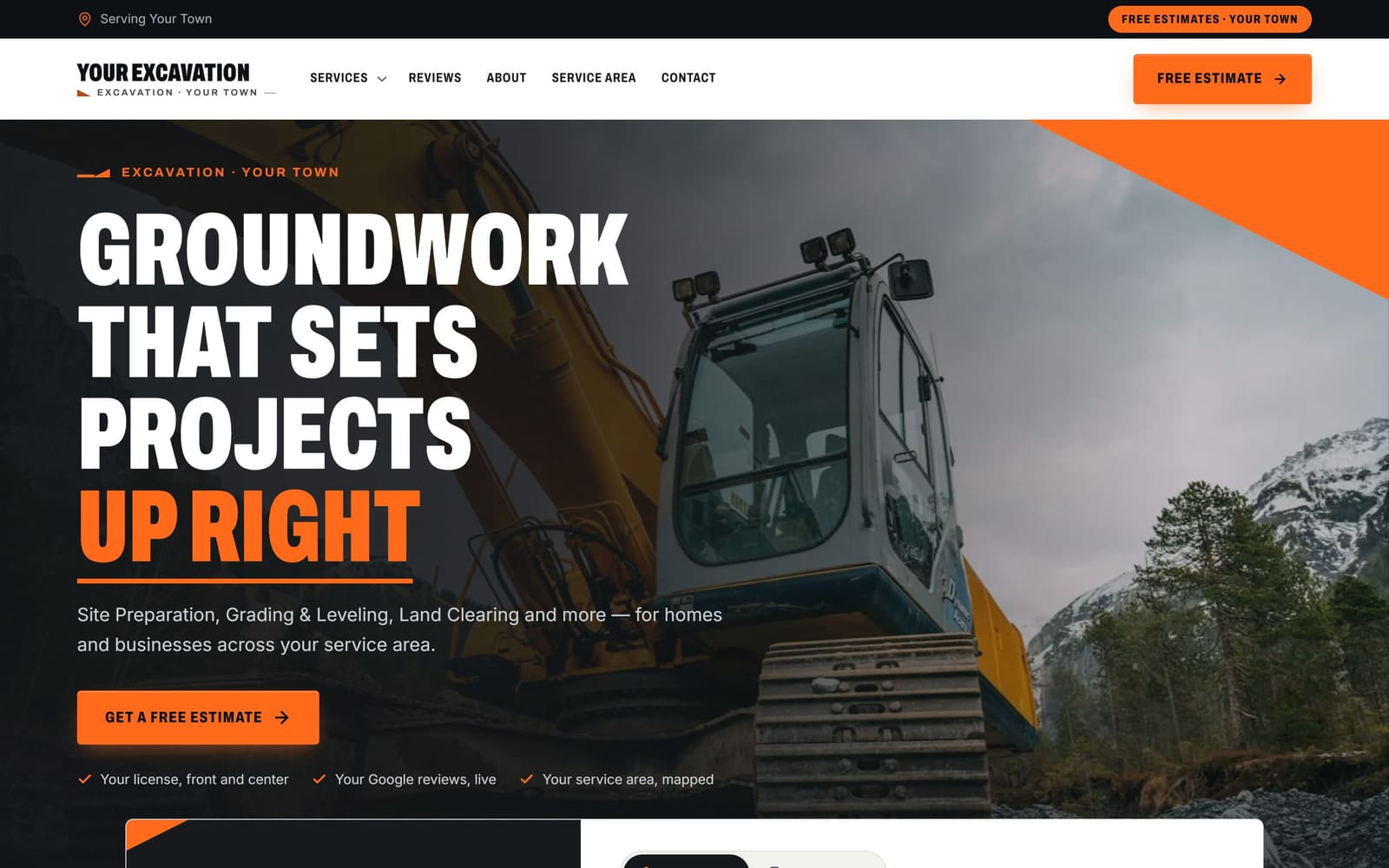
A sample excavation website, the kind Vevang builds and keeps improving.
The same sample site on a phone.
Sample demo · the kind of site we build for excavation

What does this include?

AI Search for excavation means answering the questions lot owners and builders type into chat tools: clearing an acre, fixing a flooded yard, digging a basement. Vevang Sites writes plain answer blocks, keeps your business facts identical everywhere, adds structured data, and builds a page for each type of dig you do.

Why it matters

Why it’s different for your trade.

01

The question comes before the contractor

A homeowner with a wet basement asks an assistant whether the problem is grading or a failed drain line. That conversation shapes who they call. If your site explains the difference, your pages are part of the answer.

02

Builders screen subs in a hurry

A builder lining up next season's schedule wants an excavator who can dig footings on a tight infill lot. Assistants can only repeat what is written down: your machines, your access limits, your insurance, the counties you work.

03

Mismatched facts create doubt

If your shop address, service radius and phone read one way on your site and another on your map listing, machines have no way to pick. Consistent facts everywhere make you easier to describe correctly.

What we do

The work, step by step.

01

Collect the questions you already answer

We pull the questions from your bid calls: how much fill do I need, can you get a machine through a six-foot gate, who calls in the utility locate, do you haul the spoils off. Those become page sections.

02

Put a plain answer at the top

Every page opens with two or three direct sentences before the sales language. Someone skimming gets the answer, and so does a model summarizing your page for a search result.

03

Split the work into real pages

Land clearing, grading and site prep, French drains, foundation and basement excavation, utility trenching, driveway cut-in, pond work, demolition and haul-off. One dig type per page, each with its own answers.

04

Lock down your business facts

Name, phone, shop address, service towns and counties, hours, insurance and licensing, and your equipment list all read the same on your site and your Google Business Profile.

05

Add structured data

We mark up your services, service area, project photos and question sections so machines read them as data instead of guessing from paragraph text. Call and form tracking shows which pages produce real bid requests.

06

Keep it current every week

SEO Ranker reviews your pages weekly, adds answers as new questions come in from the field, and updates seasonal content when drainage calls or spring building work pick up.

Common mistakes

What usually goes wrong.

One page that says everything

A single services page listing clearing, trenching, drainage and demo gives a machine nothing specific to repeat. Someone asking about a flooded backyard needs a drainage page that names causes, methods and what you inspect first.

Equipment buried in photos

A gallery of iron proves nothing to software. Write the list: excavator sizes, dozer, skid steer, dump trucks, attachments, and the narrowest gate or gap each machine fits through. Builders and assistants both read text.

A service area nobody can pin down

"We travel for the right job" tells a model nothing. Name your towns and counties, state your normal radius, and say how haul distance changes a bid. Vagueness gets you left out of local answers.

Skipping cost questions entirely

People ask AI what a driveway cut-in or basement dig runs. You do not need a price list. Explain what drives a bid: access, soil and rock, depth, haul distance, spoils, permits and locates.

Checklist

What you can check today.

  • List every machine with its size and access width
  • Write one page per dig type, not one services page
  • Open each page with a two-sentence direct answer
  • Name your towns, counties and normal haul radius
  • Explain what drives an excavation bid without quoting prices
  • Match your phone, address and hours across every listing
  • Add before-and-after photos with captions describing the site
  • Answer who handles permits, locates and spoil haul-off

How it works

You see it first. Then you decide.

You don’t sign anything to see it. Book a time, and your demo is ready before we talk.

  1. 01

    Book 15 minutes

    Pick a time — often the same day. Tell us your website, or just your business name and city.

  2. 02

    We build your demo

    Before the call, we build a demo of your new website from your real business: your services, your area, your reviews.

  3. 03

    See it, then decide

    We walk you through the demo on the call. You see exactly what you’d get before you spend anything.

  4. 04

    Launch, then improve weekly

    We build it for real and put it live. After launch, the SEO Ranker agent keeps improving it every week.

15 minutes on Google Meet. No obligation.

Questions

Straight answers.

Can you get ChatGPT to recommend my excavation company?

No, and nobody can. Assistants decide what to say on their own, and they change constantly. What we control is clarity: accurate pages about your dig types, equipment and service area, consistent facts, and structured data. That gives any system reading your site a correct picture to work from.

Do I have to publish prices for grading or basement digs?

No. Excavation bids depend on access, soil, rock, depth, haul distance and where the spoils go. Write those factors out plainly and explain what changes a number. That answers the question honestly, helps a lot owner prepare for a site visit, and gives machines something specific to summarize.

Does this replace my Google Business Profile work?

No, it works alongside it. Your profile still drives map results when someone searches for an excavator nearby. AI clarity helps when the same person asks a chat tool why their yard floods every storm. We manage both, and the facts stay identical between them.

Will this help me get work from builders?

It helps when a builder or their office manager searches for a sub. Give them a builder page: plan-reading, footing and basement digs, trenching, scheduling windows, insurance limits, and who they call on site. Written clearly, that page answers their screening questions before the first phone call.

How long before I see anything from AI search?

Slower than a phone call and faster than most people expect from a website rebuild. Pages need to be published, crawled and referenced. Rankings and AI mentions cannot be guaranteed by anyone. What you will see sooner is better bid requests, because callers arrive already knowing what you run.

Are project photos useful for AI search?

Only with words attached. A photo of a graded pad means nothing to software until the caption says what the site looked like, what you cut and filled, how you handled runoff, and roughly how long it took. Captions turn your gallery into readable proof.

What questions should my drainage page cover?

Why a yard holds water, how grading differs from a French drain, what a downspout tie-in does, when a dry well or catch basin makes sense, whether the fix needs a permit, and what you look at during a site visit after a heavy storm.

What happens on the 15-minute call?

We build a demo of your new site before we talk, using your real service area and the dig types you actually run. On the call you tell us what is wrong with it, what equipment to add, and which jobs you want more of. Then we adjust.

More for excavation

One team for the whole job.

Reviewed 2026-09-24

Your demo is free

See your new website on the call.

Tell us your website — or your business name and city — and pick a time. We’ll have your demo ready before we talk.

Pick a 15-minute time. Your demo is built before the call.