The search happens once
A stranded driver searches, scans three listings and calls. There is no second visit, no comparison tab, no email. If your pages do not rank for that moment, the tow is gone before you know it existed.
 Sites/ Towing companies · SEO
Local SEO · Towing companies
Your customers search from a shoulder, a parking lot or a crash scene. Local SEO puts your dispatch number in front of them before they tap the next listing.
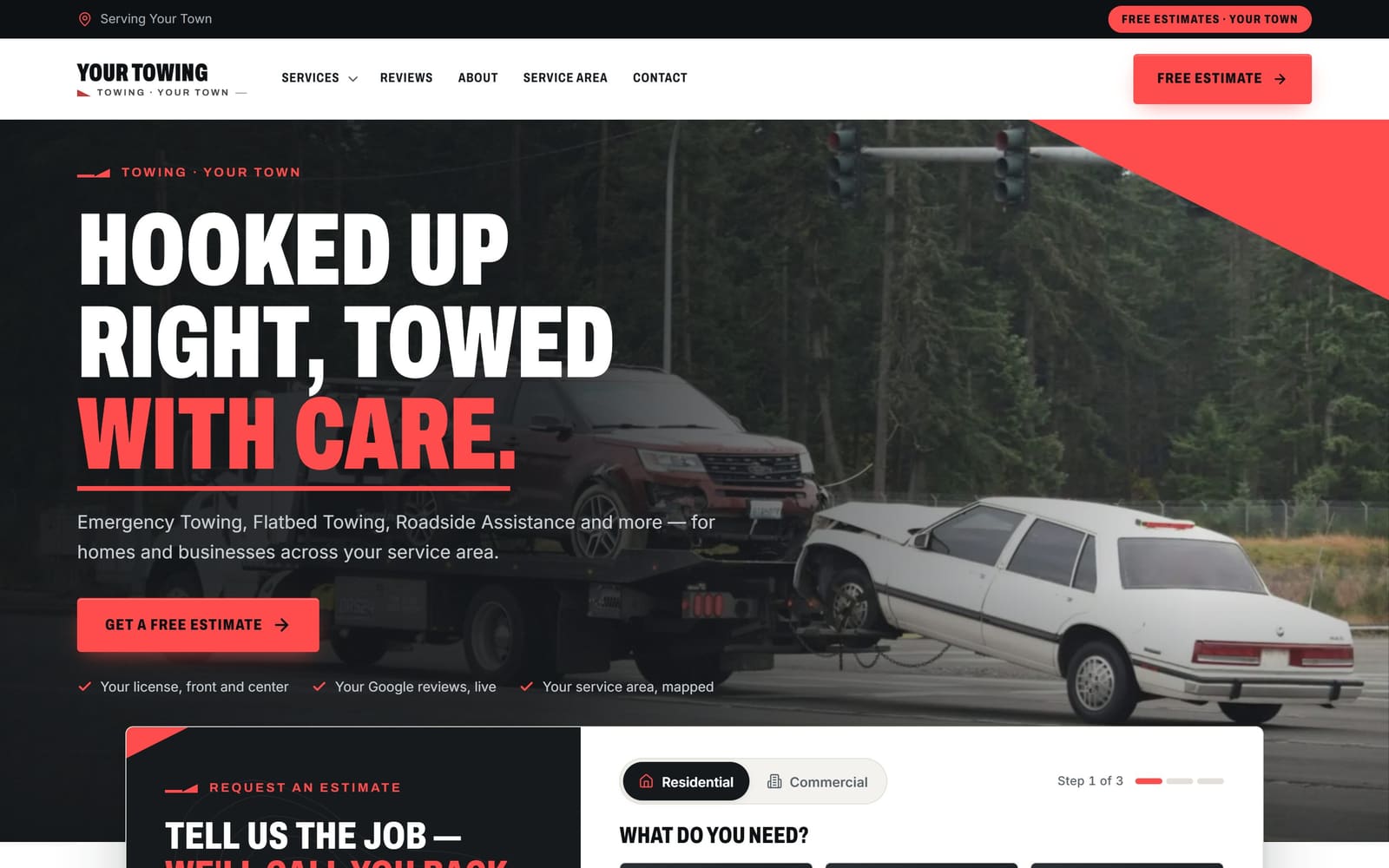
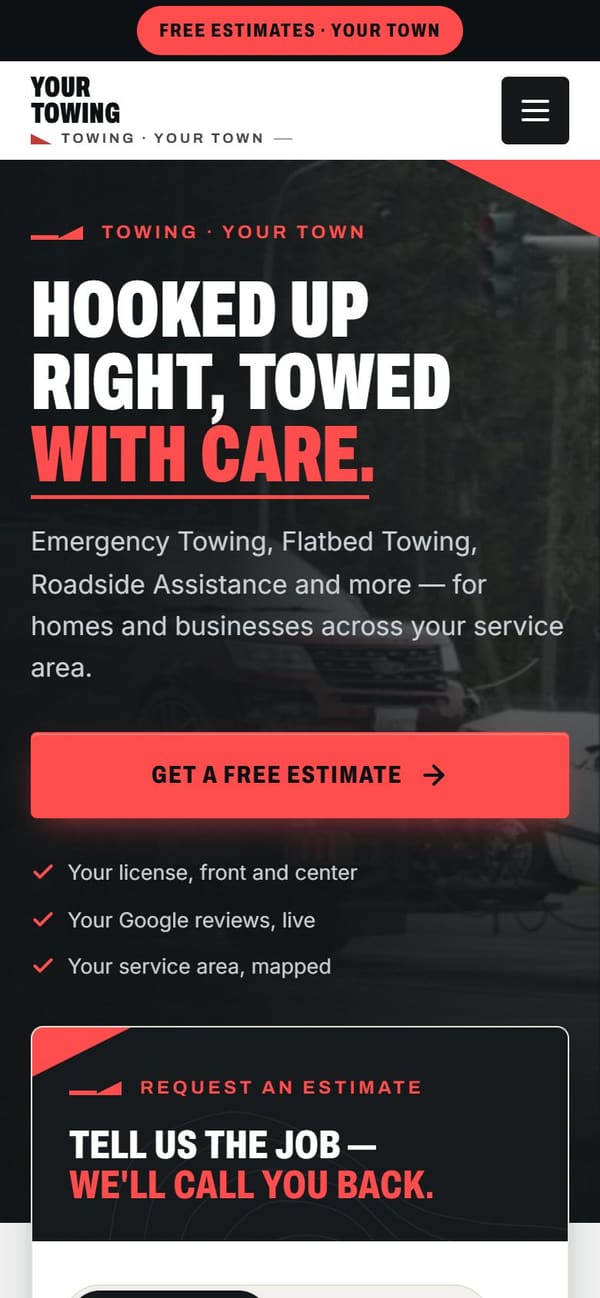
Vevang Sites builds your towing website, then runs local SEO on it every week. We create service pages by vehicle class and roadside job, build service-area pages around your radius, fix technical issues that slow phones down, and manage your Google Business Profile, reviews and call tracking.
Why it matters
A stranded driver searches, scans three listings and calls. There is no second visit, no comparison tab, no email. If your pages do not rank for that moment, the tow is gone before you know it existed.
Towing is won by distance and arrival time. Search engines need to understand which towns, highways and exits you cover. Clear service-area pages tell both the algorithm and the caller you can reach them.
First ice storm, a heat wave, a holiday travel weekend. Demand spikes for winch-outs, jump-starts and recovery. Pages that already exist and already rank catch that surge. Pages written that week do not.
What we do
How far you tow, which vehicle classes you handle, whether you run 24 hours or answer nights by phone, what you charge for a hookup versus per mile. Every page we write is built on those answers.
You see a real towing site with your services, your coverage and your dispatch number in the header, not a slide deck. We build it before your 15-minute call so you can judge the work directly.
Light-duty, heavy-duty, accident towing, winch-outs, jump-starts, lockouts, fuel delivery, motorcycle hauls. One page each. A driver searching "winch out truck stuck in ditch" lands on a page about that, not a homepage list.
Service-area pages for the towns, highway stretches and exits inside your radius. Each one names real landmarks and roads, states drive time honestly, and links back to the right service page.
Tap-to-call at the top of every screen, fast loading on a weak roadside signal, and call tracking so you know which pages and which searches produce actual dispatches.
Every week the agent checks rankings, page speed, broken links and new search terms. Ahead of winter it pushes recovery and battery pages. Rankings are never guaranteed, but the work does not stop.
Common mistakes
A bullet list of twelve towing services ranks for none of them. Search engines match specific pages to specific searches. Heavy-duty recovery and a motorcycle tow are different jobs and need different pages.
"24/7 service" with no phone answered at 2am costs you a review and a repeat customer. Say your real hours and your real radius. Honest limits beat vague promises when someone is deciding who to call.
Callers after a wreck want to know if you bill the insurer, take cards on the truck, or require payment before release from storage. Leaving that off sends them to a company that spells it out.
A heavy homepage with a video header will not load on one bar of signal on a rural shoulder. That is not a design preference. That is a lost call every time conditions are bad.
Checklist
How it works
You don’t sign anything to see it. Book a time, and your demo is ready before we talk.
Pick a time — often the same day. Tell us your website, or just your business name and city.
Before the call, we build a demo of your new website from your real business: your services, your area, your reviews.
We walk you through the demo on the call. You see exactly what you’d get before you spend anything.
We build it for real and put it live. After launch, the SEO Ranker agent keeps improving it every week.
Questions
New service and service-area pages usually take weeks to months to gain traction, and competitive towns take longer. Your Google Business Profile often moves sooner. Nobody can guarantee a ranking position. What we can promise is steady weekly work and call tracking so you see which pages produce dispatches.
Start with what you actually run. If you only do light-duty, we build light-duty, roadside and recovery pages deeply rather than faking a heavy-duty page. If you have a rotator and run heavy recovery, that deserves its own page because those searches are rare and valuable.
Club work fills slow hours but pays on their terms. Local SEO brings you direct calls at your own rates, plus fleet and body shop relationships. Most operators want both. Your site should also have a commercial accounts page so shops and fleets can find you.
Often yes, because the competition in smaller markets is thinner and your radius is tighter. A one-truck operation with clear town pages and real reviews can rank well locally. The bigger question is whether you can answer the phone when calls start coming.
For towing it carries enormous weight because map results show first on phones. We manage categories, service areas, hours, photos of your trucks and posts. We send review requests after jobs and reply to reviews. That profile and your website pages support each other.
People do ask assistants for a tow truck now. We structure your pages so your services, coverage area and hours are stated in plain, machine-readable language. No one can promise any assistant will name your company, but unclear sites are certainly skipped.
You keep the website. Rankings tend to slide over time as competitors keep publishing and your listing details go stale. The weekly work is what holds position through season changes. There is no long lock-in, but SEO rewards the operators who stay with it.
Fifteen minutes on a call. Bring your service radius, your truck list, your hours and how you handle payment and storage. We build a demo site before that call using what we can find publicly, then correct it with your answers.
More for towing companies
Reviewed 2026-09-24
Your demo is free
Tell us your website — or your business name and city — and pick a time. We’ll have your demo ready before we talk.