Vevang AISites/ Property managers · AI search

AI search visibility · Property managers

AI Search for Property Management Companies

Owners and renters now ask AI assistants what a manager charges, what they handle, and where they operate. Your site has to answer in plain language.

Pick a 15-minute time. Your demo is built before the call.

  • Your demo, built before the call
  • Improved every week
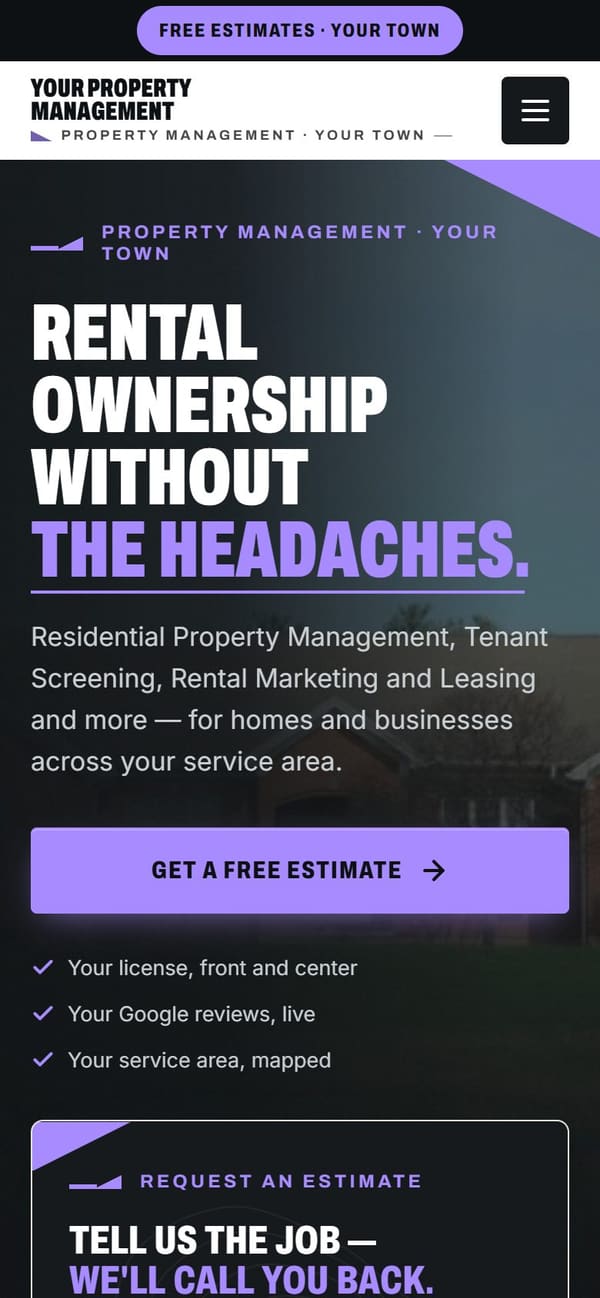
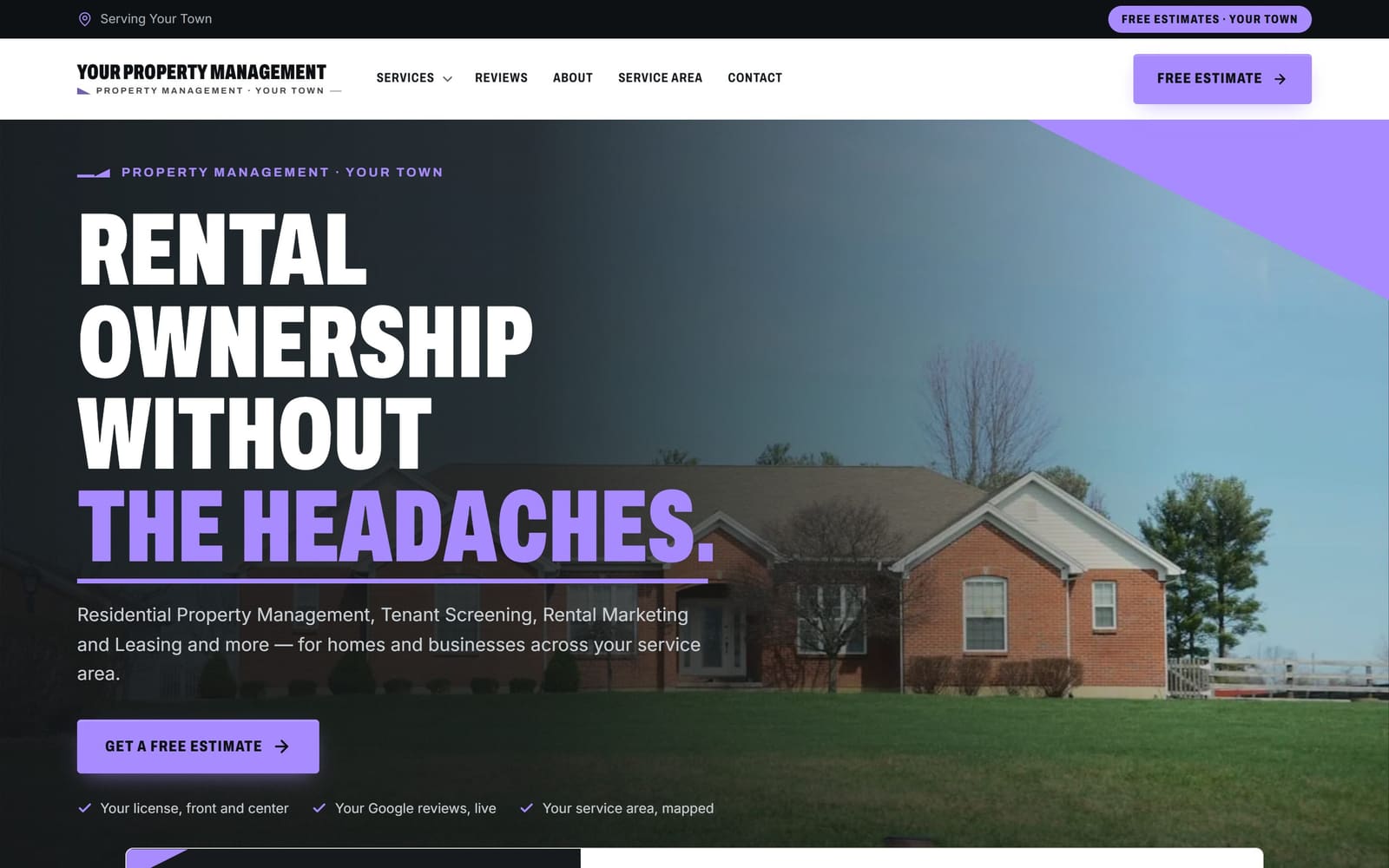
A sample property managers website, the kind Vevang builds and keeps improving.
The same sample site on a phone.
Sample demo · the kind of site we build for property managers

What does this include?

AI assistants answer questions by reading what sites say plainly. Vevang Sites writes clear answer blocks for owner and renter questions, keeps your fee structure, service areas and property types consistent everywhere, and adds structured data. No one can promise an AI will name you. Clear, current pages are what you control.

Why it matters

Why it’s different for your trade.

01

Owners ask about fees before they call

A landlord comparing managers asks an assistant what property management costs in their city and what a management fee covers. If your site never explains your structure, you are left out of the comparison entirely.

02

Renters ask about rules, not brands

Renters ask about pet policies, application requirements, income rules and deposits. Those answers live on your pages or they do not. Pages that answer them get pulled into conversations renters are already having.

03

Your facts are scattered across systems

Listing portals, your owner portal, association directories and your site often disagree on your address, phone and what you manage. Mixed signals make you an unreliable source for any assistant summarizing local managers.

What we do

The work, step by step.

01

Split the questions by audience

We list what owners ask and what renters ask, separately. Owner questions cover fees, lease-up, evictions and reporting. Renter questions cover applications, pets, maintenance and rent payment. Both sets get their own answer pages.

02

Write the fee explanation in plain words

We publish how you charge: management percentage or flat, leasing fee, renewal fee, maintenance markup or none, and what is included. Stated clearly, in sentences, not a table image an assistant cannot read.

03

Lock down your business facts

One office address, one phone, one name, one set of hours plus your after-hours maintenance line. We match them across your site, Google Business Profile and the directories where management companies get listed.

04

Add structured data for the real things

Your company, your service areas, your offices, your FAQ answers and your available rentals get marked up so machines read them correctly instead of guessing from page layout.

05

Build area and property-type pages that say something

A page for each city or county you serve, and for residential, multifamily, HOA and commercial work. Each states what you manage there, unit counts you handle, and who to contact.

06

Keep listings and answers current

SEO Ranker reviews the site weekly. Stale rentals, changed pet policies and old fee language get flagged and fixed, because outdated pages are the fastest way to become a source nobody trusts.

Common mistakes

What usually goes wrong.

Hiding fees until the discovery call

Owners searching with AI will not be handed a mystery. If your pricing model is invisible, an assistant summarizes the managers who explained theirs. Say the structure publicly and save the exact quote for the call.

Letting the portal be your whole site

Sending every visitor straight into a resident or owner portal leaves almost no readable content. Portals are logged-in software. Your public pages have to carry the answers about screening, maintenance and leasing.

One vague 'we serve the metro area' line

Assistants answer by city and neighborhood. A single metro mention gives them nothing specific. Name the cities, suburbs and counties where you actually place tenants and inspect properties.

Leaving dead listings up

Rented units still showing as available make your whole site look unmaintained. It also frustrates renters who call about a home leased three weeks ago, burning your staff's time.

Checklist

What you can check today.

  • Write one page explaining exactly how you charge owners
  • Publish pet, income and application rules in plain sentences
  • Name every city and county you manage properties in
  • List which property types you take and which you do not
  • Confirm your phone and address match across every directory
  • Post your after-hours maintenance number where renters can find it
  • Remove or mark every rental that is already leased
  • Answer the top ten owner questions in short paragraphs

How it works

You see it first. Then you decide.

You don’t sign anything to see it. Book a time, and your demo is ready before we talk.

  1. 01

    Book 15 minutes

    Pick a time — often the same day. Tell us your website, or just your business name and city.

  2. 02

    We build your demo

    Before the call, we build a demo of your new website from your real business: your services, your area, your reviews.

  3. 03

    See it, then decide

    We walk you through the demo on the call. You see exactly what you’d get before you spend anything.

  4. 04

    Launch, then improve weekly

    We build it for real and put it live. After launch, the SEO Ranker agent keeps improving it every week.

15 minutes on Google Meet. No obligation.

Questions

Straight answers.

Can you get our company named in ChatGPT answers?

No one can promise that, and anyone who does is guessing. What we control is clarity: plain answers to the questions owners and renters ask, consistent facts about your offices and service areas, and structured data. That is the work that makes a company readable. Whether an assistant names you is its decision, not ours.

Do we have to publish our management fee?

You do not have to publish an exact number. You do need to explain your model: percentage or flat monthly, whether leasing and renewal fees are separate, and what maintenance coordination costs. Owners compare structures before they call. A clear explanation puts you in the comparison and filters out owners who were never a fit.

Our rental listings come from a third-party system. Does that hurt us?

It can, if the listings load in a way that leaves your pages mostly empty. We make sure your available-rentals page has readable text around the feed, and that each property type and service area has a real page of its own. The feed stays; the surrounding content does the explaining.

Does this help with renters or just owners?

Both, and they need different pages. Renters ask about applications, screening criteria, pets, deposits and how to report a leak. Owners ask about fees, vacancy times, eviction handling and reporting. We write both sets so your site serves the tenant who would otherwise call your office and the owner deciding whether to switch.

We manage HOAs and commercial as well as rentals. Does that confuse things?

Only if it is all mashed onto one page. Association management and commercial management are different questions with different buyers. Each gets its own page describing what you handle, board meeting support or CAM reconciliation, and who to contact. Separated clearly, the mix makes you look capable rather than vague.

How is this different from regular local SEO?

Local SEO aims at rankings in Google Maps and search results. AI clarity aims at being understandable when something summarizes your market. The overlap is large: consistent facts, real area pages, current listings. We do both together, and SEO Ranker keeps working on the site every week after launch.

How long before we see anything?

Fee and policy pages can go live quickly. Assistants and search engines pick up changes on their own schedule, and no one controls that timing. We cannot guarantee rankings or placement. What we can do is keep publishing and fixing every week so your site keeps getting more useful to read.

What happens on the 15-minute call?

We build a demo of your site before we talk, so you are looking at something real instead of a slide deck. We ask which cities you cover, what property types you take, and how you charge. Then you decide. Book a call and we will have the demo ready.

More for property managers

One team for the whole job.

Reviewed 2026-09-24

Your demo is free

See your new website on the call.

Tell us your website — or your business name and city — and pick a time. We’ll have your demo ready before we talk.

Pick a 15-minute time. Your demo is built before the call.