Vevang AISites/ Movers · AI search

AI search visibility · Movers

AI Search for Moving Companies

People now ask an assistant what a two-bedroom move costs and which movers handle a piano. Your site should answer those questions in plain words, before anyone opens a quote form.

Pick a 15-minute time. Your demo is built before the call.

  • Your demo, built before the call
  • Improved every week
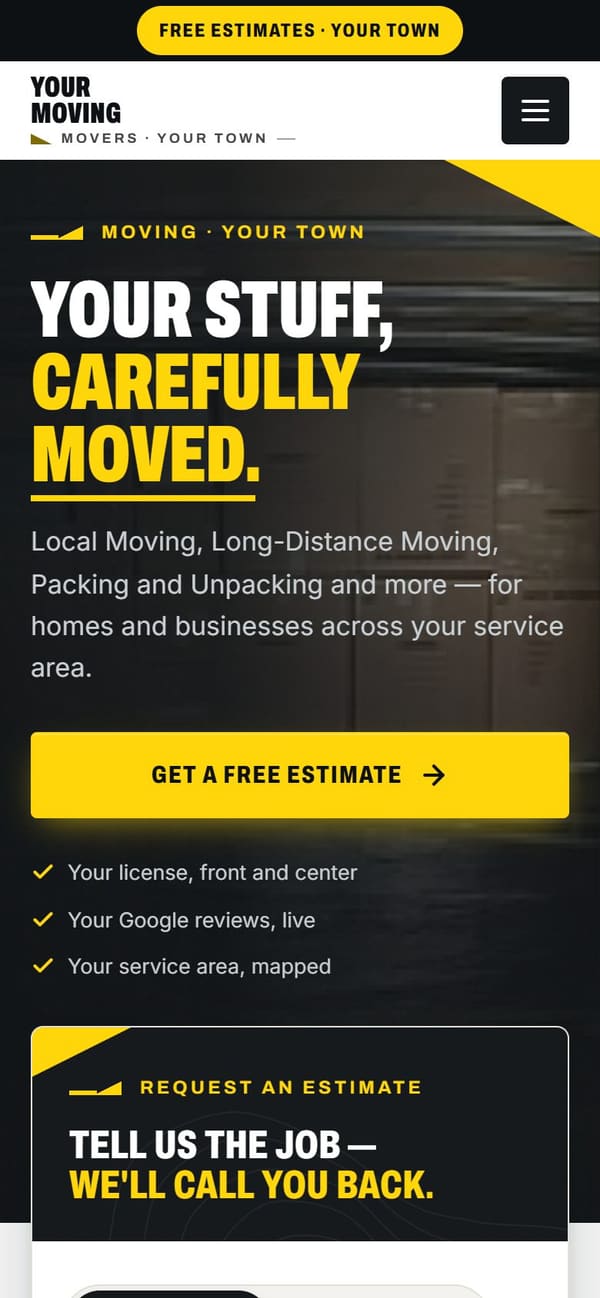
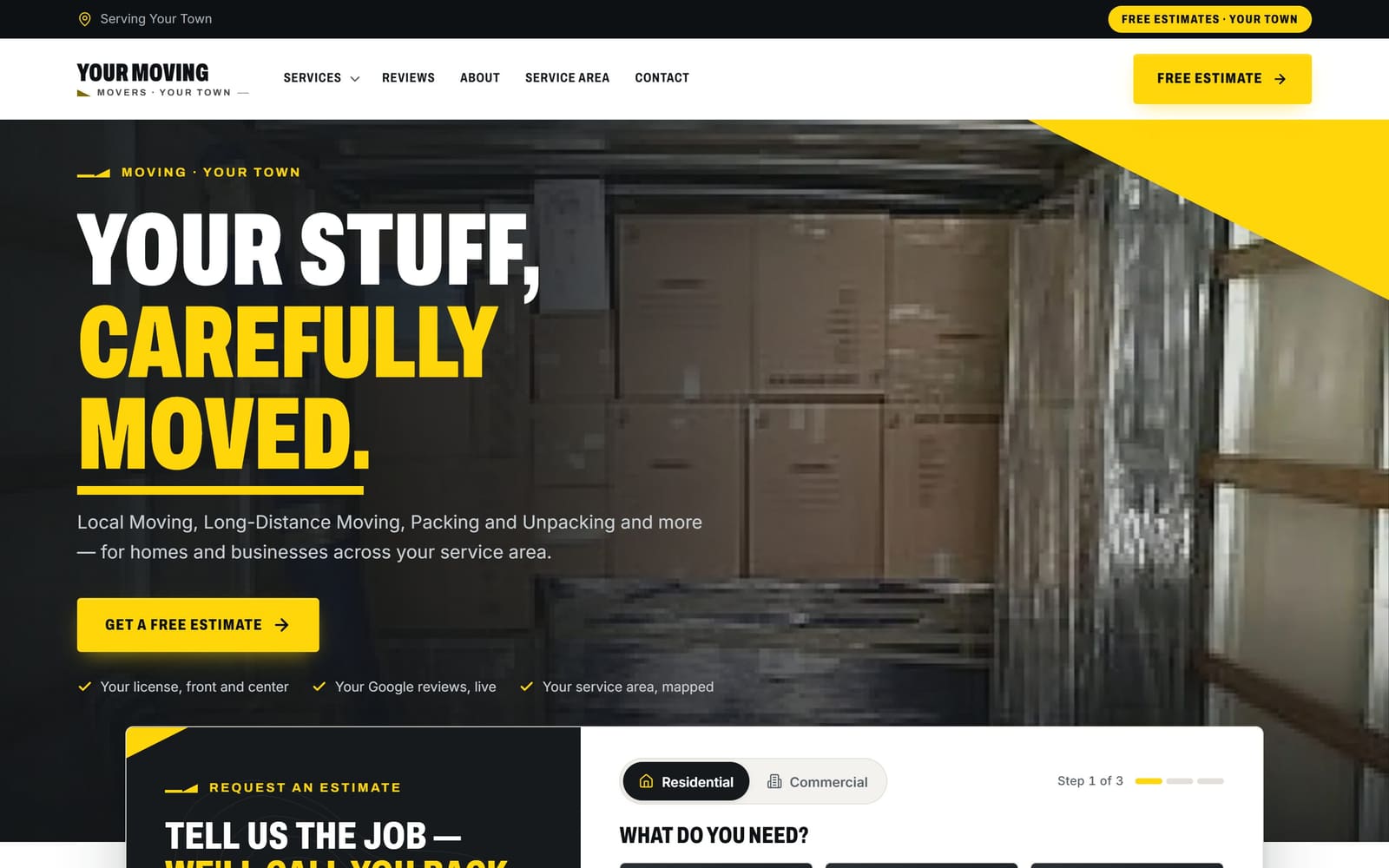
A sample movers website, the kind Vevang builds and keeps improving.
The same sample site on a phone.
Sample demo · the kind of site we build for movers

What does this include?

AI assistants answer moving questions by reading clear, consistent sources. Vevang Sites builds your moving company a site with plain answer blocks on rates, licensing, valuation and specialty moves, matching facts everywhere, and structured data. SEO Ranker improves it weekly. No one can promise an assistant will name you, and we do not.

Why it matters

Why it’s different for your trade.

01

Quote research starts in a chat box

Before they call three movers, people ask an assistant what a local two-bedroom move runs, how far ahead to book, and whether movers charge by the hour. If your site never states your model, the answer gets built from somewhere else.

02

Assistants repeat whatever facts they find

Your DOT number, legal name, DBA, service radius and phone sit in dozens of places. When old listings disagree with your site, an assistant may pass along the wrong one, or hedge and skip you entirely.

03

Specialty moves are exact questions

Nobody asks about movers in general. They ask who moves a piano, a gun safe, or a parent into assisted living. Those questions only match a page that names the item and explains how your crew handles it.

What we do

The work, step by step.

01

State how you charge, in text

Write out hourly versus flat rate, crew sizes, minimum hours, travel or fuel fee, and stair and long-carry charges. You are not publishing a quote. You are giving a range and the rules behind it, which is what people are asking for.

02

Lock one set of business facts

Pick your legal name, DBA, office address, phone, hours and service radius. Publish your DOT and MC numbers where they belong. Then match that exact wording on your Google Business Profile and every moving directory that lists you.

03

Build a page per move type and lane

Local moving, apartment moving, long-distance, packing, piano, senior moving, office moves, labor-only, storage. Add real lanes you run often, city to city. Each page answers what is included, what it costs to start, and how long it takes.

04

Add structured data and clean headings

Mark up your business, services and reviews so machines read the same facts a person sees. Use question-shaped headings followed by a short direct answer, then the detail. Skip the long story above the first useful sentence.

05

Answer the awkward ones

What you will not load, released value versus full value protection, certificate of insurance for apartment buildings, elevator reservations, deposits and cancellation windows. These are asked constantly and answered vaguely by most moving sites.

06

Re-check as the answers change

Ask assistants the questions your customers ask and read what comes back. Where the answer is wrong or thin, fix the page it should have come from. SEO Ranker does this pass weekly and keeps your facts aligned.

Common mistakes

What usually goes wrong.

Every price question routed to a form

A page that only says call for a free quote gives an assistant nothing to work with. State your rate structure and minimums in writing. You can still require an inventory or a walkthrough before committing to a number.

Facts that drifted years ago

You changed warehouses, added a DBA, or renewed under a new entity, and half your listings never caught up. Mismatched addresses and DOT numbers make you look risky to a customer and unreliable to a machine.

Service-area pages that are city names in a template

Twenty pages of the same paragraph with the town swapped say nothing about the move. Write about the actual lane: parking rules, walk-ups without elevators, toll routes, typical drive time from your yard.

Leaving the description to directories

If review sites and lead marketplaces are the only places explaining what you move, that is what gets summarized. Your own site should be the fullest, clearest source about your crews, trucks and specialty work.

Checklist

What you can check today.

  • Publish your hourly rates, crew sizes, minimums and travel fee in plain text.
  • Put DOT and MC numbers in the footer and on your about page.
  • Write a short direct answer under every service heading.
  • List what you will not load, including propane, paint and ammunition.
  • Match legal name, DBA, address and phone across every listing.
  • Add a page for each specialty move your crews actually do.
  • Explain released value versus full value protection in one paragraph.
  • Ask an assistant three questions your customers ask and read the answers.

How it works

You see it first. Then you decide.

You don’t sign anything to see it. Book a time, and your demo is ready before we talk.

  1. 01

    Book 15 minutes

    Pick a time — often the same day. Tell us your website, or just your business name and city.

  2. 02

    We build your demo

    Before the call, we build a demo of your new website from your real business: your services, your area, your reviews.

  3. 03

    See it, then decide

    We walk you through the demo on the call. You see exactly what you’d get before you spend anything.

  4. 04

    Launch, then improve weekly

    We build it for real and put it live. After launch, the SEO Ranker agent keeps improving it every week.

15 minutes on Google Meet. No obligation.

Questions

Straight answers.

Will this make ChatGPT recommend my moving company?

No one can promise that, and anyone who does is guessing. What you control is whether your rates, licensing, service area and specialty moves are stated clearly and consistently. Assistants tend to work from sources that are specific and agree with each other. We make your site that source and keep it current.

Do I have to post prices to do this?

You do not have to post a fixed price per move. You do need to explain how pricing works: hourly or flat, crew size, minimum hours, travel fee, stairs and long carries. That is what people are asking for, and it filters out the callers who were never going to book you.

What do people actually ask AI about movers?

How much a one- or two-bedroom move costs, how far ahead to book, whether movers disassemble beds, who moves pianos and safes, what movers cannot legally transport, how tipping works, and whether a company is licensed for interstate moves. Your site should answer each of those in a couple of sentences.

Does this replace Google Business Profile and local SEO?

No. Most moving jobs still come from the map pack and organic search, and that work continues. AI clarity uses the same foundation: accurate facts, real service pages, structured data. We manage your Google Business Profile alongside the site rather than treating them as separate projects.

We do local and interstate work. How should that be split?

Keep them on separate pages. Local moves are priced by the hour with a crew and a truck. Interstate is weight or volume, with different licensing and delivery windows. Mixing both on one page produces a muddled answer, and customers searching for one rarely want the other.

How does structured data help a moving company specifically?

It labels the things people ask about so machines do not have to guess: your service area radius, the moving services you offer, your hours, your reviews. It does not change what customers see on the page. It makes the facts on that page machine-readable and harder to misstate.

How fast does any of this show up?

Slower than you want. Search systems and assistants refresh on their own schedule, and rankings cannot be guaranteed by anyone. The near-term win is a site that answers quote questions before the call, which shortens the back-and-forth during your busiest months.

What happens on the call?

We build a demo of your moving site before we talk, so you are looking at real pages instead of a slide deck. Fifteen minutes. You tell us the lanes and specialty work you want, and we show you what the site and the weekly improvements would cover.

More for movers

One team for the whole job.

Reviewed 2026-09-24

Your demo is free

See your new website on the call.

Tell us your website — or your business name and city — and pick a time. We’ll have your demo ready before we talk.

Pick a 15-minute time. Your demo is built before the call.