Patio work is shopped, not grabbed
Nobody hires the first mason they see for a $30k outdoor living project. They browse, compare styles, and collect three bids. Ranking well means being in that first browse, weeks before anyone picks up the phone.
 Sites/ Masonry & hardscaping · SEO
Local SEO · Masonry & hardscaping
Homeowners plan patios all winter and call about crumbling mortar the week the frost leaves. Your site should be the one they find both times.
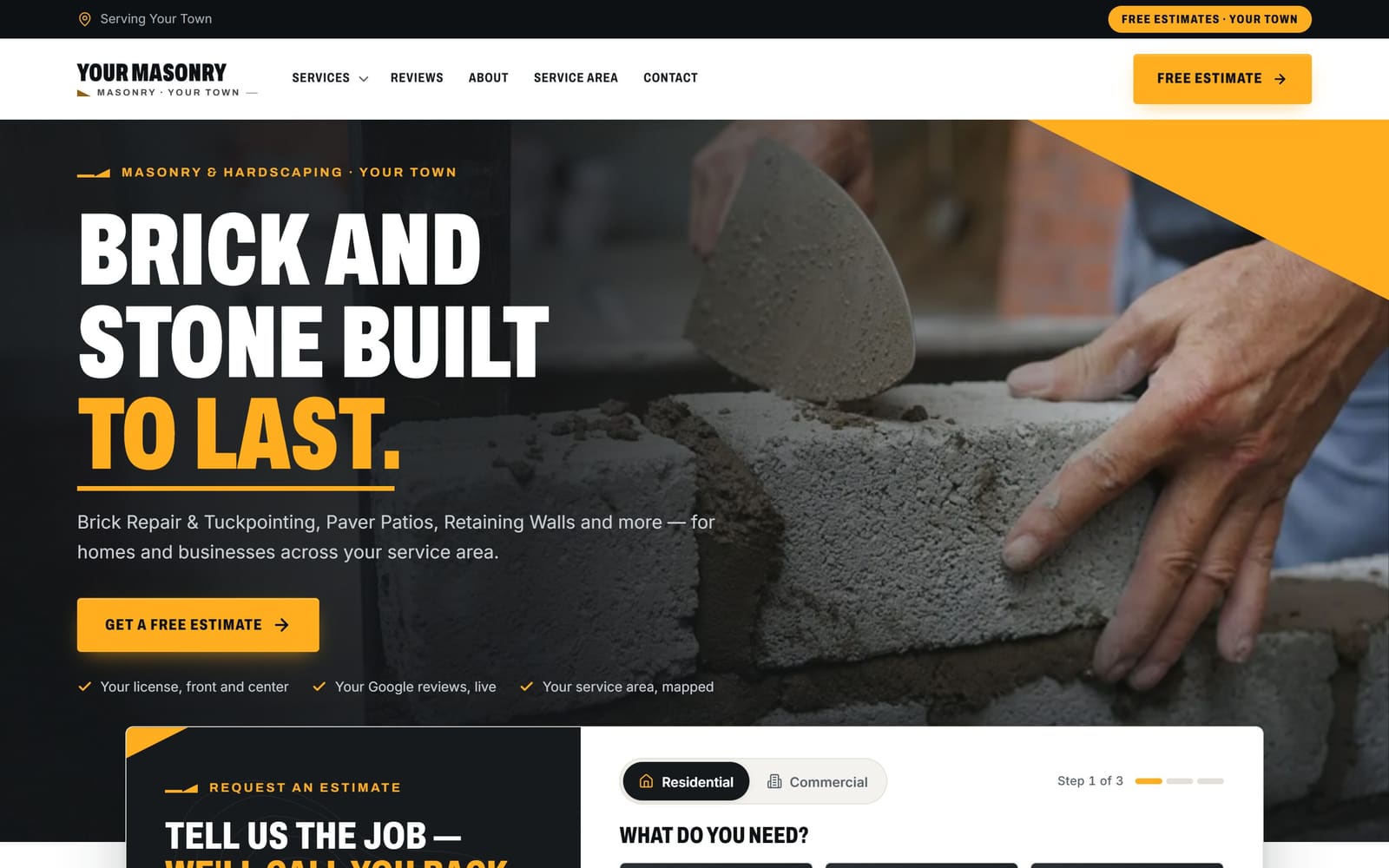
Vevang Sites builds your masonry website and runs the local SEO behind it: separate pages for paver patios, retaining walls, tuckpointing and chimney work, service-area pages for the towns you drive to, and project galleries search engines can actually read. Our SEO Ranker agent improves the site weekly. Rankings are never guaranteed.
Why it matters
Nobody hires the first mason they see for a $30k outdoor living project. They browse, compare styles, and collect three bids. Ranking well means being in that first browse, weeks before anyone picks up the phone.
The homeowner with a leaning retaining wall and the homeowner planning an outdoor kitchen use different words and want different proof. One page about "masonry services" serves neither. Separate pages let each search land on work that matches.
Masons have thousands of photos and almost no text. Search engines read words. Captions, materials, towns and project details turn a gallery into pages that rank instead of a folder of unnamed images.
What we do
We map what you actually sell: paver patios, natural stone patios and walkways, retaining walls, fire pits and outdoor kitchens, brick and stone steps, tuckpointing, chimney repair, stone veneer. Each gets its own page with its own photos and language.
"Mortar falling out between bricks," "patio pavers sinking," "wall leaning toward the house." We use plain descriptions alongside the trade terms, so the search matches the page and the homeowner knows they're in the right place.
One page per town you truly serve, mentioning the housing stock, the common work there, and projects you've done nearby. Older brick neighborhoods get repair language. New subdivisions get patio and wall language.
Project pages instead of one lightbox: material used, base and drainage detail, town, before and after. Descriptive file names and alt text. Each project links to the service page it belongs to and back.
Full-size masonry photos are heavy. We compress and size images so pages load fast on a phone in a driveway, then clean up headings, titles, sitemap and internal links so every service page is reachable in one click.
SEO Ranker reviews the site weekly: new project content, page structure, internal links, and pages for searches you're close on. Call and form tracking shows which pages bring estimate requests worth driving to.
Common mistakes
A list of ten bullet points cannot rank for tuckpointing and paver patios and outdoor kitchens at once. Each of those is a different search with a different homeowner behind it. Give each one a page with photos of that exact work.
Two hundred photos in a slideshow, no captions, no materials named, file names straight off the camera. Beautiful to visitors, blank to search engines. Name the stone, the pattern, the town, and what the problem was.
Many masons want the big builds and bury tuckpointing and chimney repair. Those searches are urgent, local and constant, and they fund your winter. They also turn into patio jobs later, once the homeowner trusts you.
A footer stuffed with forty town names helps nothing and looks thin. Write real pages for the places you'll actually drive to with a skid steer and a pallet of stone.
Checklist
How it works
You don’t sign anything to see it. Book a time, and your demo is ready before we talk.
Pick a time — often the same day. Tell us your website, or just your business name and city.
Before the call, we build a demo of your new website from your real business: your services, your area, your reviews.
We walk you through the demo on the call. You see exactly what you’d get before you spend anything.
We build it for real and put it live. After launch, the SEO Ranker agent keeps improving it every week.
Questions
Local search moves slowly. New pages usually need a few months to settle, and competitive patio searches take longer than repair searches. Nobody can guarantee a ranking or a date. What you can control is publishing real pages, keeping the site fast, and adding projects steadily so there's always something new to index.
Two. Homeowners search by material because they've already picked a look. Someone searching flagstone walkway does not want concrete paver photos. Separate pages let you show the right work, use the right words, and price differently. Link them to each other so a browsing homeowner can compare without leaving your site.
Only for towns you'll actually drive to. A real page mentions the housing stock, the work that's common there, and nearby projects with photos. Five pages like that beat forty thin ones. If you can't write three honest paragraphs about a town, leave it off and focus on where your trucks already go.
Winter is when homeowners plan spring patios and outdoor kitchens. That browsing happens months before they call. Pausing means you're missing the research window and starting cold in March. Winter is also the best time to write project pages and organize photos from last season, while you're not on a wall all day.
Yes, and those searches are often easier to win. They're urgent, specific and local, and fewer masons write about them well. A repair page that explains when mortar needs repointing versus when a section needs rebuilding earns trust from someone who's afraid of being sold a full rebuild.
AI assistants pull from clear, well-structured pages. We write your site so the basics are unmistakable: what you build, what materials you work in, which towns you serve, and how to reach you. No one can promise any assistant will mention your business, but vague sites are easy to skip.
Call and form tracking shows which pages produce estimate requests, not just visits. You'll see whether the retaining wall page brings real jobs or just clicks. That tells us where to add content and which service pages deserve more project photos. Site visits alone are a weak measure for a mason.
We build a demo of your masonry site before we talk, using your work and your service area, so you're reacting to something real instead of a pitch. We'll walk through which service and town pages you're missing and what would change first. Fifteen minutes, no prep needed.
More for masonry & hardscaping
Reviewed 2026-09-24
Your demo is free
Tell us your website — or your business name and city — and pick a time. We’ll have your demo ready before we talk.