Vevang AISites/ Masonry & hardscaping · AI search

AI search visibility · Masonry & hardscaping

AI Search for Masons and Hardscapers

Homeowners now ask an assistant whether their chimney needs repointing or a rebuild before they ask a mason. Your pages decide what that assistant has to work with.

Pick a 15-minute time. Your demo is built before the call.

  • Your demo, built before the call
  • Improved every week
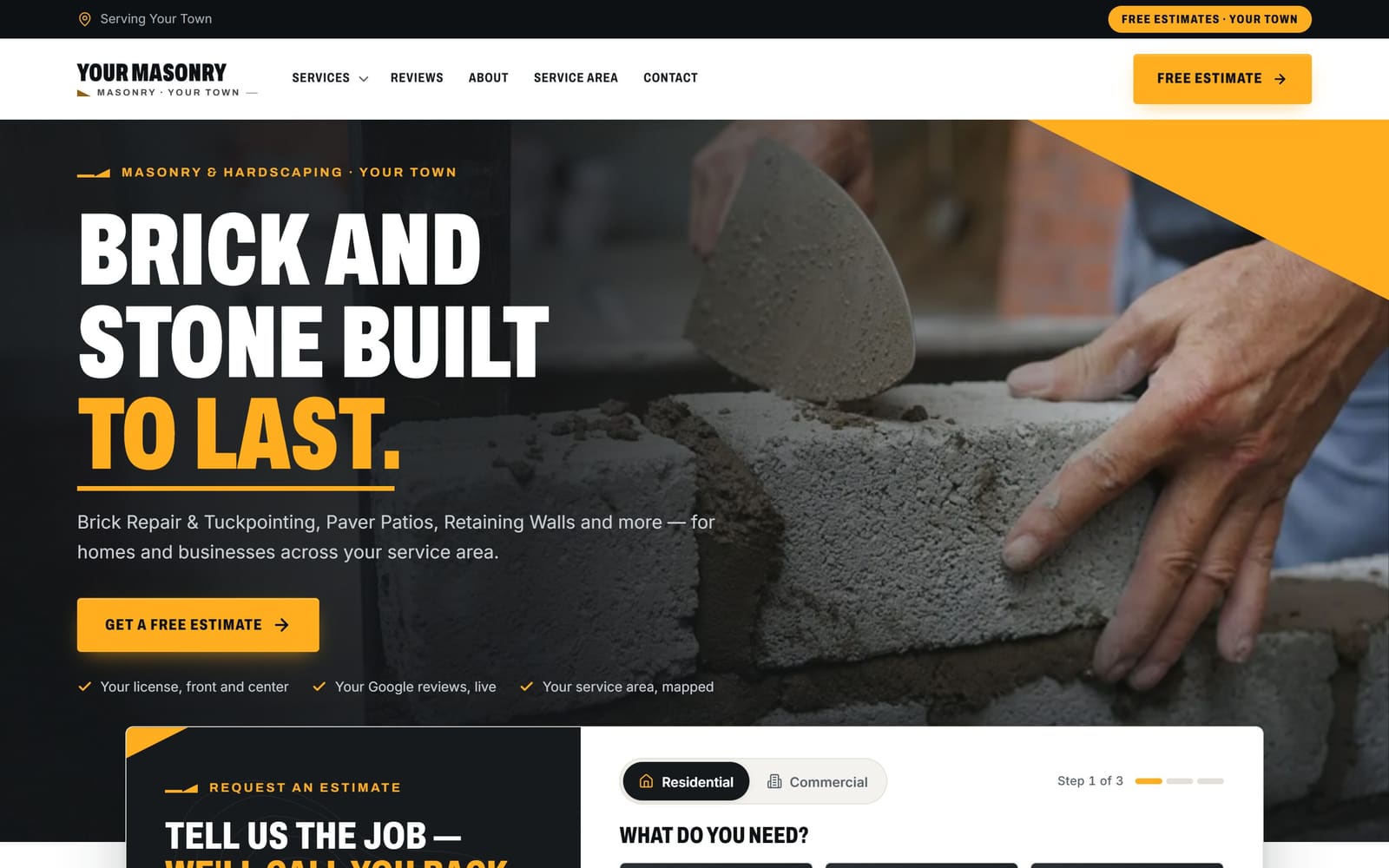
A sample masonry & hardscaping website, the kind Vevang builds and keeps improving.
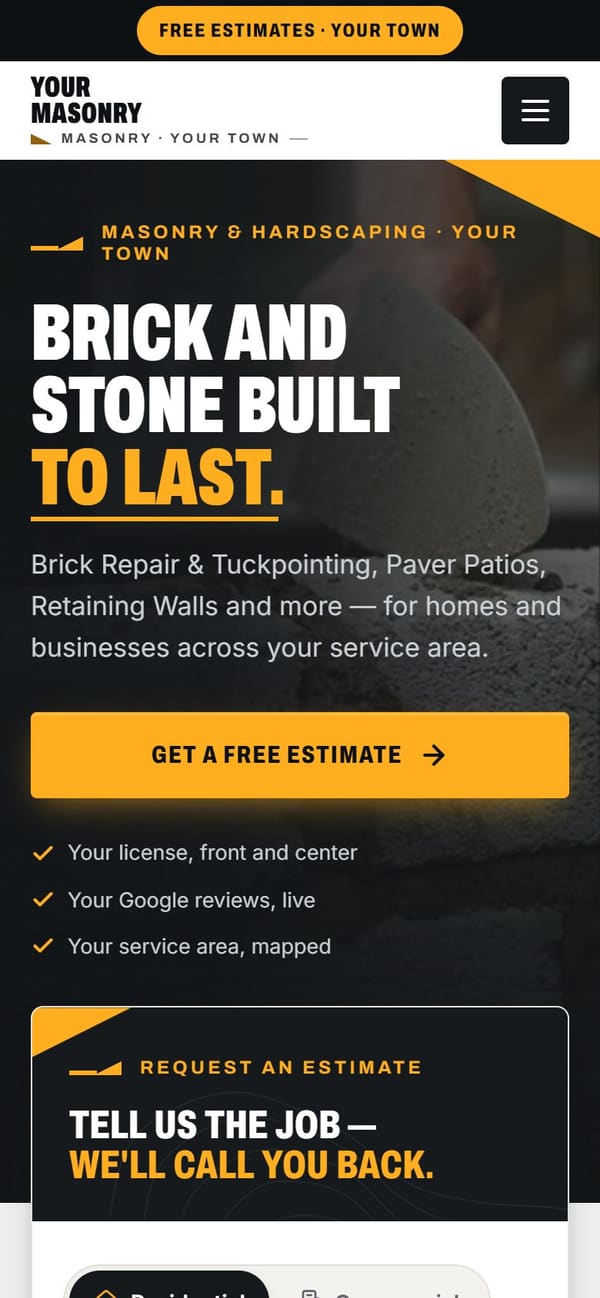
The same sample site on a phone.
Sample demo · the kind of site we build for masonry & hardscaping

What does this include?

Vevang Sites rewrites your masonry pages so AI assistants can read them: a plain answer at the top of each service page, consistent business facts everywhere, structured data, and pages that answer what homeowners ask before a patio or wall bid. No one can promise an AI names you.

Why it matters

Why it’s different for your trade.

01

Patio buyers research for months

An outdoor living project gets planned over winter and bid in spring. In those months the homeowner asks an assistant about paver versus flagstone, base depth and sealing. Pages that answer those questions in plain text are the ones machines can quote.

02

Repair questions have real answers

Loose brick steps, shedding mortar, a bulging wall. People ask whether it can be repointed or must come down. If your site never answers that in words, an assistant summarizing local masons has nothing specific of yours to use.

03

Your facts have to match

Assistants stitch together your site, your Google Business Profile and old directory entries. One dead phone number or a service area that says fifty miles on one page and eight towns on another makes every description of you less reliable.

What we do

The work, step by step.

01

Collect the real questions

We start from what your estimators hear: how deep is the base, will pavers settle, can you match 1920s brick, do I need a permit for a four-foot wall. Those become the questions your pages answer directly.

02

Put a plain answer up top

Each service page opens with two or three sentences that answer the question without hedging. The retaining wall page says how you handle drainage and base. The tuckpointing page says when repointing works and when the section gets rebuilt.

03

Make the facts identical everywhere

Business name, phone, hours, towns served and the materials you install are written the same on your site and your Google Business Profile. Old listings with a previous number or address get cleaned up so nothing contradicts.

04

Add structured data and captions

We mark up your services, service area and FAQ sections so machines read them cleanly. Gallery photos get captions naming the material, the project type and the town, because a photo of bluestone tells software nothing on its own.

05

Turn pricing into something answerable

You do not have to post a fixed number. Say what drives cost on a patio: square footage, base depth, grade, material, steps and seating walls. That gives an assistant a defensible answer instead of silence.

06

Improve it every week

SEO Ranker reviews the site weekly, adds answers for new questions, and keeps facts consistent as you add crews or towns. Call and form tracking shows which pages actually bring estimate requests.

Common mistakes

What usually goes wrong.

A gallery with no words

Beautiful project photos and nothing else. Homeowners love it; software reads an empty page. Every album needs text saying what material, what problem, what town and how the base and drainage were handled.

"Every project is custom" and nothing more

That sentence dodges the pricing question the homeowner just asked an assistant. Explain what changes the number on a paver patio or a stone wall. You keep your flexibility and the page finally says something.

Repair work buried under installs

Chimney repointing and step repair often live in one line on the services list. Then the crumbling mortar searches go elsewhere. Those calls deserve their own pages with plain answers about repair versus rebuild.

Facts that drift

A new number on the truck, an old one on a directory. A service area of towns on one page, a radius on another. Contradictions make every automated description of your company vaguer.

Checklist

What you can check today.

  • Write a two-sentence plain answer atop your paver patio page
  • Caption gallery photos with material, project type and town
  • Add a page for tuckpointing and brick repair alone
  • Explain base depth, drainage and freeze-thaw in text
  • Say what drives patio and wall cost, in writing
  • List the towns you drive to, not a radius
  • Check your phone number matches on every listing
  • State when you repair instead of recommending a rebuild

How it works

You see it first. Then you decide.

You don’t sign anything to see it. Book a time, and your demo is ready before we talk.

  1. 01

    Book 15 minutes

    Pick a time — often the same day. Tell us your website, or just your business name and city.

  2. 02

    We build your demo

    Before the call, we build a demo of your new website from your real business: your services, your area, your reviews.

  3. 03

    See it, then decide

    We walk you through the demo on the call. You see exactly what you’d get before you spend anything.

  4. 04

    Launch, then improve weekly

    We build it for real and put it live. After launch, the SEO Ranker agent keeps improving it every week.

15 minutes on Google Meet. No obligation.

Questions

Straight answers.

Will this make ChatGPT recommend my masonry company?

No one can promise that, and anyone who does is guessing. What you can control is whether the assistants have accurate, specific information about your work. Clear answers about retaining wall drainage, brick matching and your service towns give them something correct to draw on. Without it, they describe someone else.

Do I have to post prices for patios and walls?

No. Publish the method instead. Explain that a paver patio depends on square footage, excavation and base depth, grade changes, material choice, steps and seating walls, and that a site visit sets the number. Homeowners get a useful answer, assistants get something quotable, and you keep control of every estimate.

My work is visual. Can AI read my project photos?

Not the craftsmanship. Software reads the words around the image. So each project gets a caption and short write-up: bluestone walkway in a named town, the drainage problem behind the failing wall, the mortar color matched on a century-old chimney. That text is what gets read and summarized.

Which questions should my pages actually answer?

The ones your crew answers on driveways. Repoint or rebuild. How deep the base goes. Whether pavers settle. Whether a wall over a certain height needs an engineer or permit in your area. Paver versus natural stone. Sealing. Each one deserves a direct answer in plain sentences, not a brochure paragraph.

Does AI work replace regular local SEO?

No, it overlaps with it. The same clear service pages, consistent business facts and structured data help people searching Google Maps for a mason and help assistants describe you. We do both together. Rankings still cannot be guaranteed by anyone, and results depend on your market and competitors.

How long before this changes anything?

Assistants and search indexes refresh on their own schedule, so expect gradual change rather than a switch flipping. The pages help you immediately with homeowners reading them during bid season. SEO Ranker keeps adding answers and fixing inconsistencies weekly, so the site keeps getting clearer instead of aging.

We do historic restoration and brick matching. Does that matter here?

It matters a lot, because it is a question people ask assistants word for word. A page explaining how you match old brick, source salvage, test mortar color and work on soft historic masonry is specific enough to be useful. Generic masonry copy cannot be summarized into anything distinct.

What happens before the first call?

We build a demo of your new site using your projects, your services and your towns, so you are looking at masonry pages instead of a slide deck. The call runs fifteen minutes. You can point at the demo and tell us what is wrong with it.

More for masonry & hardscaping

One team for the whole job.

Reviewed 2026-09-24

Your demo is free

See your new website on the call.

Tell us your website — or your business name and city — and pick a time. We’ll have your demo ready before we talk.

Pick a 15-minute time. Your demo is built before the call.