Vevang AISites/ Landscapers · SEO

Local SEO · Landscapers

SEO that fills your spring design calendar

Homeowners decide who builds the patio months before the ground thaws. Your site should be the one they find while they are still saving photos.

Pick a 15-minute time. Your demo is built before the call.

  • Your demo, built before the call
  • Improved every week
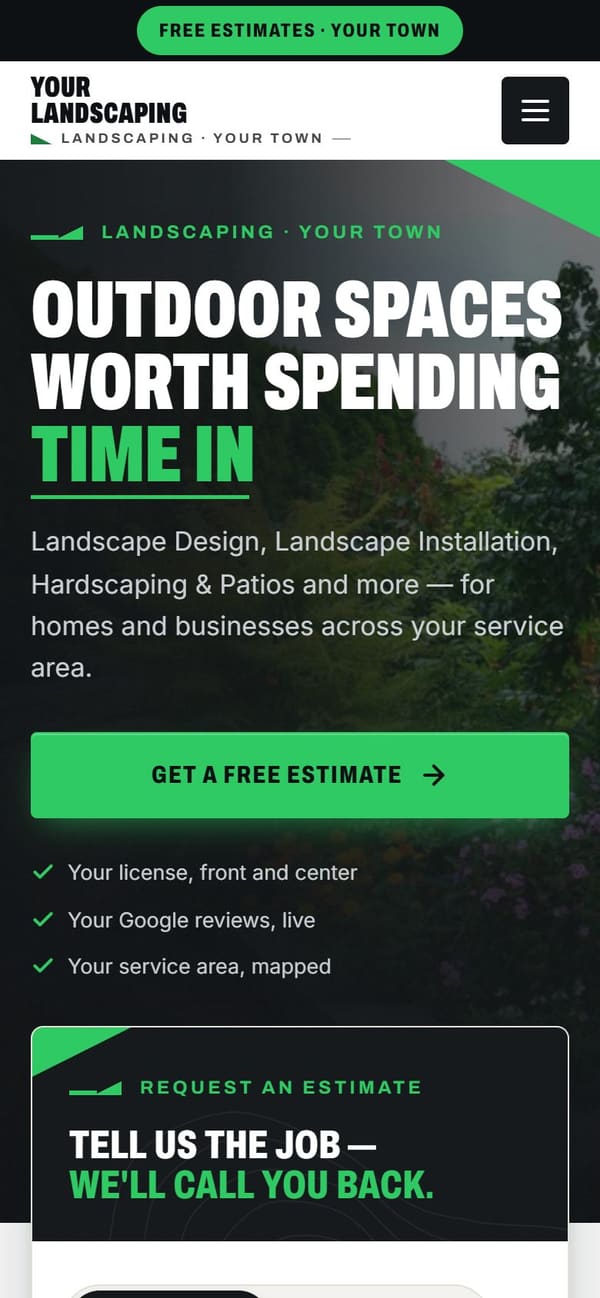
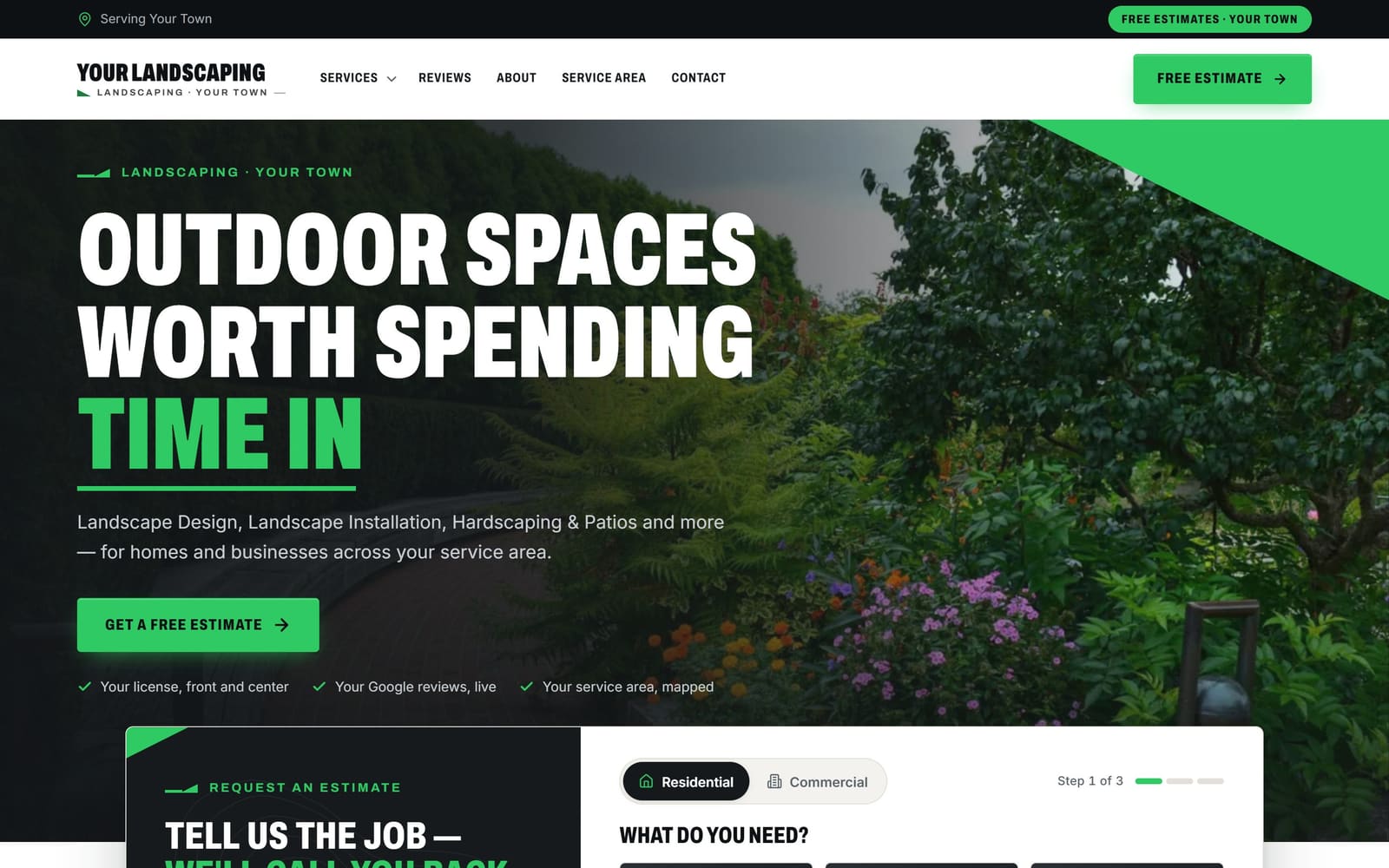
A sample landscapers website, the kind Vevang builds and keeps improving.
The same sample site on a phone.
Sample demo · the kind of site we build for landscapers

What does this include?

Vevang Sites builds your landscaping website, then works on its search ranking every week. You get separate pages for design-build, hardscaping, drainage and maintenance, service-area pages for the towns you drive to, and galleries tied to real jobs. We also manage your Google Business Profile and track every call.

Why it matters

Why it’s different for your trade.

01

The searching starts in February

Design searches climb while your crews are still idle. If your patio and retaining wall pages only get attention in May, you are asking Google to rank them during the weeks homeowners are already signing with someone else.

02

One install becomes a decade of work

The person who hires you for a paver patio often keeps you for beds, lighting and weekly maintenance. Search is how that relationship starts, so the page that wins the install is worth far more than the install.

03

Your work is the content

Every finished job is a real project, in a real neighborhood, with plants suited to your zone. Most landscapers leave that in a phone camera roll. Organized into pages, it is the specific proof search engines and buyers both want.

What we do

The work, step by step.

01

Split design-build from maintenance

These are two different buyers searching two different ways. We build a clear design-build path and a clear maintenance path, so a homeowner pricing a patio and a property manager pricing weekly mowing each land where they belong.

02

Give every money job its own page

Patios and hardscaping, retaining walls, planting and garden beds, landscape lighting, drainage, spring and fall cleanups. One page each, written with the materials, the process and the questions you answer on every estimate visit.

03

Turn finished jobs into service-area pages

A town page that only swaps the town name helps nobody. We tie each area page to projects you actually built there, the soil and slope you deal with, and the neighborhoods your trucks already pass.

04

Fix the weight of your gallery

Photos straight off a phone are enormous and slow the site to a crawl on a driveway with one bar of signal. We compress images, label them properly and link each project back to the service page it belongs to.

05

Publish for the season before the season

Design and consultation pages get attention in midwinter. Cleanup, planting and lighting pages get attention in late summer. If you run snow or holiday lighting, those pages go live before the first cold snap, not after.

06

Track calls, then improve weekly

Call and form tracking shows which pages produce consultations. SEO Ranker works on the site every week after launch, tightening pages, internal links and technical health instead of leaving the site frozen at launch day.

Common mistakes

What usually goes wrong.

One page called Services

A bulleted list of patios, mulch, walls and mowing gives Google nothing to rank and a homeowner nothing to read. The person searching for a retaining wall wants a page about retaining walls, not a menu.

A gallery with no words

Rows of photos and no captions means no context. Say what the job was, what materials you used, what problem the yard had and roughly where it is. That text is what connects your pictures to a search.

Aiming at the whole metro

Chasing a giant city term you will never win costs you the towns you actually serve. Rank in the communities your crews drive to daily, where the drive time still lets you make money on maintenance.

Going quiet after spring

Sites that stop changing in April drift down by fall. Drainage searches spike after heavy rain, cleanup searches spike after the first leaves. Keep those pages current and you catch the demand when it arrives.

Checklist

What you can check today.

  • Give patios, walls, drainage and lighting their own pages
  • Separate design-build from recurring maintenance
  • Caption every gallery project with materials and town
  • Compress photos so pages load on mobile data
  • List your service towns with real project proof
  • Add a commercial grounds page for HOAs and managers
  • Update seasonal pages a month before the season
  • Answer your phone or route it to someone who will

How it works

You see it first. Then you decide.

You don’t sign anything to see it. Book a time, and your demo is ready before we talk.

  1. 01

    Book 15 minutes

    Pick a time — often the same day. Tell us your website, or just your business name and city.

  2. 02

    We build your demo

    Before the call, we build a demo of your new website from your real business: your services, your area, your reviews.

  3. 03

    See it, then decide

    We walk you through the demo on the call. You see exactly what you’d get before you spend anything.

  4. 04

    Launch, then improve weekly

    We build it for real and put it live. After launch, the SEO Ranker agent keeps improving it every week.

15 minutes on Google Meet. No obligation.

Questions

Straight answers.

How long before SEO changes my phone volume?

Usually months, not weeks. Service pages and area pages need time to be found, read and trusted. Nobody can guarantee a ranking. The practical move is to start in fall or winter so the work has settled in by the time design inquiries begin.

Do I really need a page for every service?

For the jobs you want more of, yes. Someone searching for a retaining wall is solving a specific problem with slope and water. A page that addresses that problem ranks better and converts better than a line item on a combined services page.

Should maintenance customers see the same site as design clients?

They should see the same brand and different paths. Design clients want galleries, process and a consultation form that asks about budget and timeline. Maintenance clients want scope, schedule and an easy signup. Mixing both on one page makes each one work harder than it should.

What about HOA and property manager work?

That needs its own page. Commercial buyers look for insurance, crew size, equipment, recurring schedules and references before they request a bid. If your site reads entirely residential, they assume you cannot handle a property and they call someone else.

Is Google Business Profile enough on its own?

It matters, especially for map results, but it is thin on its own. Your profile has limited room to explain hardscaping, drainage or plant selection. The website carries that depth, and a strong site supports the profile rather than competing with it.

Do I need to blog every week?

No. Consistent project write-ups beat filler articles. Post the jobs you finish, with the problem, the materials and the town. That is content only you can write, and it feeds your service pages and area pages at the same time.

What about AI assistants answering yard questions?

We write pages in clear, direct language with your services, areas and hours stated plainly, which helps any system read you correctly. No one can promise an AI assistant will mention your company. The same clarity helps homeowners decide faster.

What happens on the 15-minute call?

We build a demo of your landscaping site before we talk, so you are looking at real pages instead of a pitch deck. We go through your services, your towns and your busiest season, then you decide whether to move forward.

More for landscapers

One team for the whole job.

Reviewed 2026-09-24

Your demo is free

See your new website on the call.

Tell us your website — or your business name and city — and pick a time. We’ll have your demo ready before we talk.

Pick a 15-minute time. Your demo is built before the call.