Vevang AISites/ Junk removal · SEO

Local SEO · Junk removal

SEO for junk removal companies

Your customers search by the item, the room or the deadline. Your site should have a page for each one, in every town your truck reaches.

Pick a 15-minute time. Your demo is built before the call.

  • Your demo, built before the call
  • Improved every week
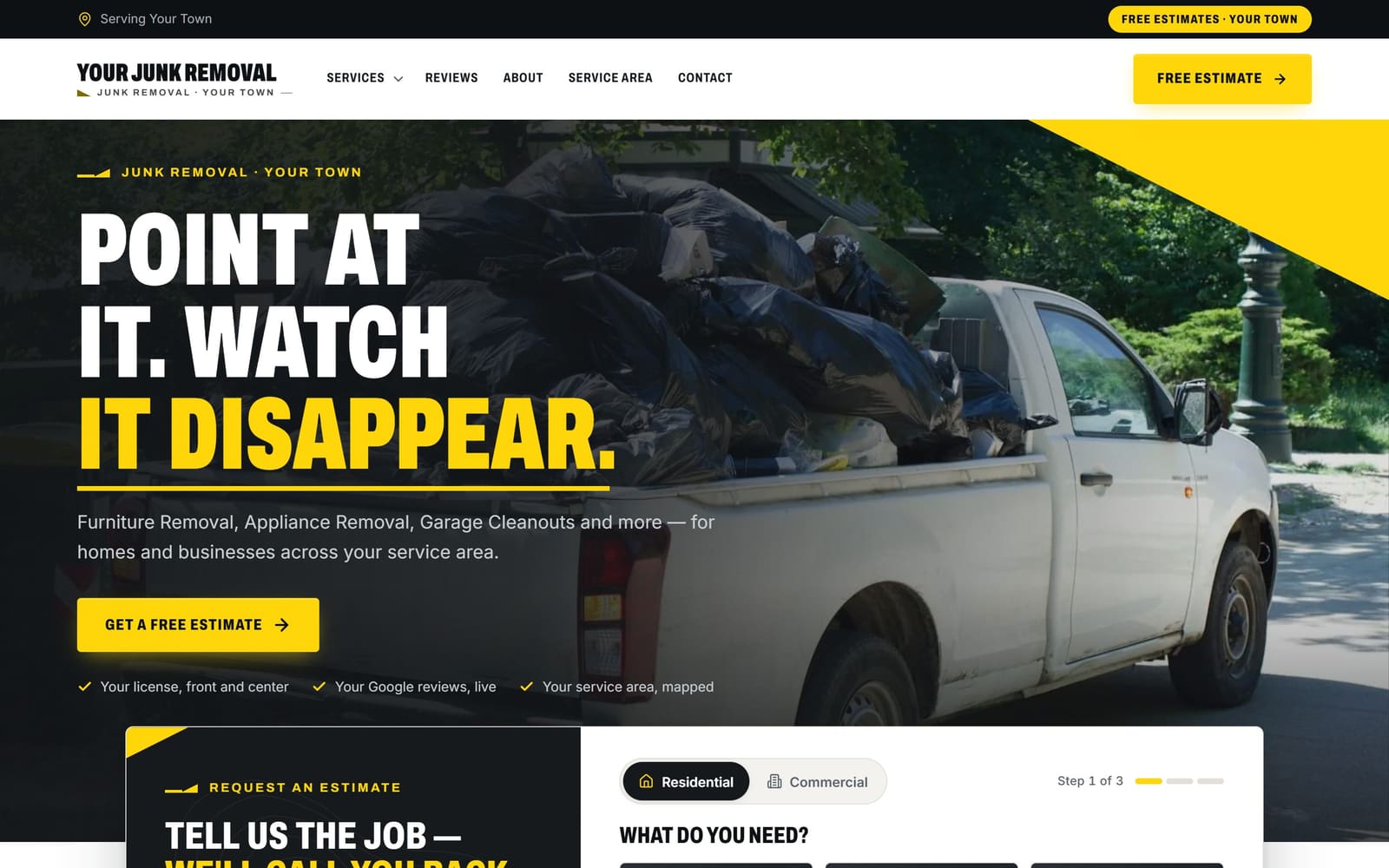
A sample junk removal website, the kind Vevang builds and keeps improving.
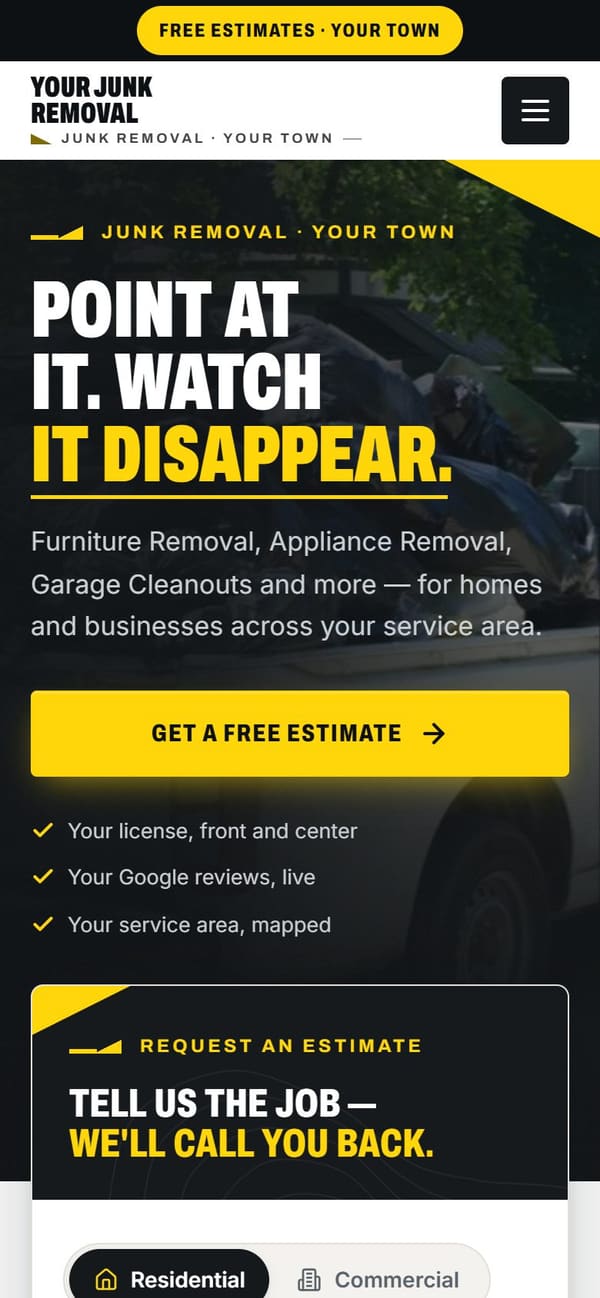
The same sample site on a phone.
Sample demo · the kind of site we build for junk removal

What does this include?

Vevang Sites builds junk removal websites and runs the local SEO behind them. We create pages for item pickups, cleanouts and debris hauls, build service-area pages for each town, keep your Google Business Profile current, and improve the site every week with our SEO Ranker agent.

Why it matters

Why it’s different for your trade.

01

People search the item, not the industry

Searches look like "couch removal near me" or "who takes old refrigerators." A single junk removal page cannot rank for all of that. Separate pages for furniture, appliances, hot tubs and yard debris match the words people actually type.

02

Your service area is wider than your address

One truck covers a dozen towns, but the map listing favors the town you sit in. Real service-area pages with local landmarks, dump sites you use and job photos give you a way to show up two towns over.

03

Jobs are decided in minutes

A move-out coordinator and a homeowner with a broken washer both want an answer now. Ranking gets you seen. Clear pricing language, a photo quote form and a phone number at the top turn that view into a booked slot.

What we do

The work, step by step.

01

We map how your jobs come in

Single items, garage cleanouts, estates, contractor debris, property managers. We look at what you actually take, what you refuse, the towns you drive to and the jobs you want more of before writing a word.

02

We build a page per job type

Furniture removal, appliance removal, garage and basement cleanouts, estate cleanouts, hoarding cleanups, construction debris, hot tub and shed removal, yard waste. Each page explains access, crew size, how volume pricing works and what happens after the truck leaves.

03

We build service-area pages that earn their place

One page per town you cover, with the neighborhoods you work, transfer stations and donation centers you use, and photos from real jobs there. Not a list of town names swapped into the same paragraph.

04

We fix structure and speed

Headings that match search phrasing, image compression for your before-and-after photos, mobile layout with a tap-to-call bar, clean internal links from cleanout pages to the item pages inside them.

05

We connect the map listing

Google Business Profile categories, service list, photos of your truck and crew, and posts that match the season. Your profile and your site say the same thing about what you haul and where.

06

SEO Ranker improves it weekly

Every week the agent reviews what people searched, what pages they landed on and what you got called about. It adds pages, tightens copy and adjusts what you rank for. Rankings are never guaranteed.

Common mistakes

What usually goes wrong.

One page that says "we haul anything"

It reads fine and ranks for nothing. Someone searching for hot tub removal wants a page about hot tubs: the deck access, the draining, the cut-up. Broad pages lose to specific ones every time.

Hiding how pricing works

Nobody expects an exact number online. They do want to know you price by truck volume, that you quote from a photo, and that the quote includes labor and disposal. Silence sends them to the next result.

No path for commercial callers

Property managers, realtors and contractors book repeat work. If your site only speaks to homeowners with a couch, those buyers never see themselves and never call.

Chasing the whole metro at once

Broad city-wide pages with no local detail rarely hold. Win the towns you actually drive to first, then expand the map as the crew grows.

Checklist

What you can check today.

  • Write one page for each item you commonly haul.
  • List clearly what you will not take.
  • Explain volume pricing in two plain sentences.
  • Add a photo-upload quote form to every page.
  • Put tap-to-call at the top on mobile.
  • Build a page for each town you serve.
  • Name where the load goes after pickup.
  • Add a commercial and contractor page.

How it works

You see it first. Then you decide.

You don’t sign anything to see it. Book a time, and your demo is ready before we talk.

  1. 01

    Book 15 minutes

    Pick a time — often the same day. Tell us your website, or just your business name and city.

  2. 02

    We build your demo

    Before the call, we build a demo of your new website from your real business: your services, your area, your reviews.

  3. 03

    See it, then decide

    We walk you through the demo on the call. You see exactly what you’d get before you spend anything.

  4. 04

    Launch, then improve weekly

    We build it for real and put it live. After launch, the SEO Ranker agent keeps improving it every week.

15 minutes on Google Meet. No obligation.

Questions

Straight answers.

How long before SEO does anything?

New pages usually get indexed within days, but movement in local rankings takes months of steady work. Service-area pages for smaller towns often move before competitive city terms. Nobody can guarantee a position. What we can do is publish the right pages, keep them current and keep improving them every week.

Do I need a page for every town I drive to?

For towns you genuinely serve and want more work in, yes. Each page needs real content: neighborhoods, the transfer station you use, job photos from that area. Thin copies of the same page help nobody. Start with your top five or six towns and add more as you go.

Should my site show prices?

Show how pricing works rather than fixed numbers. Explain that you charge by how much space the load takes in the truck, that labor and disposal are included, and that a photo gets a quote back quickly. That answers the question without locking you into a price you cannot honor.

What about single-item jobs? They're small.

Single items are how customers find you the first time. A couch pickup often turns into a garage cleanout later, or a referral to a neighbor moving out. We build those pages because they bring in searches, then link them into the larger cleanout pages.

Does my Google Business Profile matter more than the site?

They work together. The map listing drives a lot of calls for near-me searches. The site is what convinces someone you take their item and can come this week. We manage the profile and keep its categories, services and photos matched to the site.

How do AI assistants fit in?

People now ask assistants things like which company takes old appliances in their area. Those tools read clear, well-structured pages. We write your service, coverage and pricing details plainly so they can be read and repeated. No one can promise any assistant will name you.

What if I want more commercial and property work?

We build a separate path for it: pages for move-out turnovers, construction debris, office cleanouts and recurring routes. The language changes. Property managers care about scheduling windows, insurance and invoicing, not a discount on a single couch pickup.

What happens on the first call?

We build a demo of your junk removal website before we talk, using your service area and the jobs you run. You spend fifteen minutes looking at something real, telling us what you actually haul and where, and asking whatever you want. No obligation after.

More for junk removal

One team for the whole job.

Reviewed 2026-09-24

Your demo is free

See your new website on the call.

Tell us your website — or your business name and city — and pick a time. We’ll have your demo ready before we talk.

Pick a 15-minute time. Your demo is built before the call.