Vevang AISites/ Junk removal · Local ads

Local ads management · Junk removal

Local Ads for Junk Removal Companies

Paid search works for junk removal because the buyer wants the pile gone this week. The ads only pay off when the page, the phone and the schedule back them up.

Pick a 15-minute time. Your demo is built before the call.

  • Your demo, built before the call
  • Improved every week
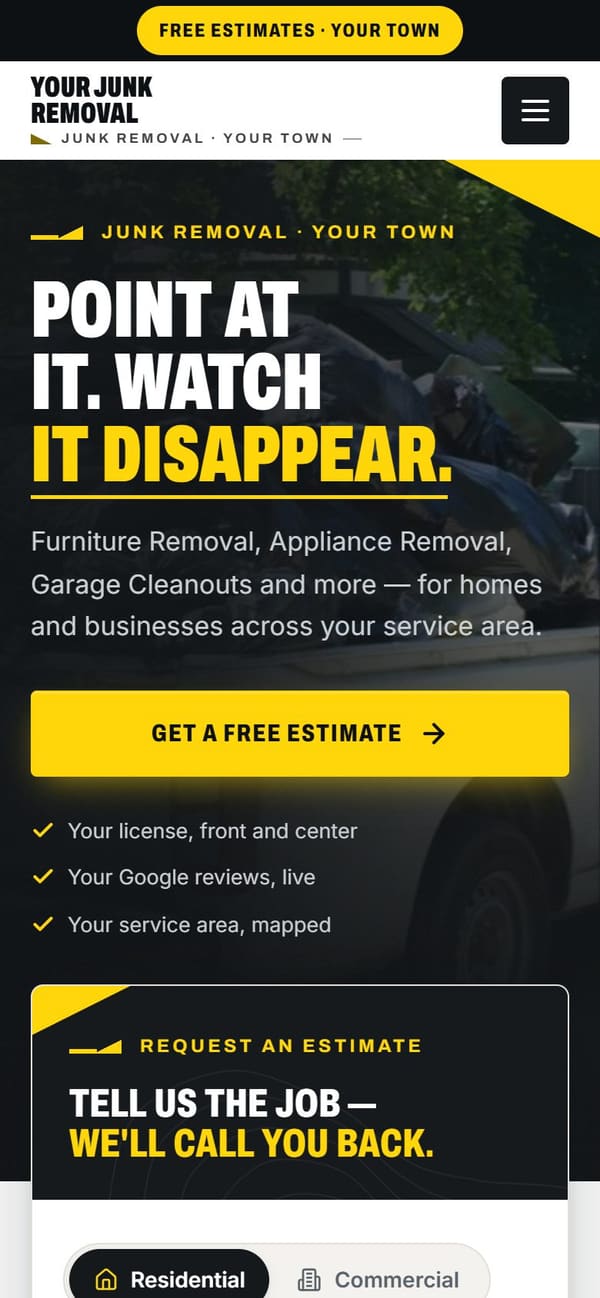
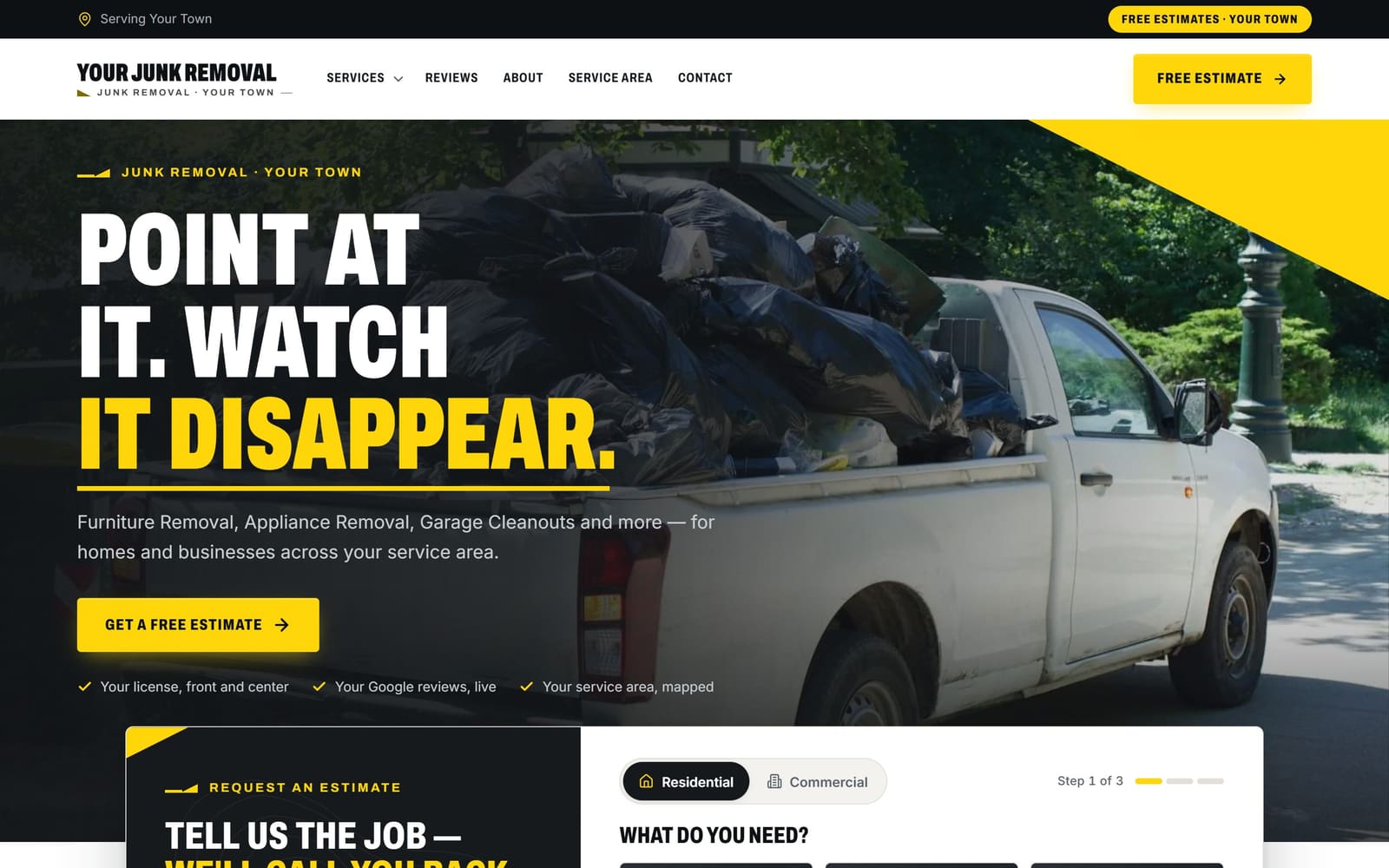
A sample junk removal website, the kind Vevang builds and keeps improving.
The same sample site on a phone.
Sample demo · the kind of site we build for junk removal

What does this include?

Local ads put your truck in front of people who need junk gone this week. Vevang Sites builds the junk removal pages first, then runs Google Search, Google Local Services Ads where your area qualifies, and Meta ads pointed at them. Ad spend goes on your own card. We track calls, forms and booked jobs.

Why it matters

Why it’s different for your trade.

01

The job is gone within the hour

Someone with a garage full of debris is not researching. They search, they call two trucks, they book the one that answers with a time. Ads put you at the top of that short list on a Saturday morning when the pile is already on the driveway.

02

You can choose which jobs to pay for

Organic traffic brings you whatever comes. Ads let you bid harder on estate cleanouts, move-outs and construction debris, and spend less on a single mattress across town. The job mix is yours to steer, week by week.

03

Ads expose a weak site fast

Paid clicks land on whatever page you send them to. If that page does not say what you take, how pricing works and how to book, you pay for the visit and lose the job. That is why the site comes first here.

What we do

The work, step by step.

01

Fix the pages the clicks will land on

Every ad group gets a matching page: furniture removal, appliance removal, estate cleanouts, construction debris, hot tub removal. Each one shows a photo quote form, plain words on how truckload pricing works, what you will not haul, and where the load goes after pickup.

02

Decide which work you want more of

We look at what pays: full cleanouts, property manager turnovers, contractor debris runs, or steady single-item pickups. Budget follows that answer. A crew chasing move-outs bids differently than one filling gaps between scheduled jobs.

03

Set the map by drive time, not miles

Your real service radius is bounded by the transfer station and the hours in a day. We set geography around the routes you can actually run and pull back from areas where the disposal trip eats the ticket.

04

Launch search, Local Services and Meta

Google Search covers people typing the item or the cleanout. Local Services Ads run where junk removal is an eligible category in your area. Meta carries before-and-after cleanout photos to homeowners nearby and back to people who visited but never called.

05

Track calls, forms and booked jobs

Call tracking and form tracking show which ad produced a booked cleanout and which produced a question about paint cans. We keep the keywords that fill the truck and cut the ones that fill your voicemail.

06

Tune weekly against your schedule

Negative keywords get added, hours get shifted toward evenings and weekends, and spend drops when you are booked out two weeks. SEO Ranker keeps improving the organic pages underneath so the ads are not carrying everything.

Common mistakes

What usually goes wrong.

Sending every click to the homepage

A person searching for hot tub removal wants to see a hot tub. Dropping them on a general homepage makes them scroll, guess and leave. Each ad needs a page about that exact item or cleanout situation.

Letting broad keywords run loose

Without negatives you pay for dumpster rental, cash for cars, scrap metal buyers, junkyard hours, free pickup and people looking for a job. Those clicks cost the same as a real estate cleanout lead and book nothing.

Running ads nobody answers

Weekend afternoons and early evenings are when the piles get photographed. If those calls ring out, you funded a competitor's booking. Either cover the hours or schedule ads only when someone picks up.

Leaving ads on when the truck is full

Spending to generate leads you cannot reach for ten days annoys property managers and burns the budget. Ads should ease off when the calendar tightens and come back when there is room.

Checklist

What you can check today.

  • Answer ad calls on evenings and weekends.
  • Send each ad to its own item or cleanout page.
  • Add photo upload to your quote form.
  • Explain truckload pricing in plain words.
  • Block dumpster rental, cash for cars and hiring terms.
  • List what you will not haul.
  • Lower spend when the schedule is full.
  • Tag every booked job with its source.

How it works

You see it first. Then you decide.

You don’t sign anything to see it. Book a time, and your demo is ready before we talk.

  1. 01

    Book 15 minutes

    Pick a time — often the same day. Tell us your website, or just your business name and city.

  2. 02

    We build your demo

    Before the call, we build a demo of your new website from your real business: your services, your area, your reviews.

  3. 03

    See it, then decide

    We walk you through the demo on the call. You see exactly what you’d get before you spend anything.

  4. 04

    Launch, then improve weekly

    We build it for real and put it live. After launch, the SEO Ranker agent keeps improving it every week.

15 minutes on Google Meet. No obligation.

Questions

Straight answers.

Do I need ads if my site already ranks?

Not always. Organic pages and your Google Business Profile should carry the steady work first, because those clicks keep coming without spend. Ads make sense when you want a specific job type faster, when you are entering a new town, or during a slow stretch between the spring and holiday rushes.

Who pays for the ad spend?

You do, directly. The ad account is billed to your own card, so you see exactly what went to Google or Meta and you can raise or cut it whenever the schedule changes. We manage the campaigns, the keywords and the landing pages. The spend never passes through us.

Can junk removal use Google Local Services Ads?

In many areas junk removal is an eligible Local Services category, but availability changes by region. We check your market first. Where it runs, it needs licence and insurance details verified, and it rewards businesses that answer the phone and keep a steady flow of reviews coming in.

Should I bother with Meta ads?

They work differently than search. Nobody on Meta is looking for a junk truck right then. What works is a clear before-and-after of a garage or basement cleanout shown to homeowners nearby, plus retargeting people who read your estate cleanout page and did not call.

How do I stop paying for tiny jobs?

Separate the campaigns. Single-item pickups and full cleanouts get their own ad groups, budgets and pages, so you can see what each costs and shift money toward the work you want. Some owners keep the small jobs running to fill gaps and pause them during busy months.

Can you guarantee a number of leads?

No. Nobody can honestly promise lead counts or rankings, and auctions shift with competitors and season. What we can do is point spend at pages built for junk removal buyers, track calls and forms to booked jobs, and cut what is not working every week.

What happens if I stop the ads?

Traffic from ads stops the day you pause them. That is why the website, service pages and Google Business Profile come first and keep getting weekly improvements from SEO Ranker. Ads are the dial you turn up before a spring cleanout rush and turn down when the truck is booked.

What do I get before the first call?

We build a demo of your junk removal website ahead of the 15-minute call, using your service area and the jobs you actually run. You look at real pages instead of a pitch deck, then we talk about whether ads belong on top of it yet.

More for junk removal

One team for the whole job.

Reviewed 2026-09-24

Your demo is free

See your new website on the call.

Tell us your website — or your business name and city — and pick a time. We’ll have your demo ready before we talk.

Pick a 15-minute time. Your demo is built before the call.