Vevang AISites/ HVAC · AI search

AI search visibility · HVAC

AI Search for HVAC Companies

Homeowners now ask AI assistants what a furnace replacement costs, whether a heat pump works in cold weather, and who services their area. Your site should answer those questions in plain language.

Pick a 15-minute time. Your demo is built before the call.

  • Your demo, built before the call
  • Improved every week
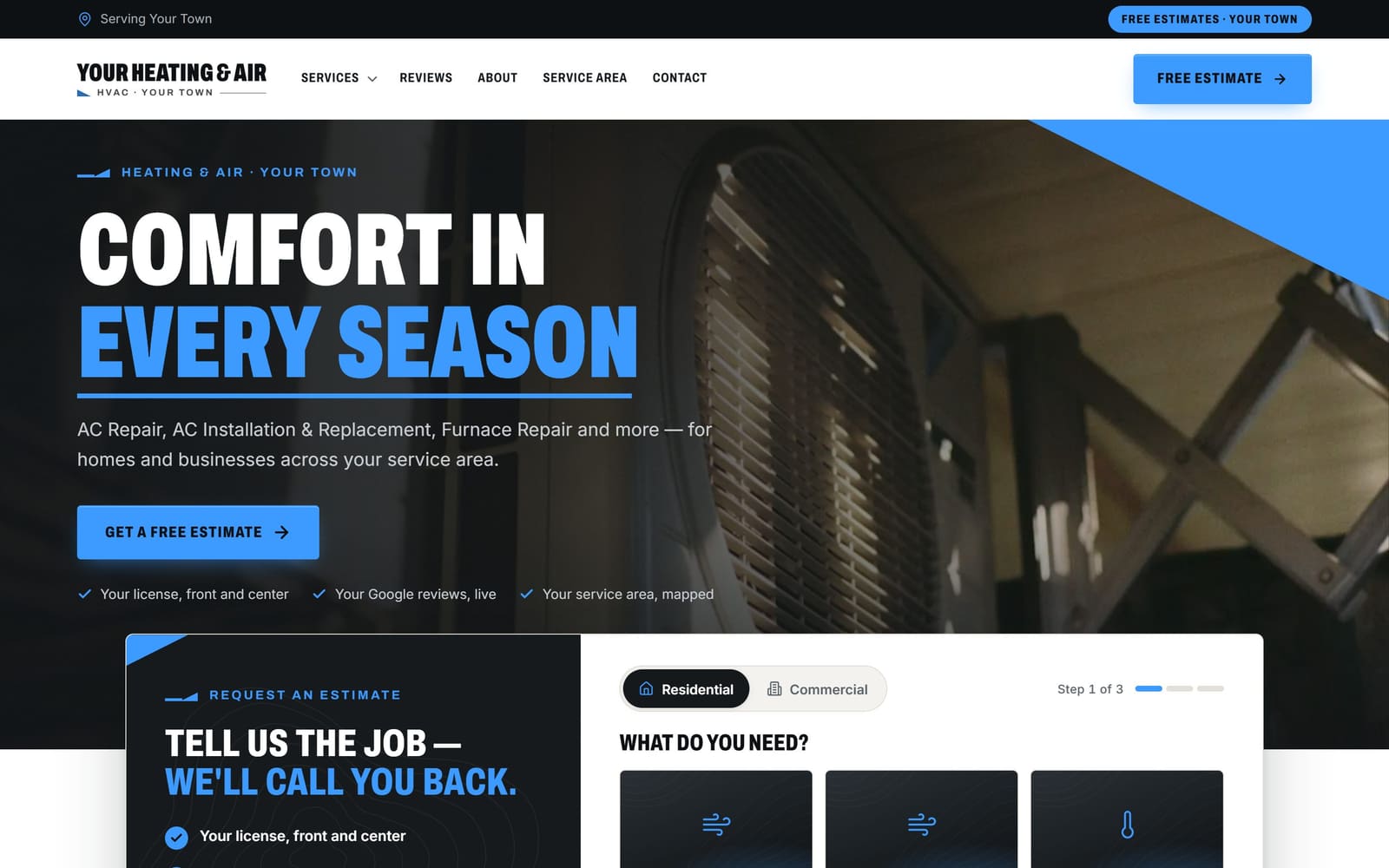
A sample hvac website, the kind Vevang builds and keeps improving.
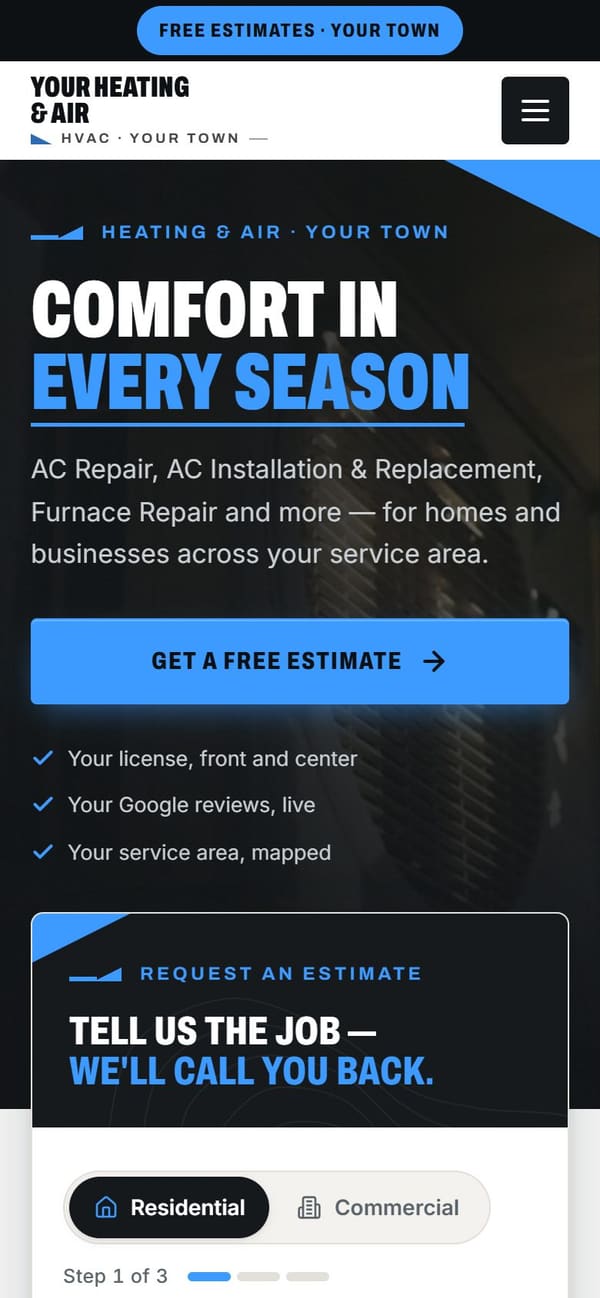
The same sample site on a phone.
Sample demo · the kind of site we build for hvac

What does this include?

AI assistants pull from pages that state facts clearly. Vevang Sites writes plain answer blocks for your repair, replacement and maintenance pages, keeps your name, address, hours and service area identical everywhere, and adds structured data. No one can promise an AI will name your company, but unclear sites are skipped first.

Why it matters

Why it’s different for your trade.

01

Replacement research starts with a question

Before anyone calls for a new system, they ask about heat pumps, furnace lifespan, SEER numbers and rebates. If your pages answer those questions directly, you show up in the research phase instead of the quote phase.

02

Emergency searches need facts fast

A no-heat call at 11pm turns into a question about who is open right now in this town. Assistants need your hours, emergency availability and service area stated plainly, not buried in a hero image.

03

Confused facts get you dropped

If one page says you serve five towns and your Google Business Profile says three, and your after-hours number differs from your main line, an assistant has no reliable answer to give about you.

What we do

The work, step by step.

01

Pull every question your techs get asked

Why is my AC freezing up. How long does a furnace last. Do you work on my brand. Is a mini-split worth it. These are the exact things homeowners type into an assistant before they ever call you.

02

Write an answer block on every service page

Each page opens with two or three plain sentences that answer the question in the heading. AC repair, furnace repair, heat pumps, ductwork, maintenance plans. Detail follows, but the answer comes first.

03

Lock down your business facts

One phone number, one address format, one set of hours including after-hours coverage, one list of towns. Match it on your site, your Google Business Profile and every directory that lists your HVAC company.

04

Add structured data for services and areas

Machine-readable markup tells search systems what you repair, install and maintain, which towns you cover, and when you answer the phone. It removes the guesswork about what kind of HVAC work you do.

05

Publish the boring specifics

Brands you service, licenses and certifications, financing options, current utility rebates, whether you handle oil, propane or geothermal. These details are what separate a real answer from a vague one.

06

Review it every week

Rebate programs change, refrigerant rules change, your service area grows. SEO Ranker updates pages, tightens answers and keeps your facts consistent so nothing goes stale between seasons.

Common mistakes

What usually goes wrong.

Hiding the answer behind a form

Pages that say request a quote for furnace pricing give an assistant nothing to work with. Explain what drives replacement cost, what a diagnostic visit involves, and what your service call covers.

Vague service area language

Serving the greater metro area is not a fact. List the towns and counties you actually drive to, and say whether you charge a trip fee outside that ring.

Seasonal pages that contradict each other

A summer AC banner still live in January, alongside a furnace page promising same-day service, creates a mixed picture. Keep the season current and the promises identical across pages.

Treating AI search as separate work

The same clarity that helps an assistant helps a homeowner reading on a phone at 2am. Writing two versions of your site, one for people and one for machines, wastes your time.

Checklist

What you can check today.

  • Write a plain answer at the top of each HVAC service page.
  • List every town and county you dispatch trucks to.
  • State your after-hours and weekend coverage in words, not icons.
  • Name the equipment brands you install and repair.
  • Match your phone, address and hours across every listing.
  • Post current financing terms and local utility rebates.
  • Add a page explaining what your maintenance plan includes.
  • Answer the five questions your techs hear most on site.

How it works

You see it first. Then you decide.

You don’t sign anything to see it. Book a time, and your demo is ready before we talk.

  1. 01

    Book 15 minutes

    Pick a time — often the same day. Tell us your website, or just your business name and city.

  2. 02

    We build your demo

    Before the call, we build a demo of your new website from your real business: your services, your area, your reviews.

  3. 03

    See it, then decide

    We walk you through the demo on the call. You see exactly what you’d get before you spend anything.

  4. 04

    Launch, then improve weekly

    We build it for real and put it live. After launch, the SEO Ranker agent keeps improving it every week.

15 minutes on Google Meet. No obligation.

Questions

Straight answers.

Can you get my company named by ChatGPT or Gemini?

No one can promise that. Those systems decide what to say on their own and change constantly. What we control is clarity: plain answers on your pages, consistent facts everywhere you appear, and structured data that describes your HVAC services and service area accurately. That is the work that makes you usable as a source.

Does this replace regular local SEO?

No, it sits on top of it. Homeowners still search Google Maps for AC repair near me during a heat wave, and your Google Business Profile still drives those calls. AI clarity work uses the same foundation: accurate listings, real service pages, reviews and replies. We do both together.

What questions should my site actually answer?

The ones your dispatcher repeats daily. How much does a new furnace cost. Will a heat pump heat my house in winter. Why is my AC running but not cooling. Do you service my brand. How often should I get a tune-up. Each deserves a real page with a direct answer up top.

We do mostly emergency work. Does this matter?

Yes. Assistants get asked who is open right now for no heat. If your hours, emergency coverage and towns are stated plainly and match your Google Business Profile, you are a clean answer. If your site only says call us anytime with no specifics, you are hard to use.

How long before this changes anything?

Site changes land immediately. Listings and search systems take time to pick them up, usually weeks. Replacement research runs long anyway, so a homeowner reading your heat pump page in March may call in July. Rankings and AI mentions cannot be guaranteed by anyone.

Do I need to write the content myself?

No. We interview you once about your brands, licenses, service area, plan tiers and how you price diagnostics, then write the pages. You review them. After that, SEO Ranker keeps them current each week as rebates, seasons and your service area change.

What about rebates and tax credits that keep changing?

We put them on a dedicated financing and rebates page rather than scattering them across your site. One place to update, one clear answer. Weekly review catches expired programs so you are not advertising a credit that ended last quarter.

What happens on the 15-minute call?

We build a demo of your HVAC site before we talk, so you see real pages with your services and towns on them. On the call we go through it, cover your seasonal mix and emergency coverage, and you decide. No preparation needed on your end.

More for hvac

One team for the whole job.

Reviewed 2026-09-24

Your demo is free

See your new website on the call.

Tell us your website — or your business name and city — and pick a time. We’ll have your demo ready before we talk.

Pick a 15-minute time. Your demo is built before the call.