Vevang AISites/ Flooring installers · AI search

AI search visibility · Flooring installers

AI search clarity for flooring installers

Homeowners now ask an assistant whether vinyl plank belongs in a basement before they ever ask an installer. Your site should hold the clear answer.

Pick a 15-minute time. Your demo is built before the call.

  • Your demo, built before the call
  • Improved every week
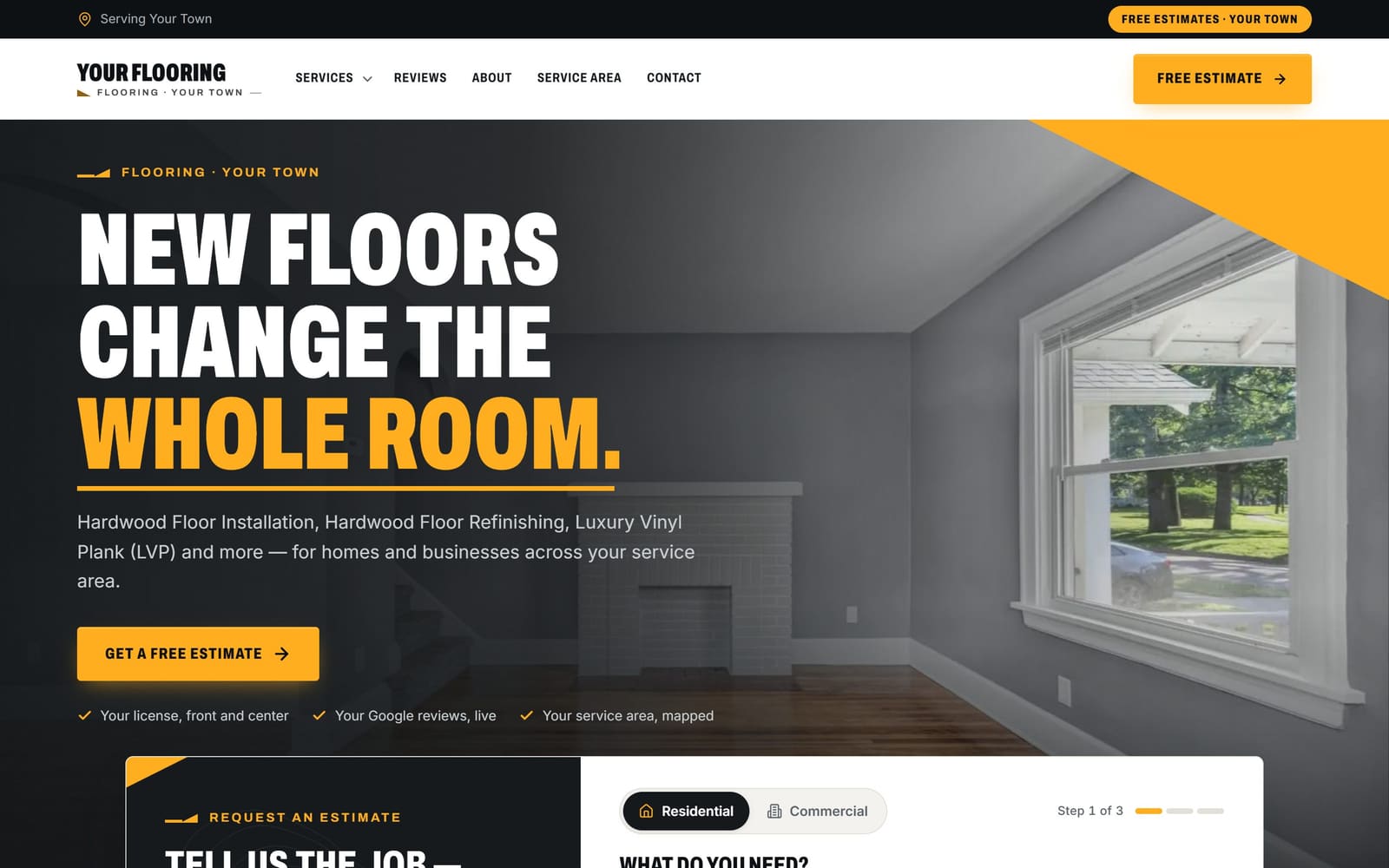
A sample flooring installers website, the kind Vevang builds and keeps improving.
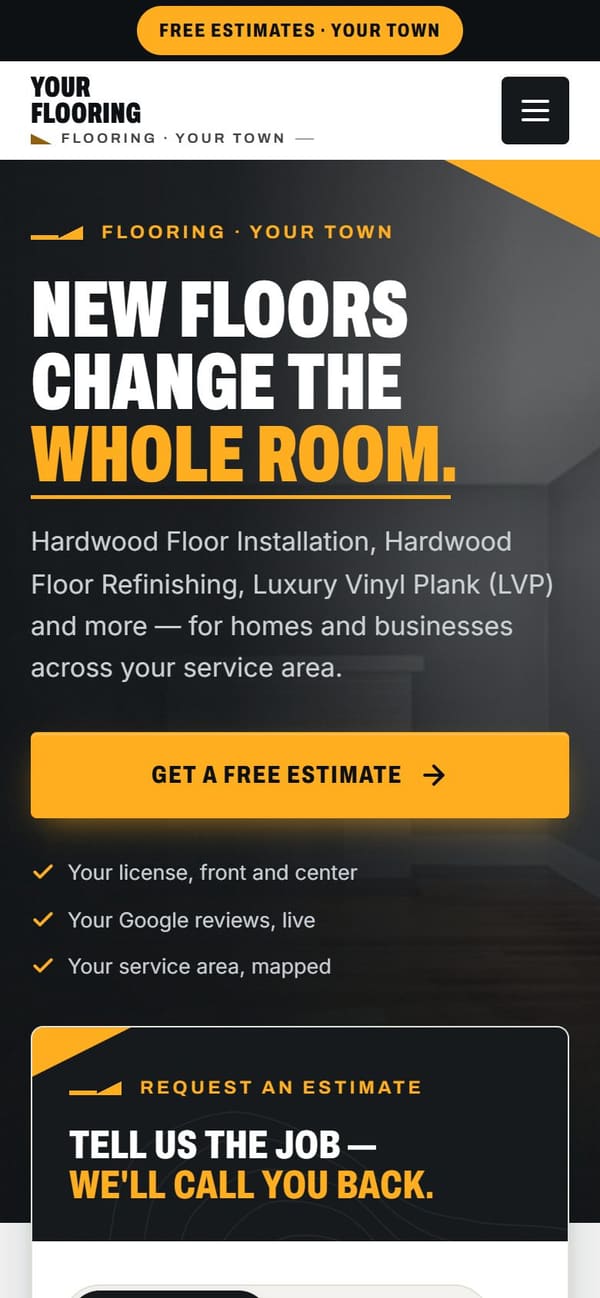
The same sample site on a phone.
Sample demo · the kind of site we build for flooring installers

What does this include?

Vevang Sites builds your flooring website so AI assistants can read it: plain answers about materials, subfloor prep and lead times, the same business facts on every page and profile, and structured data. Then SEO Ranker improves those pages weekly. We build a demo of your site before your first call.

Why it matters

Why it’s different for your trade.

01

Material questions come first

Nobody starts with "who installs floors near me." They start with hardwood versus engineered, waterproof options for a basement, or what holds up to a dog's nails. If your site answers those in plain words, you enter the conversation early.

02

Assistants trust facts that agree

Your service towns, showroom hours, phone number and the materials you carry sit on your site, your Google Business Profile and your social pages. When those three disagree, an assistant has no reason to repeat any of them confidently.

03

Quote shoppers arrive decided

A homeowner who already read about wear layers and acclimation wants a measure, not a lecture. Pages written as direct answers move that person from reading to booking without a second round of research.

What we do

The work, step by step.

01

Collect the real questions

We list what your customers actually ask: can engineered hardwood be refinished, does vinyl plank need underlayment, will you level a wavy subfloor, how long before furniture goes back. Your answers become the source, not guesswork.

02

Write answer blocks on material pages

Each material page opens with a short, direct answer, then the detail. Hardwood, luxury vinyl plank, laminate, tile, carpet, refinishing and repair each get their own page so an assistant can quote the right one.

03

Lock your business facts in place

One phone number, one address, one set of hours, one list of towns, one list of materials and brands you install. We make the site and your Google Business Profile say the same thing, then keep them matched.

04

Add structured data

We mark up your business, your services and your question-and-answer sections so machines read them as data instead of decoration. Your project gallery gets captions naming material, room type and town, so images carry meaning too.

05

Turn answers into measures

Every answer page ends with a way to request a measure, and we track calls and form fills so you can see which material questions bring in real quote requests rather than casual reading.

06

Improve it every week

SEO Ranker reviews your pages weekly, tightens thin answers, adds questions you start hearing on the phone, and keeps material pages current as you change what you stock or install.

Common mistakes

What usually goes wrong.

A gallery with no words

Beautiful install photos and almost no text. You know the job was white oak with a matte finish in a 1950s ranch; the page says nothing. Write what the material was, why it suited the room, and what the subfloor needed.

Material charts trapped in images

Comparison tables saved as pictures or handed out as brochures leave nothing readable behind. Put the comparison in real text on the page: durability, moisture tolerance, refinishing options, where each material makes sense in a house.

Dodging the awkward questions

Homeowners ask whether you install material they bought elsewhere, whether you haul away old carpet, whether you do dust-contained sanding, and if you have a minimum job size. Answer each one plainly. Vague sites get skipped by people and machines alike.

Facts drifting apart

The showroom hours changed, the site still shows last year's, and your social page shows something else again. Contradictions make your business look unreliable and give assistants nothing solid to repeat about you.

Checklist

What you can check today.

  • Write a direct answer to "hardwood or vinyl plank?"
  • State whether you install customer-supplied flooring
  • List every material and finish you actually install
  • Put subfloor prep and moisture testing in writing
  • Name each town you cover, not just the metro
  • Publish measure, order and install lead times
  • Caption gallery photos with material, room and town
  • Match hours and phone across site and profiles

How it works

You see it first. Then you decide.

You don’t sign anything to see it. Book a time, and your demo is ready before we talk.

  1. 01

    Book 15 minutes

    Pick a time — often the same day. Tell us your website, or just your business name and city.

  2. 02

    We build your demo

    Before the call, we build a demo of your new website from your real business: your services, your area, your reviews.

  3. 03

    See it, then decide

    We walk you through the demo on the call. You see exactly what you’d get before you spend anything.

  4. 04

    Launch, then improve weekly

    We build it for real and put it live. After launch, the SEO Ranker agent keeps improving it every week.

15 minutes on Google Meet. No obligation.

Questions

Straight answers.

Can you get ChatGPT to recommend my flooring company?

We will not claim that, and rankings in Google cannot be guaranteed either. What we control is clarity: accurate facts everywhere, plain answers about the materials you install, and structured data. That gives assistants something correct to work with when a homeowner asks about flooring in your area.

Does this replace local SEO for flooring?

No, it sits on top of it. The same clear material pages, consistent service-area details and well-kept Google Business Profile help both a homeowner searching Maps for a flooring installer and an assistant summarizing options. We build the site so one effort serves both audiences.

Which flooring questions should my site answer first?

Start with the ones that decide a purchase: waterproof options for basements and bathrooms, hardwood versus engineered, pet and kid durability, whether existing floors can be refinished instead of replaced, and what happens on install day. Those are the questions that turn reading into a measure request.

We mostly do refinishing. Does AI search matter?

Yes, and it may matter more. Homeowners ask whether scratched floors can be sanded, how many times a floor can be refinished, how long fumes and dust last, and when they can walk on it. Clear answers on a refinishing page put you in that conversation.

What about brands and product lines we carry?

Name them in text on the relevant pages, along with what you stock versus order in. Assistants and shoppers both search by product name. Keep the list current; listing something you stopped carrying creates the kind of mismatch that undermines the rest of your facts.

How do reviews fit into this?

Reviews are part of how both people and assistants read your reputation. We send review requests after jobs and help you reply to what comes in, good or bad. We ask every customer, never only the pleased ones, and we never write or edit review content.

What happens on the 15-minute call?

We build a demo of your flooring site first, so you look at real pages instead of a pitch deck. On the call we go through your materials, service towns and how quote requests reach you now, then tell you what we would change and in what order.

More for flooring installers

One team for the whole job.

Reviewed 2026-09-24

Your demo is free

See your new website on the call.

Tell us your website — or your business name and city — and pick a time. We’ll have your demo ready before we talk.

Pick a 15-minute time. Your demo is built before the call.