Three very different searchers
One person smells hot plastic behind a wall. One is comparing 100 amp and 200 amp panels for a hot tub. One has an inspection report and a closing date. A single services page serves none of them well.
 Sites/ Electricians · SEO
Local SEO · Electricians
Homeowners search differently when a breaker keeps tripping than when they are pricing an EV charger. Your site should answer both, and rank for both.
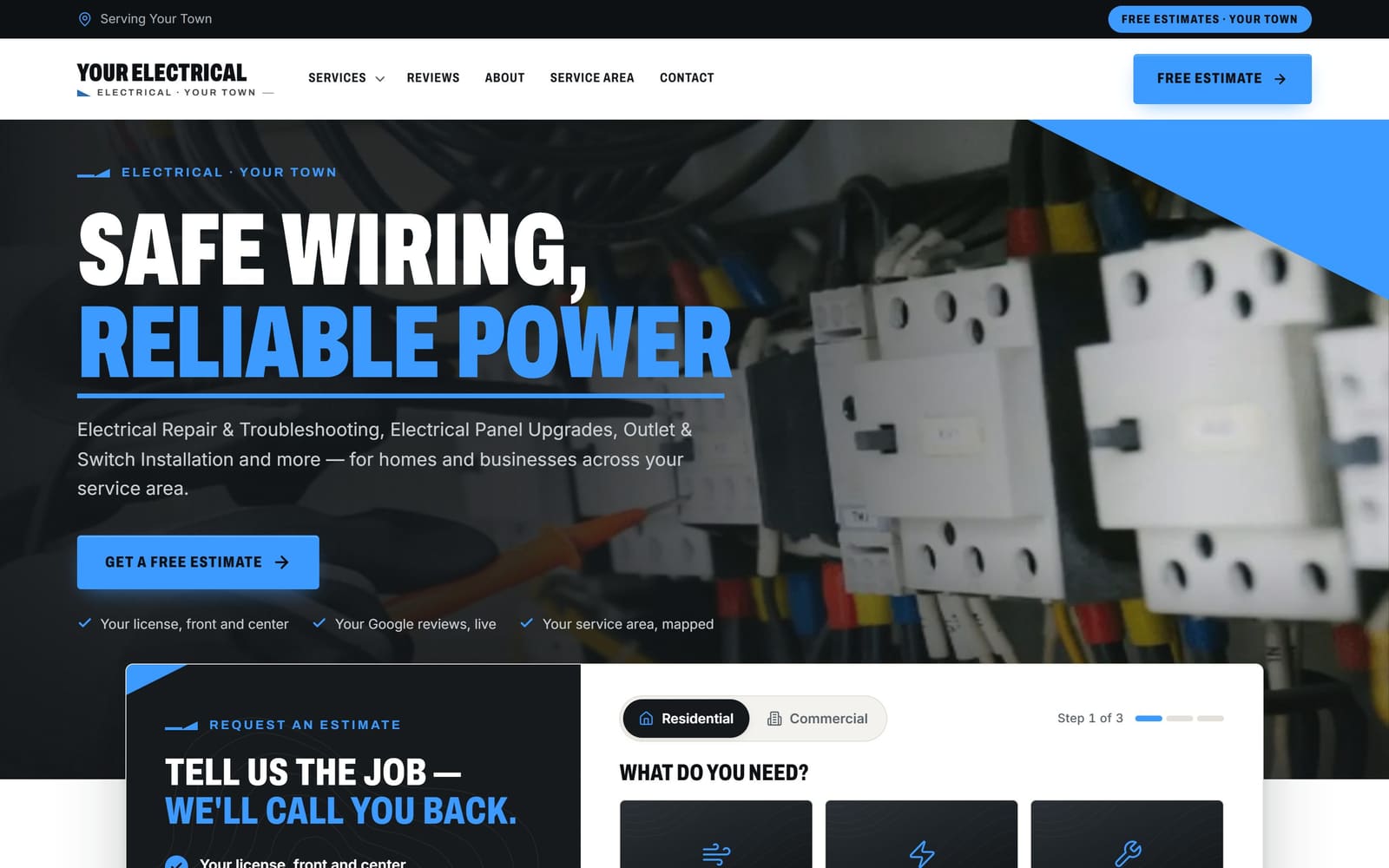
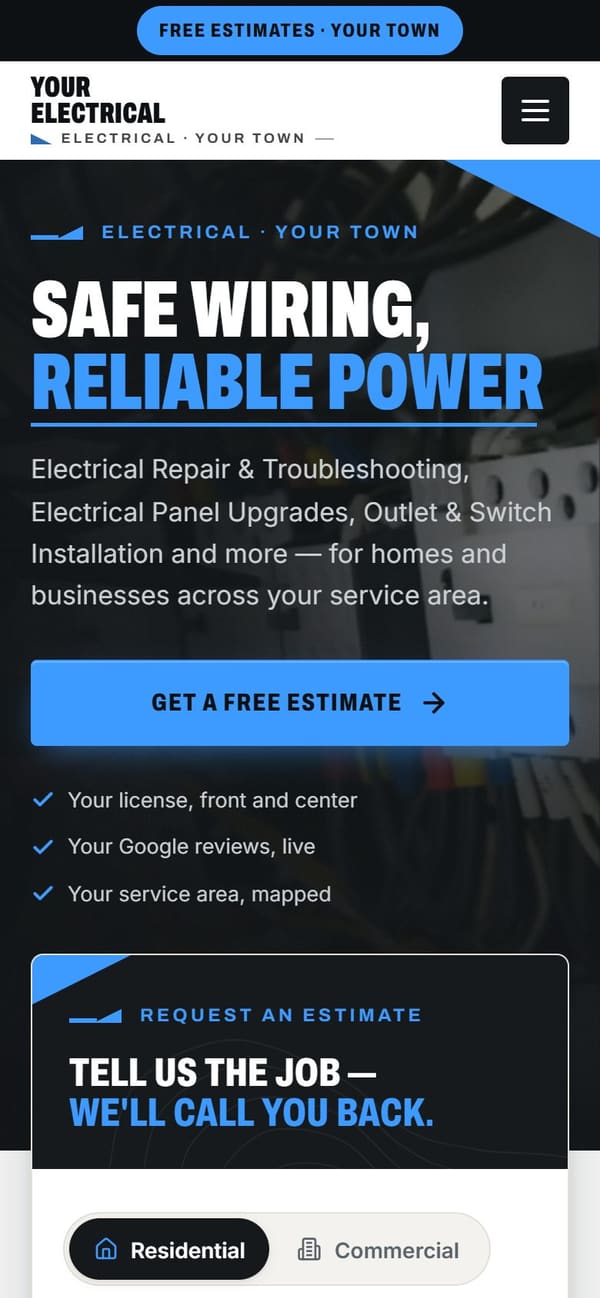
Vevang Sites builds and runs your website: a page for every electrical service you sell, service-area pages for the towns you actually drive to, and page structure Google can read. Our SEO Ranker agent improves the site every week. We build a demo of your new site before your first call.
Why it matters
One person smells hot plastic behind a wall. One is comparing 100 amp and 200 amp panels for a hot tub. One has an inspection report and a closing date. A single services page serves none of them well.
Homeowners know electrical is permit work. They look for a license number, whether you pull permits and how the inspection goes. Pages that answer that plainly get the call over a listing with no detail.
Someone who finds you for a ceiling fan calls you again for the panel, the charger and the basement circuits. Ranking for small jobs feeds the big ones, so build pages for both ends of your work.
What we do
Write down what people actually type: breaker keeps tripping, outlet sparked, cost to upgrade electrical panel, EV charger installation near me, generator hookup. Those phrases become your pages. Your internal service list is not a search list.
Panel upgrades, EV charger installation, rewiring, generators, surge protection, lighting and fans, code corrections, commercial work. Each page explains the job, the permit, the typical timeline and what shows up in an older home. Bullets on one page rank for nothing.
Name the towns you drive to. Mention the housing stock you see there, older panels and fuse boxes, subpanel work in finished basements, and who inspects. Copy-pasted town pages with the name swapped are ignored.
Put the phone number, your hours and an answer-now line at the top of the repair and emergency pages. Someone with a burning smell will not scroll or fill out a form. Track which page and keyword produced each call.
Fast on a phone, one clear heading per page, license number in the footer, schema for services and areas, and internal links from the EV charger page to panel upgrades. Search engines and AI assistants both read that structure.
SEO Ranker reviews the site weekly: new questions answered, thin pages expanded, seasonal pushes like generators before storm season, and links tightened. Rankings are never guaranteed, but steady work beats a site left alone after launch.
Common mistakes
A property manager needing a panel schedule and a homeowner with a dead outlet want different proof. Split them. Commercial buyers look for after-hours work, tenant fit-outs and coordination with a GC.
EV buyers research load capacity, breaker size, run length and rebates before they call anyone. A full page that covers panel capacity, garage runs and permitting catches them mid-research. A bullet catches nobody.
If your license number is buried and permits are never mentioned, a cautious homeowner assumes the worst. Put the number in the footer and explain who pulls the permit and what the inspection involves.
Chasing one broad city term while ignoring the suburbs you actually serve leaves easy calls on the table. Pages for the towns on your route usually bring in work faster than the crowded main term.
Checklist
How it works
You don’t sign anything to see it. Book a time, and your demo is ready before we talk.
Pick a time — often the same day. Tell us your website, or just your business name and city.
Before the call, we build a demo of your new website from your real business: your services, your area, your reviews.
We walk you through the demo on the call. You see exactly what you’d get before you spend anything.
We build it for real and put it live. After launch, the SEO Ranker agent keeps improving it every week.
Questions
Usually months, not days. New service pages need time to be crawled, indexed and trusted. Service-area pages for smaller towns often move first because there is less competition. Emergency terms take longer because everyone wants them. No one can guarantee rankings, so we work weekly and track calls instead of promising positions.
For the towns you genuinely serve, yes. Each one should say something true about that area: the age of the homes, common panel situations, drive time, who inspects. If you cannot write three honest paragraphs about a town, you probably should not have a page for it.
You do not need exact numbers. Explain what changes the cost: amperage, meter location, mast and service entrance condition, permit fees, drywall repair. Homeowners searching panel upgrade cost want to understand the range of work, not a quote. That page also gives them a reason to call you prepared.
Yes. The map results and your website feed each other. We manage the profile alongside the site: services, service areas, hours, photos of real work, and replies to reviews. We also send review requests to every customer after a job, not a selected few.
Tools like ChatGPT, Gemini and Perplexity read clear pages the same way search engines do. Plain headings, direct answers about panels, permits and charger installs, and consistent name, address and phone details help. We cannot promise any assistant will mention you, but clarity makes you easier to read.
Only if it answers real questions. Posts about why a breaker trips repeatedly, what a scorched outlet means or how much power a hot tub needs will bring searchers in. Generic industry news will not. Most electricians get more from strong service pages than from posting weekly.
Yes, with separate paths. Repair and emergency pages lead with the phone number and your hours. Panel, charger and generator pages are longer, because those buyers read before they call. Same site, two different reading speeds, and call tracking shows which side is producing.
We build a demo of your new site first, using your services, your towns and your actual work. On the call we walk through it, ask what jobs you want more of, and tell you what we would fix first. If it is not a fit, you keep the ideas.
More for electricians
Reviewed 2026-09-24
Your demo is free
Tell us your website — or your business name and city — and pick a time. We’ll have your demo ready before we talk.