Vevang AISites/ Garage door pros · SEO

Local SEO · Garage door pros

SEO for garage door companies that need calls today

Your customers search with a door stuck halfway and a car trapped inside. Your site should answer that search first, then sell the new door later.

Pick a 15-minute time. Your demo is built before the call.

  • Your demo, built before the call
  • Improved every week
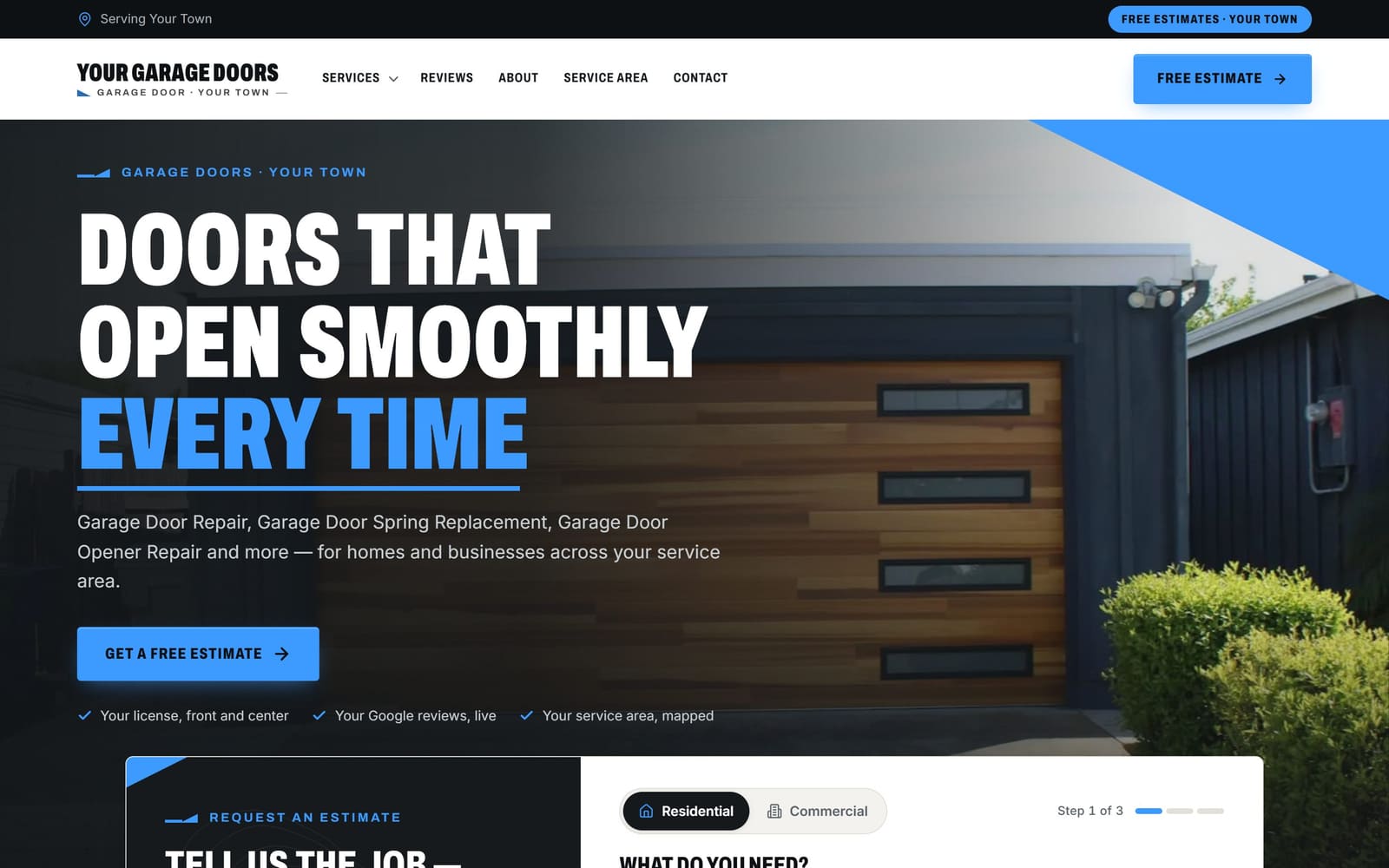
A sample garage door pros website, the kind Vevang builds and keeps improving.
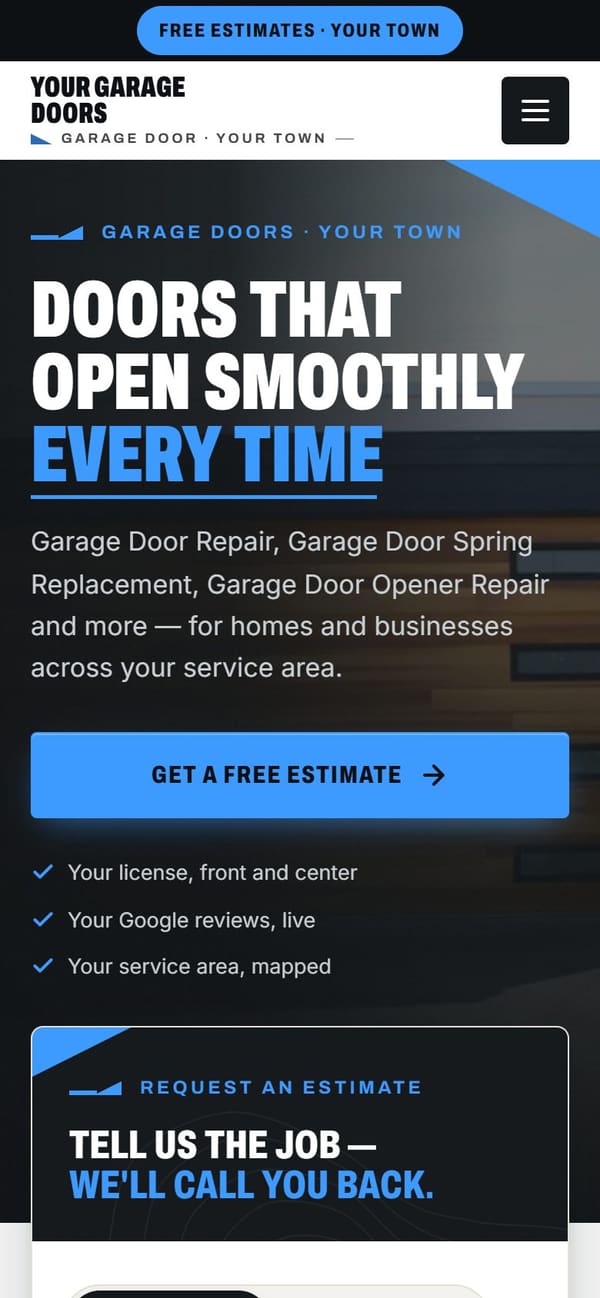
The same sample site on a phone.
Sample demo · the kind of site we build for garage door pros

What does this include?

Vevang Sites builds your garage door website, then improves it every week with our SEO Ranker agent. We write pages for broken springs, off-track doors, opener repair and new door styles, manage your Google Business Profile, handle review requests and replies, and track every call and form so you see what earns work.

Why it matters

Why it’s different for your trade.

01

Repair searches are decided in minutes

A snapped spring means the car is stuck in the garage. That homeowner opens Google, scans the first few results, and calls. If your spring page loads slow or buries your phone number, the next company gets the job.

02

One repair often becomes a new door

The spring call leads to an opener upgrade, then a replacement door a year later. Ranking for the cheap emergency search is how you get in front of the customer who later spends on a full install.

03

Search demand swings with the weather

Cold snaps push spring and cable failures. Spring and pre-listing season pushes door styles and curb appeal. A site that never changes misses half the year. Weekly updates let your pages follow the season.

What we do

The work, step by step.

01

We map how your area searches

We look at what people near you type: broken garage door spring, garage door off track, opener won't close, new garage doors plus your town. We build a page plan around those exact problems, not generic garage door content.

02

We build the repair pages first

Broken spring, off-track door, cables, opener repair, emergency service. Each page explains the symptom, warns against DIY spring work, states your service call terms plainly, and puts a tap-to-call button above the fold.

03

We build the sales side

A door styles gallery with real installs, materials, insulation, window options and colors. Opener pages that compare repair versus replacement. These are the pages homeowners browse for days before they call you.

04

We cover your service area honestly

One page per town you actually serve, with local detail and the jobs you do there. No thin pages for cities you'd never drive to. Internal links tie each town page to your repair and install pages.

05

We connect Google and tracking

Your Google Business Profile gets matched categories, service list, install photos and review replies. Call and form tracking shows which page produced each lead, so you know whether the spring page or the gallery is earning work.

06

SEO Ranker improves it weekly

Every week the agent checks technical health, refreshes seasonal pages, adds content for searches you're close to ranking for, and fixes what slipped. Rankings can't be guaranteed, but the work never stops.

Common mistakes

What usually goes wrong.

One page that lists every service

Springs, cables, openers, rollers and new doors crammed onto one services page rank for none of them. Someone searching broken garage door spring should land on a page about broken springs, not a menu.

A gallery with no words

Photos of installed doors with filenames like IMG_4421 tell Google nothing. Each gallery entry needs the style, material, color, town and what the job involved. That's what turns browsing into a quote request.

Hiding the service call terms

Homeowners with a stuck door want to know what a visit costs before they dial. Vague pricing makes them call the company that says it. State your diagnostic terms and what's included.

Ignoring commercial doors

Property managers and warehouses search differently: rolling steel, dock doors, high-cycle springs, service contracts. If your site only speaks to homeowners, you never show up for the accounts that repeat.

Checklist

What you can check today.

  • Give broken springs their own page with a DIY warning
  • Add tap-to-call buttons to every repair page
  • Label gallery photos with style, color and town
  • Publish your service call terms in plain text
  • List opener brands you repair and install
  • Add a page for each town you truly serve
  • Ask every customer for a review after the job
  • Reply to every review, including the rough ones

How it works

You see it first. Then you decide.

You don’t sign anything to see it. Book a time, and your demo is ready before we talk.

  1. 01

    Book 15 minutes

    Pick a time — often the same day. Tell us your website, or just your business name and city.

  2. 02

    We build your demo

    Before the call, we build a demo of your new website from your real business: your services, your area, your reviews.

  3. 03

    See it, then decide

    We walk you through the demo on the call. You see exactly what you’d get before you spend anything.

  4. 04

    Launch, then improve weekly

    We build it for real and put it live. After launch, the SEO Ranker agent keeps improving it every week.

15 minutes on Google Meet. No obligation.

Questions

Straight answers.

How long before SEO brings in calls?

Local search work builds over months, not days. New service pages and Google Business Profile fixes often move first because they match urgent searches like broken spring repair. Competitive terms such as new garage doors in a large metro take longer. No one can guarantee rankings, so we track calls and forms to show what's actually working.

Should I rank for repair or new door sales?

Both, on separate pages. Repair searches come with urgency and volume, and they put you in the driveway where the replacement conversation starts. New door searches convert slower but pay more. We build the repair pages first because they produce calls sooner, then grow the style and opener content.

Do I need a page for every town I serve?

Only towns you genuinely cover. A page for a suburb you drive to weekly, with local jobs, neighborhoods and real photos, can rank. Twenty thin copies with the city name swapped usually don't, and they make your site look spammy. We'd rather build six strong area pages than thirty empty ones.

What about emergency and after-hours searches?

If you run after-hours service, say so clearly with your actual hours and response window. A door stuck open overnight is a security problem and people search at odd times. If you don't do nights, don't claim it. Broken promises turn into bad reviews that cost you more than the job.

How does AI search affect my business?

People now ask assistants things like why their garage door reverses or what a spring replacement involves. Those tools read clear, well-structured pages. We write your content so the facts are easy to pull: symptoms, services, service area, hours, contact. No one can promise an assistant will mention you.

Can you handle my Google Business Profile too?

Yes. We set categories, write your service list, keep hours accurate through holidays and cold snaps, post install photos, and reply to reviews. For garage door companies the profile often drives the emergency calls, since map results sit above everything else on a phone.

Do you run ads as well?

We can run local ads when you want them, billed straight to your card with no markup from us. Ads work well during cold weather when spring failures spike and you have crew capacity. SEO keeps working when you pause ads, so we build that foundation either way.

What happens on the 15-minute call?

We build a demo of your new garage door website before we talk, so you see real pages instead of a pitch deck. On the call we walk through it, look at how your area searches, and tell you what we'd fix first. Book a call.

More for garage door pros

One team for the whole job.

Reviewed 2026-09-24

Your demo is free

See your new website on the call.

Tell us your website — or your business name and city — and pick a time. We’ll have your demo ready before we talk.

Pick a 15-minute time. Your demo is built before the call.