Vevang AISites/ Drywall · Local ads

Local ads management · Drywall

Local Ads for Drywall Contractors

Paid search and social that goes after patch calls today and basement projects next season. The website comes first, then ads point at the page that matches the job.

Pick a 15-minute time. Your demo is built before the call.

  • Your demo, built before the call
  • Improved every week
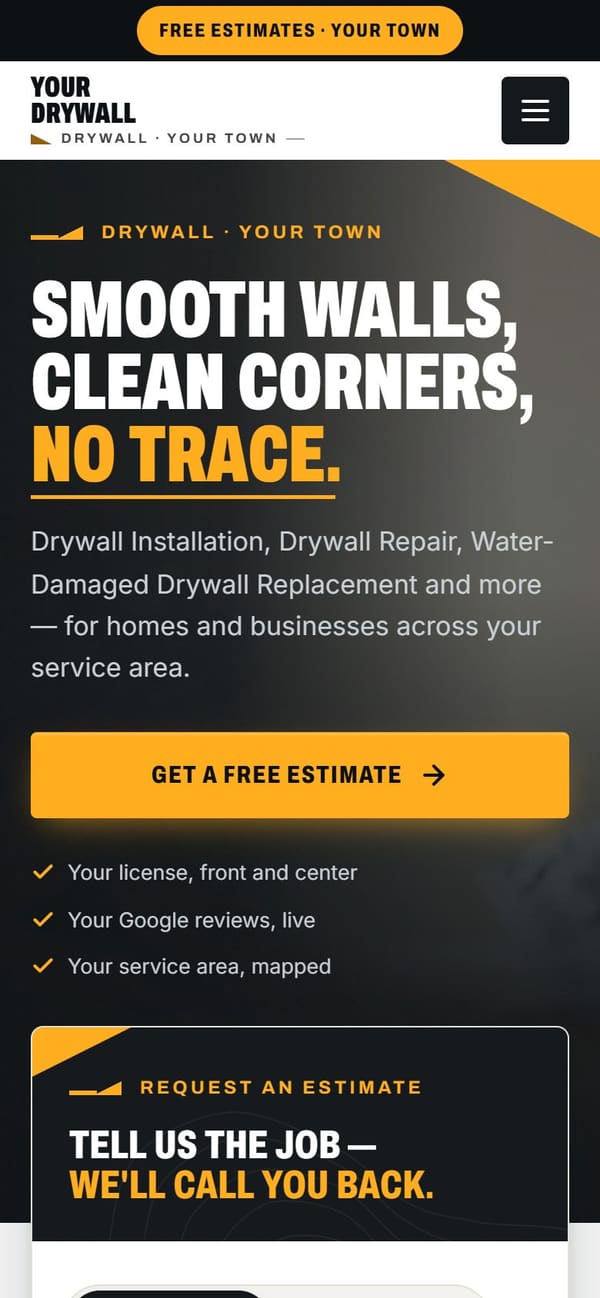
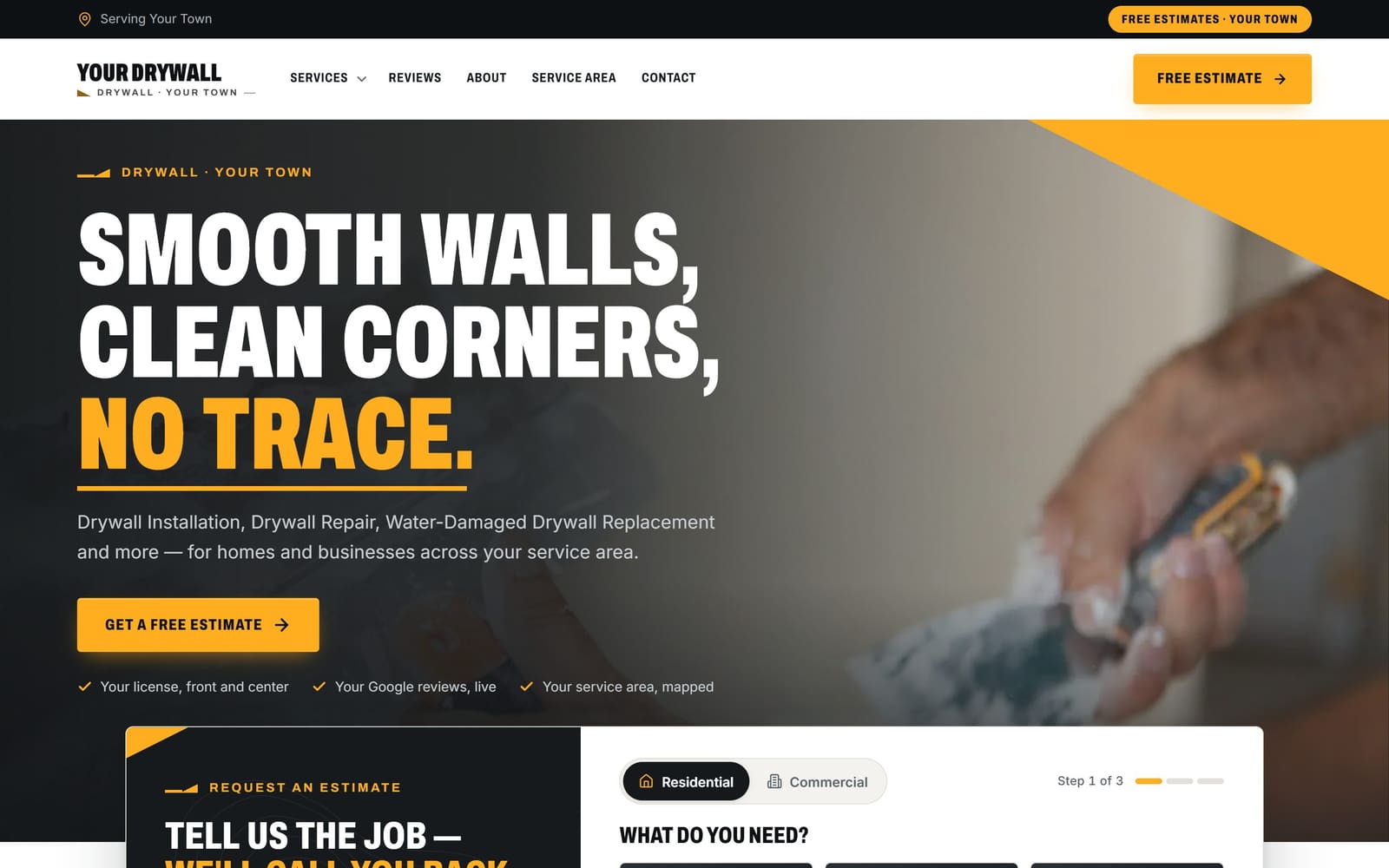
A sample drywall website, the kind Vevang builds and keeps improving.
The same sample site on a phone.
Sample demo · the kind of site we build for drywall

What does this include?

Vevang Sites builds your drywall website first, then runs optional local ads on Google and Meta, including Local Services Ads where drywall qualifies. Each ad points at the matching page: hole repair, ceiling water stains, basement finishing. Ad spend is billed to your own card, and every call and form is tracked.

Why it matters

Why it’s different for your trade.

01

Patch calls are decided in an hour

A doorknob hole before a party, a stain spreading on a ceiling, a landlord turning a unit Friday. These people call the first drywall contractor who looks willing to take a small job. A paid spot puts you in front of that decision.

02

New repair pages take time to climb

Organic work on terms like drywall repair and popcorn ceiling removal builds over months. Ads can carry the phone while those pages mature, then you can taper spend as the repair and ceiling pages start pulling calls on their own.

03

Basement projects need to see your finish

A homeowner planning a basement is not searching yet. Meta ads showing close-ups of flat, shadow-free walls and matched texture reach them while they are still sketching the layout, months before they type anything into a search bar.

What we do

The work, step by step.

01

Get the pages ready first

We build or fix the pages ads will point at: drywall repair, water damage, ceiling repair, texture matching, basement finishing. Each one has finish photos, dust and cleanup details, and an estimate form that accepts a photo of the damage.

02

Split repair money from remodel money

Search ads chase today's patch, stain and ceiling calls. Meta ads warm up basement and remodel homeowners in your service radius. We keep the budgets separate so a busy repair week does not eat the project pipeline.

03

Check Local Services Ads eligibility

Drywall is not offered as an LSA category everywhere. We check your area. If it is available we handle the screening and profile. If not, the budget goes to search ads and your Google Business Profile instead.

04

Block the clicks that never hire you

Negative keywords strip out drywall sheet prices, hanging jobs and hiring, mud and tape supplies, and how-to searches. You stop paying for DIYers, suppliers and people looking for work on a hang crew.

05

Match the ad to the landing page

A ceiling stain search lands on the water damage page, not the homepage. A basement search lands on the basement gallery. The headline the homeowner clicked is the first thing they read when the page opens.

06

Track calls, then cut what is dead

Call and form tracking ties each lead to the ad that caused it. We review weekly, move budget toward the job types that book, and keep improving the organic pages so ads are a choice, not a crutch.

Common mistakes

What usually goes wrong.

Every ad points at the homepage

Someone searching for ceiling repair after a roof leak lands on a page about your company history and leaves. Send ceiling searches to the ceiling page, texture searches to the texture page, and let the photos answer the question.

Bidding on the bare word drywall

That single term brings in people pricing sheets at a lumber yard, hangers looking for work, and homeowners watching patch videos. You pay for all of it. Tight phrases like drywall repair near me and popcorn ceiling removal cost less and book more.

Advertising a site with no finish photos

Drywall is judged on flatness and texture match. If the landing page shows a truck and a stock image, paid traffic bounces. Close-ups under raking light, before and after patches, and a clean jobsite do the persuading.

Judging ads by clicks instead of jobs

Cheap clicks from curious homeowners look great in a report and never turn into work. Count booked estimates and signed basements. A repair ad that produces three patch calls a week is worth more than a busy campaign with no phone ringing.

Checklist

What you can check today.

  • Point each ad at its matching service page
  • Add negative keywords for supplies, hiring and DIY
  • Say small patch jobs welcome in the ad text
  • Put close-up finish photos above the form
  • Add photo upload to your estimate form
  • Turn on call tracking before you spend a dollar
  • Check whether LSA covers drywall in your area
  • Review booked jobs by ad every week

How it works

You see it first. Then you decide.

You don’t sign anything to see it. Book a time, and your demo is ready before we talk.

  1. 01

    Book 15 minutes

    Pick a time — often the same day. Tell us your website, or just your business name and city.

  2. 02

    We build your demo

    Before the call, we build a demo of your new website from your real business: your services, your area, your reviews.

  3. 03

    See it, then decide

    We walk you through the demo on the call. You see exactly what you’d get before you spend anything.

  4. 04

    Launch, then improve weekly

    We build it for real and put it live. After launch, the SEO Ranker agent keeps improving it every week.

15 minutes on Google Meet. No obligation.

Questions

Straight answers.

Should I run ads before my website is finished?

No. Paid clicks land somewhere, and if that page has no finish photos, no repair details and no easy form, the money is gone. We build the site and the service pages first, then add ads once there is something worth sending traffic to.

Do drywall contractors qualify for Google Local Services Ads?

It depends on your area, because the available service categories vary. We check before promising anything. Where drywall is covered, we handle screening and the profile. Where it is not, the budget goes to standard search ads and your Google Business Profile instead.

Are ads better for repairs or for basement projects?

Repairs respond faster. Someone with a punched wall or a ceiling stain searches and calls the same day, so search ads convert quickly. Basement finishing takes longer and works better with Meta ads showing your finish work, since those homeowners are still planning rather than searching.

Who pays for the ad spend?

You do, directly. The ad platforms bill your own card, so you see exactly what was spent and you keep control of the account. Vevang Sites manages the campaigns, the landing pages and the tracking. Nothing about the spend is hidden inside a bundled invoice.

Can you guarantee a certain number of drywall leads?

No, and nobody honestly can. Rankings and ad results depend on your market, competing contractors, your budget and the season. What we control is tight targeting, pages that match each search, and tracking that shows which ads produced real calls so the budget keeps moving toward what works.

How do I know a call came from an ad?

Call tracking numbers and form tracking tie each lead back to its source. You can see whether the patch call came from a search ad, a Meta ad or your Google Business Profile, and whether it turned into a booked estimate.

Will Meta ads work for a drywall business?

They work for the planning side. Photos of a finished basement, a smooth ceiling after popcorn removal, or a patch that disappeared into matched texture get attention from homeowners in your radius. Expect slower inquiries than search, and expect them to be larger jobs.

Should I advertise to builders and general contractors too?

Usually not with the same campaign. Builders find hang-and-finish crews through referrals and by checking your site for crew size and project scope. Keep a contractor page ready for that, and spend ad budget where homeowners are actively searching.

More for drywall

One team for the whole job.

Reviewed 2026-09-24

Your demo is free

See your new website on the call.

Tell us your website — or your business name and city — and pick a time. We’ll have your demo ready before we talk.

Pick a 15-minute time. Your demo is built before the call.