Vevang AISites/ Appliance repair · Google Business Profile

Google Business Profile management · Appliance repair

Your Google Business Profile, built for appliance repair

Your map listing is the first thing a homeowner with a warm refrigerator sees. We set it up, keep it current, and tie it to the pages on your site.

Pick a 15-minute time. Your demo is built before the call.

  • Your demo, built before the call
  • Improved every week
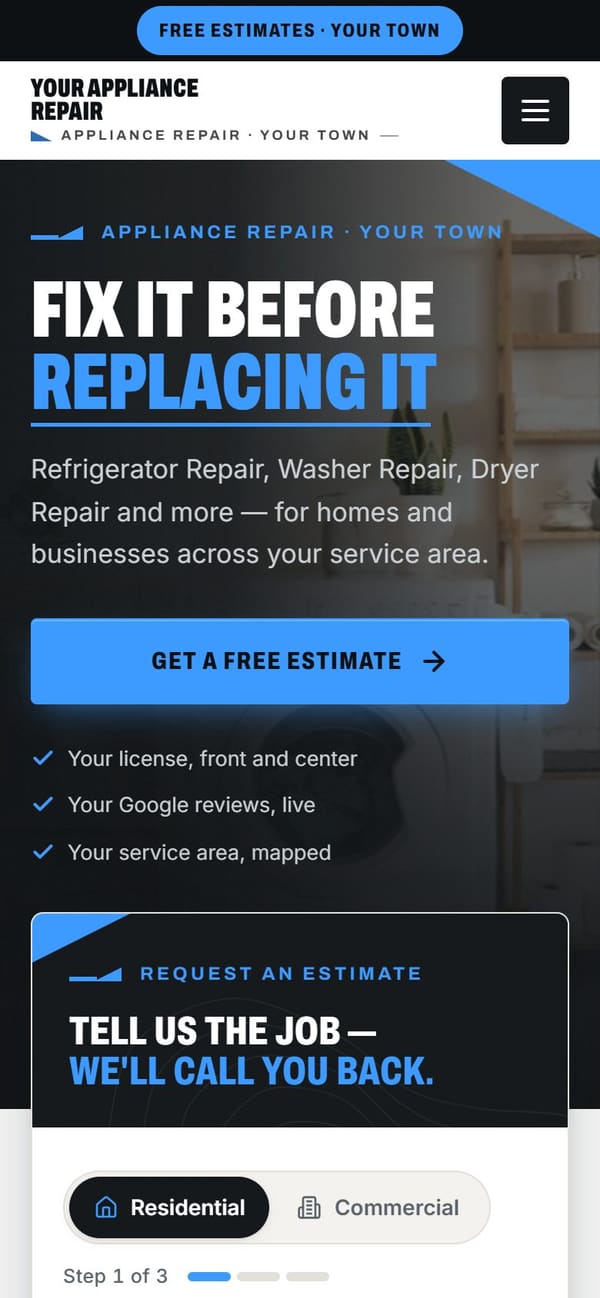
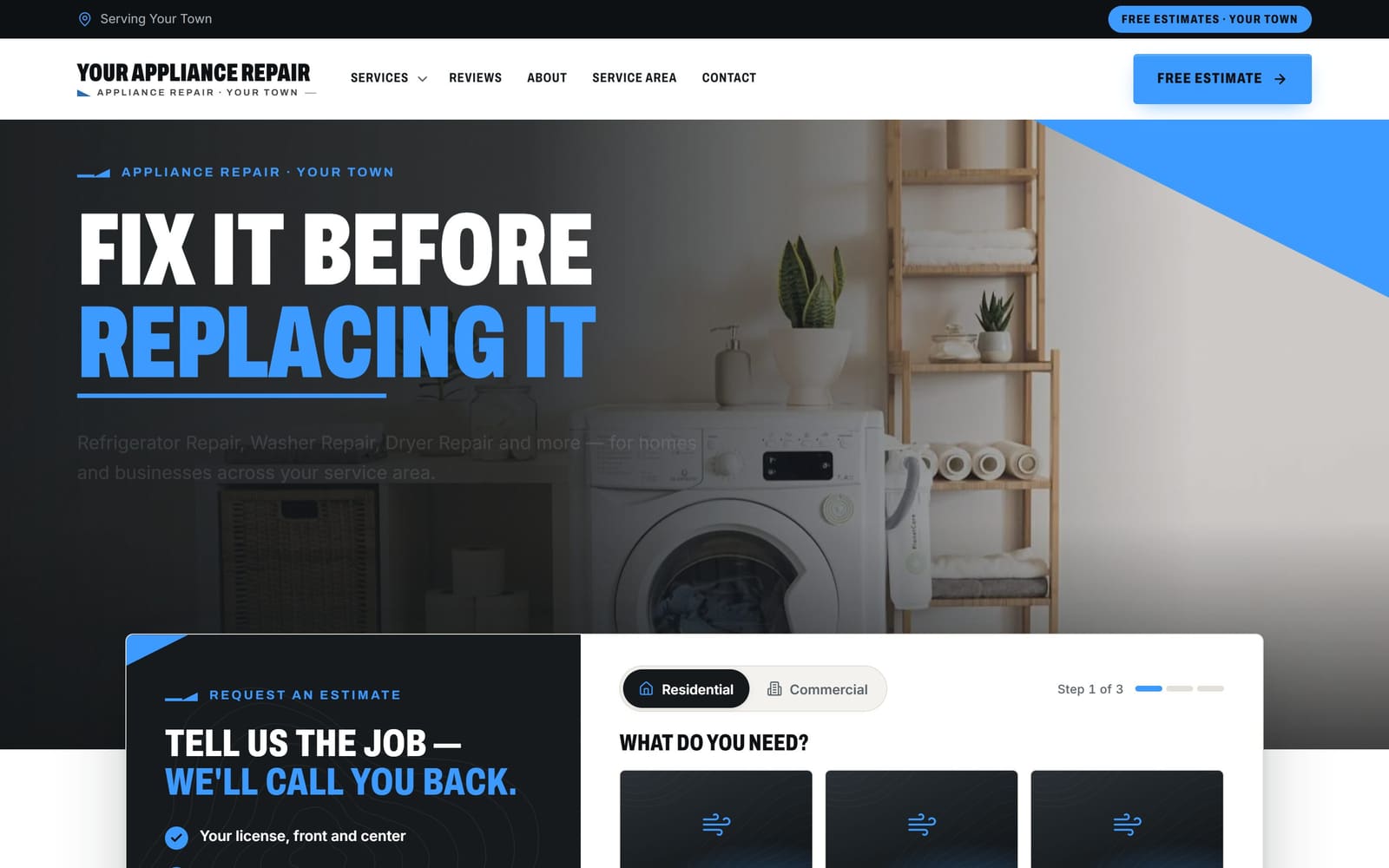
A sample appliance repair website, the kind Vevang builds and keeps improving.
The same sample site on a phone.
Sample demo · the kind of site we build for appliance repair

What does this include?

Vevang Sites sets up and runs your Google Business Profile: the right repair categories, appliance and brand service items, a real service area, honest hours, van and job photos, seasonal posts, and Q&A. We connect it to matching pages on your site so the map listing and the site say the same thing.

Why it matters

Why it’s different for your trade.

01

The map is where a dead fridge search ends

Someone standing in front of a warming refrigerator opens the map, scans the first few listings, and calls. They are not reading a homepage first. Your categories, hours, photos and reviews decide whether that call lands with you or the shop two towns over.

02

People search by brand and by symptom

Homeowners rarely type appliance repair. They type a brand plus a problem: a front-loader that will not drain, an ice maker that quit, an oven that will not hold temperature. Service items on your profile let you name those jobs and the brands you stock parts for.

03

The listing and the site have to agree

If your profile names a brand your site never mentions, or your hours differ between the two, both look unmanaged. We match your service list to real pages for refrigerators, washers, dryers, dishwashers and ranges, so every tap leads somewhere that answers the question.

What we do

The work, step by step.

01

Claim, verify and clean the basics

We take ownership of the listing, fix a business name that drifted, and remove duplicate profiles left over from an old van number or a shop address you moved out of. Then the phone number, website link and hours get checked line by line.

02

Set categories that match major appliance work

Primary category goes to appliance repair service, not appliance store or small appliance repair, unless that is truly your work. Secondary categories only when you really do them, like washer and dryer repair or refrigerator repair. Wrong categories pull the wrong calls all day.

03

Build the service list by appliance and brand

We add service items for refrigerator, washer, dryer, dishwasher, oven and range, ice maker and disposal work, then name the brands you carry parts for. Each item gets a short description in plain words a homeowner would recognize on a bad morning.

04

Define service area, hours and the trip fee

Towns and zip codes you actually drive to, not a hopeful radius. Hours that match when a person answers the phone. Holiday hours set before the oven rush. Your diagnostic or trip fee stated in the profile description and in Q&A so nobody argues at the door.

05

Add photos, posts and Q&A that look like your work

Your van, your tech at a kitchen panel, parts stocked on the shelf, a replaced control board. Posts that shift with the season: freezers in summer heat, ranges before the holidays. Q&A covering parts warranty, brands serviced, and rental and property manager work.

06

Connect it to the site and keep it moving

Service items link to the matching page, calls and form fills are tracked, and SEO Ranker works on the site and listing every week. We send review requests after completed jobs and reply to what comes in, good or bad.

Common mistakes

What usually goes wrong.

Choosing the wrong primary category

Appliance store, used appliance dealer and small appliance repair all pull different searches. If you fix built-in refrigerators and wall ovens, a storefront category sends you people hunting a cheap microwave and hides you from the calls you want.

Showing a home address or fake round-the-clock hours

If customers never come to you, hide the address and set a service area. And listing open twenty-four hours when nobody answers at midnight earns you a one-star review from a person who called about a leaking dishwasher and got voicemail.

Leaving the services section empty

With no service items you only surface for the broadest term. Nobody finds you for ice maker repair or dryer no heat. The opposite error also hurts: naming brands you cannot source parts for, then turning those callers away.

Pointing every link at the homepage

A homeowner who tapped dishwasher repair should land on your dishwasher page with the trip fee, warranty terms and booking windows. Dropping them on a homepage that lists ten appliances makes them back out and call the next tech.

Checklist

What you can check today.

  • Set your primary category to appliance repair service
  • Hide your address if you work out of a van
  • Add a service item for every appliance you fix
  • Name only the brands you stock parts for
  • Answer your trip fee and parts warranty in Q&A
  • Update hours before holiday cooking weeks
  • Upload photos of your van, techs and real repairs
  • Link service items to matching pages, not the homepage

How it works

You see it first. Then you decide.

You don’t sign anything to see it. Book a time, and your demo is ready before we talk.

  1. 01

    Book 15 minutes

    Pick a time — often the same day. Tell us your website, or just your business name and city.

  2. 02

    We build your demo

    Before the call, we build a demo of your new website from your real business: your services, your area, your reviews.

  3. 03

    See it, then decide

    We walk you through the demo on the call. You see exactly what you’d get before you spend anything.

  4. 04

    Launch, then improve weekly

    We build it for real and put it live. After launch, the SEO Ranker agent keeps improving it every week.

15 minutes on Google Meet. No obligation.

Questions

Straight answers.

Should I hide my address if I work out of a van?

If customers never come to you, hide the street address and set a service area instead. A listed address you do not staff invites confused walk-ins and complaints. Google still uses your location to decide where you appear, so keep the address on file accurate even when hidden, and list the towns you actually drive to.

Which primary category should an appliance repair company use?

Appliance repair service fits most major-appliance techs. Pick secondary categories only for work you genuinely do, such as refrigerator repair or washer and dryer repair. Avoid appliance store and used appliance dealer unless you sell units. The primary category carries the most weight, so changing it changes which searches you appear in.

Can I list every brand I service?

List the brands you can actually get parts for and send a tech out on the same week. Brands go in service item descriptions and in the profile description, and they should match a brands page on your site. Listing a brand you then decline wastes a call and often earns a poor review.

How wide should my service area be?

Set it to the towns and zip codes you will really drive to on a Tuesday afternoon. A giant radius does not make you show up further away, and it brings calls you have to turn down. If you add a town later, add it to the profile and to your service area page together.

Do posts on the profile actually matter?

They keep the listing looking active and let you say what is timely. In summer you post about refrigerators and freezers struggling in heat. Before a holiday you post about oven and range repair and how early to book. It also gives a homeowner reading the listing a reason to trust that you are still working.

Will this put me first on the map?

Nobody can guarantee a map position, and we will not pretend otherwise. What we control is the work: correct categories, a complete service list, real photos, accurate hours, steady posts, review requests and replies, and a site that backs up every claim. That is what gives the listing its best chance.

How do reviews fit into this?

We send review requests to customers after completed jobs and reply to the reviews that come in. We do not filter who gets asked and we never write or edit a review. A reply that explains what you found in the dryer vent tells the next reader more than the star count does.

Do I still need a website if the profile brings calls?

Yes. The homeowner deciding whether a ten-year-old dishwasher is worth fixing wants to read something before they pay a trip fee. Property managers want a page about multi-unit work. The profile gets the tap, the site answers the question, and the two need to say the same thing.

More for appliance repair

One team for the whole job.

Reviewed 2026-09-24

Your demo is free

See your new website on the call.

Tell us your website — or your business name and city — and pick a time. We’ll have your demo ready before we talk.

Pick a 15-minute time. Your demo is built before the call.